'Demolishing Doubt': Father-Son Duo Cliffe & Stuart Knechtle Out to Share the Answers Our Souls Seek
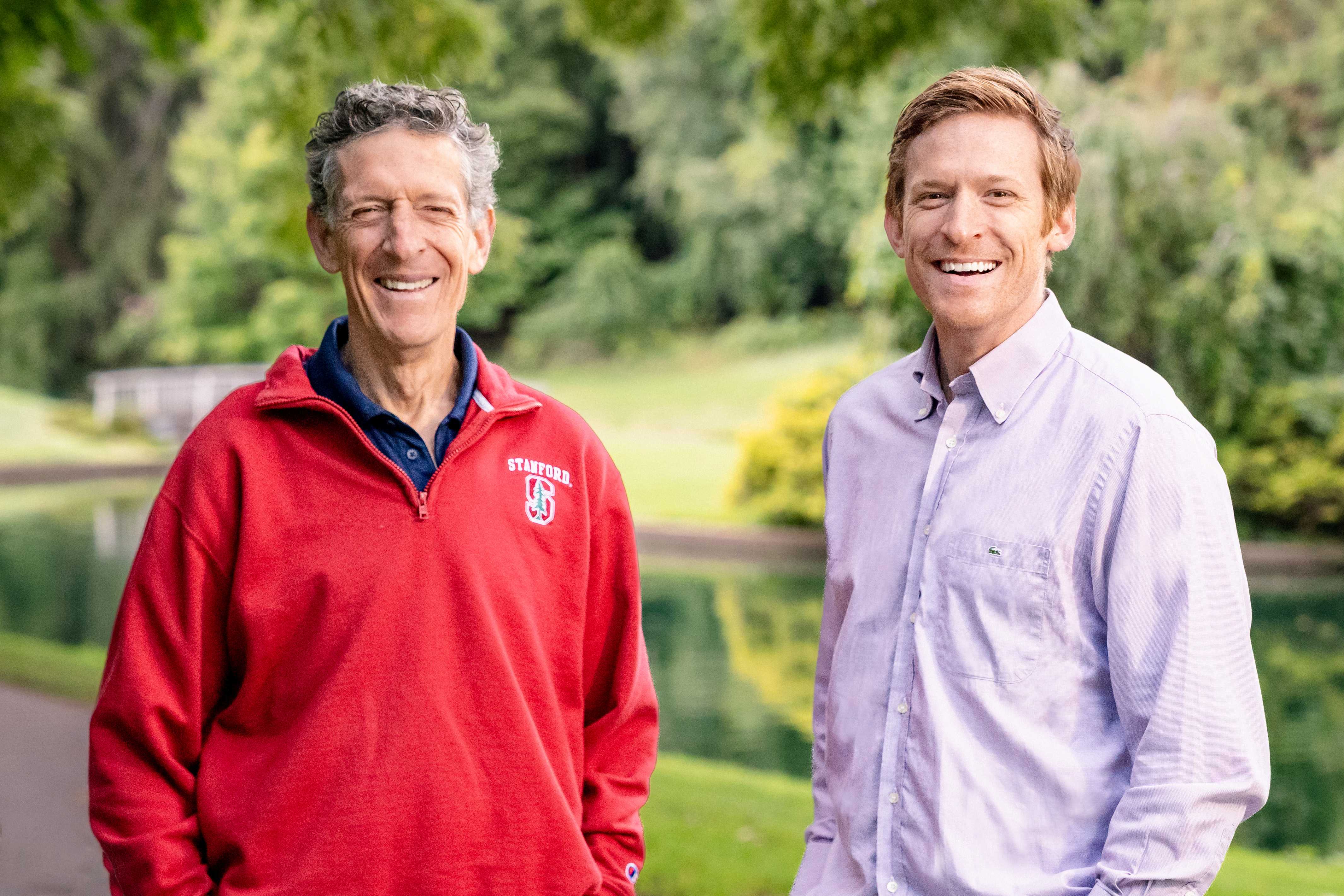 Cliffe & Stuart Knechtle, authors of 'Demolishing Doubt'. Photo image courtesy Zondervan Books
Since the beginning of time, people have been earnestly searching for the true meaning of life. Sifting through a plentiful host of religions, the promise of nature, or a belief in the potential of man, those seeking for truth eventually become lost in a swirl of doubt and uncertainty.
For decades, Christian apologist Cliffe Knechtle has built a following by stepping onto college campuses and inviting hard questions about God, suffering, science, and faith. Now, alongside his son Stuart Knechtle, the longtime advocate for Christ is bringing those conversations to the pages of a new book called Demolishing Doubt: Discover How Your Deepest Questions Can Lead to Life-Giving Faith.
Blending personal stories, campus debates, and practical apologetics, the father-son duo argues that doubt is not the enemy of belief, but often the beginning of a deeper and more honest faith journey.
I recently sat down with Cliffe and Stuart to discuss why doubt is rarely just about doubt itself but rather our reaction to it, why so many people struggle with doubt when it comes to faith, and why there is one hundred percent proof that God exists.
So many people struggle with doubt in so many areas but especially when it comes to matters of faith. Demolishing Doubt could be seen as just yet another self-help book with no clear remedy. Why should people get excited about this book?
Stuart Knechtle: That's a great question. We're trying to lead people to Christ for non-believers, and then for believers we're trying to just give tools to the toolbox for how to talk to somebody and how to defend their faith. And for us, maybe the biggest selling point and us writing it together is that publishing companies were very excited about how we are compatible in the way where my dad, who's built the ministry primarily off of how to work through tough questions, and how to give the evidence. And then, I try to come alongside and offer the emotional, therapeutic, and psychological reasons for why you'd want to put your faith in Christ. We try to be compatible in that sort of way, and really hope we offer a persuasive type of thought and feeling for why people should put their faith in Christ.
For the sake of our conversation, how would you define doubt as it relates to this book?
Stuart Knechtle: People should not get too confused by the book’s title. It could almost seem a little bit like we've demolished doubt. No, that's not what we're talking about. We're talking about working through the difficult unhealthy doubt. I think doubt is asking questions due to uncertainty about your belief system. In Genesis, Abraham stands over Sodom and Gomorrah and is struggling with the justice of God. Abraham has just been told by God; I'm going to wipe out Sodom and Gomorrah. And so, Abraham starts asking, ‘Well, what if they're 50 righteous people down there? What if they're 45, 40, 35, 30, 25, 20, 15, 10?’ And God says, ‘All right, if they're 10 righteous people, I will not wipe out Sodom and Gomorrah.’
But Abraham is working through questions that he has that are making him feel uncertain about his belief in the goodness of God, and the justice of God. And what I find so refreshing about the Bible is God encourages that type of questioning, that type of honest doubt. But if someone concludes that, because I have doubt, therefore I cannot believe, that incredibly narrow-minded doubt should motivate us to study harder, to examine the evidence more carefully, and then to conclude either my belief is secure or, no, I need to keep on studying and find out better answers.
You write that the problem with doubt isn’t merely the doubt itself, but rather our reaction to it. What do you mean by that?
Cliffe Knechtle: The question is how you're going to handle doubt. We all have doubts, every day that I sin. It shows I think I got a better way of doing this than God does. And that's what sin is, basically. It's denying that God is all knowing, all good, and all loving. What it's saying is I think I'm better at determining how I'm going to achieve happiness, so I'm going to do it my way instead of God's way. Well, that's doubting the goodness, the knowledge, and the love of Almighty God. And so the question becomes, how am I going to handle that doubt? Am I just going to spiral into bad habits or addiction, or am I going to learn that God indeed is smarter than I am, is more loving than I am, and is better than I am? Therefore it would be very, very wise for me to trust God as opposed to ultimately trusting myself. All of us have to make that decision. Agnosticism is impossible because of the extreme nature of the questions of life. Why is life valuable? What's the purpose of life? What's the basis of ethics? What about life after death? Is there no life after death? Is there life after death? I have no choice but to formulate some type of belief system to answer those human questions.
I’m glad you said that. One of the main topics you tackle in the book is giving 100 percent proof that God exists. How do you answer that, and what does that teach us about the difference between proof and evidence?
Cliffe Knechtle: Sure. I'll give you a hundred percent proof that God exists after you first give me a hundred percent proof that you exist. The point I'm trying to make is obvious, hopefully nobody has a hundred percent proof about anything in life, but we can have reliable knowledge. And when we have reliable knowledge, we can build on that knowledge, increase our understanding, and increase our knowledge.
Stuart Knechtle: There's all different types of definitions when it comes to proof. People say, oh, is it scientific proof? Oh, is it mathematical proof? I think mathematical proof is the only type of way you get to something you can actually prove. And there's only a few different types of mathematical laws that even gets you close to it. There are 25 different definitions of proof. You get a bunch of kids together, or adults together, and they're all going to have different definitions.
So, the idea that you need to prove something is an absolute joke versus the Christian faith is not about proof. It's about evidence. How much evidence are you going to bring to the court of law in order to indict somebody or not? And so, out of our typical life, you're not going to prove whether I love you or not, you're going to actually work through the evidence and decide on a wife or a husband. You're going to go by the evidence of, yeah, I have a checklist on their character. But unfortunately, I'm going to eventually take that evidence and make a leap of faith to trust that person for hopefully a lifelong commitment. So, it's not about proof.
Cliffe, you have been preaching Christianity for the last 45 years with no signs of slowing down. Have the big questions people ask about God changed much?
Cliffe Knechtle: The big questions have not changed, but what has changed is there's a deeper commitment to relativism, and science contradicting the Bible and faith in Christ. There's a deeper commitment to moral relativism. I've got to try and piece together a worldview that allows me to have sex with whoever, whenever I want to. We see that pretty consistently. And there's also a deeper commitment to agnosticism. You cannot know, and you're an arrogant twit if you think you can know. And unfortunately, that doesn't work because due to the extreme nature of the questions that are addressed by Christ, you have to decide whether He is a liar or whether He is the truth. What are those questions? First, why is life valuable? Second, what's the purpose and meaning of life? Third, how are you going to live your life ethically? And fourth, what about life after death? And I'm sorry you have no choice but to deal with those questions because life forces you to deal with those questions.
What advice do you have for someone who has found themselves full of doubt, but longing to find truth?
Cliffe Knechtle: First of all, cry out to God in prayer. Tell Him your doubts. Pray through your doubts. Second of all, doubt your doubts. In other words, doubts are not king and queen. Doubts are good, hard questions that make you feel uncertain and make your knees knock a bit. And that's okay. But learn to doubt your doubts. Thirdly, if you're smart enough to doubt, you're smart enough to study, so don't be intellectually lazy. Crack the books. Go and find some Christian who's more intelligent than you are and ask him questions. Good gracious, if Jesus at the age of 12 could ask questions in the temple in Jerusalem, I'm sure that you and I could ask questions and learn a lot from each other. So, let's be honest with our doubts. Let's doubt our doubts. Let's cry out to God in prayer for wisdom and let's go study hard and ask other people these hard questions and listen to their answers.
Stuart Knechtle: Do some soul searching. Is this potentially a volitional issue or an emotional issue? Or is it intellectual? Oftentimes, people think it's intellectual when they haven't done any soul searching. And it's really a volitional thing where I don't want to turn myself over into the hands of a God who controls me, or I have to be defined by my faith. No, I want to define myself. That's the volitional side that I'll see oftentimes underneath the doubts that you have to work through. In John 3:30, John the Baptist easily could have said, who's this character coming to steal my audience? But instead he said, He must become greater, I must become less. That's the volitional side. And then on the emotional side, a lot of people don't realize that it's the pain they've experienced that's really driving the doubt. They think it's an intellectual thing when really it’s no, this is pain. I've lost a loved one, or I've been through a painful breakup. How could there be a good God? And then, helping them work through here we are worshiping the God who suffered for us and suffers with us. This is the only philosophy, meta narrative religion that is based out of suffering. It's the suffering of faith. So, helping them there then gets to the point of saying, okay, if there's intellectual things, now let's work through them to help you in your doubt.
After people have had a chance to read Demolishing Doubt, what would you like your readers to take away from that experience? What is your greatest hope for the book?
Cliffe Knechtle: The greatest hope for the book is that people who don't believe in Christ come to trust Him. Secondly, a great hope is that believers learn to think through issues and to articulate the answers to those issues in a way that more people who don't know Christ, begin to understand Christ in a new way. And the third hope is that I pray that people who struggle with doubt, which can be very uncomfortable, can come to a stability, a security in their faith that will be very peace-producing and will produce confidence in them as they share Christ with others.
PURCHASE DEMOLISHING DOUBT: DISCOVER HOW YOUR DEEPEST QUESTIONS CAN GIVE LIFE-GIVING FAITH:
WATCH CLIFFE & STUART KNECHTLE DEBATE AND ANSWER THE QUESTION: SHOULD SOMEONE BECOME AN AGNOSTIC?: