E. T. A. Hoffmann the Jurist: A Life Between Law, Literature, and Music — Undine Overture
We began this series with a simple question: what happens when a musician has to earn a living another way?
We’ve met composers who worked as clerks, civil servants, naval officers, and chemists. For our final episode, we turn to perhaps the most extraordinary case of all: E. T. A. Hoffmann (1776–1822), who built a life in three worlds—law, literature, and music.
When Law Wasn’t the Whole Story
Music had been part of Hoffmann’s life from an early age. He played the piano and organ and dreamed of becoming a musician. In admiration of Mozart, he even changed one of his middle names from “Wilhelm” to “Amadeus.”
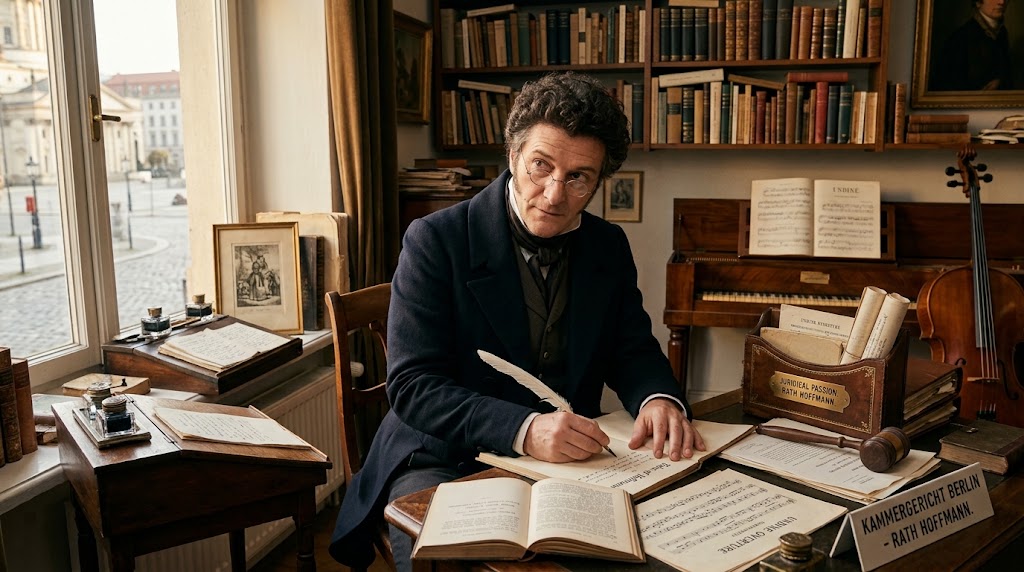
Despite his musical ambitions, Hoffmann studied law and built a legal career, eventually becoming a judge at the Kammergericht, Prussia’s highest court. During his years in Bamberg, however, he immersed himself in theater, conducting, composing, directing, and teaching.
He later returned to government service in Berlin while continuing to write and compose. Law remained his profession, but music and literature continued to shape his life.
Undine: From Story to Music
One of Hoffmann’s most important musical works was his opera Undine, based on a story by Friedrich de la Motte Fouqué. The story follows Undine, a water spirit who enters the human world through love for a knight. It blends the familiar with the mysterious, a world well suited to Hoffmann’s imagination.
The opera premiered in Berlin in 1816 and became his greatest success. The Undine Overture introduces its mysterious world through flowing melodies and dramatic moments, hinting at something just beyond the ordinary.
Undine brought together Hoffmann’s love of literature, music, and theater in a single work.
A Life That Doesn’t Fit in One Box
Hoffmann’s story shows how easily we reduce people to one word. We may call someone a lawyer, teacher, scientist, writer, or musician, as though one title could explain a whole life. Hoffmann was a jurist by profession, a writer by reputation, and a musician in his own right.
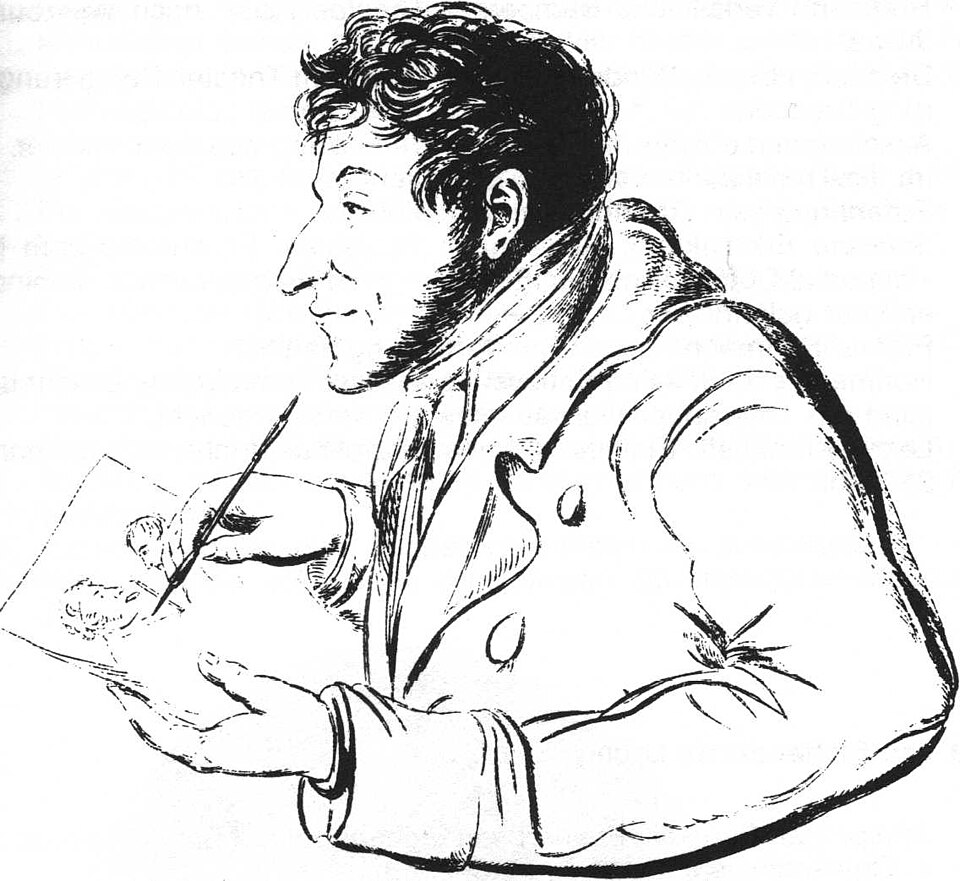 A self-portrait of E. T. A. Hoffmann
Hoffmann’s path also brings to mind Robert Schumann, who studied law before turning fully toward music. Unlike Schumann, however, Hoffmann continued working in law while pursuing literature and music.
Sometimes these different parts of life seem unrelated. At other times, they shape one another in ways we do not expect. Hoffmann’s life did not follow a simple path, but its different pieces eventually became part of the same creative world.
When Music Has More Than One Place
Charles Ives worked in insurance. Alexander Borodin was a chemist, physician, and teacher. E. T. A. Hoffmann worked in law. Yet music remained an essential part of each life.
Their stories remind us that a calling does not always follow a clear career path. Sometimes a gift grows alongside responsibilities, and different parts of life shape one another in unexpected ways.
“Do you see someone skilled in their work? They will serve before kings.” — Proverbs 22:29
Skill takes time. It grows through practice, patience, and the willingness to continue developing what we have been given. Hoffmann’s life reminds us that our work and our gifts do not always have to compete. They may take different paths, yet still become part of the same life.
Perhaps we do not need one perfect word to describe what we are called to do. Sometimes the story becomes clearer only as the different parts of our lives come together.
Read previous: Modest Mussorgsky the Civil Servant: Between Work and Music — Night on Bald Mountain