El Roi Meaning: The God Who Sees You in Your Hidden Places
There's a kind of loneliness that doesn't come from being alone. It comes from being unseen by the people who should see you. Used and then forgotten. Talked about, but never quite talked to.
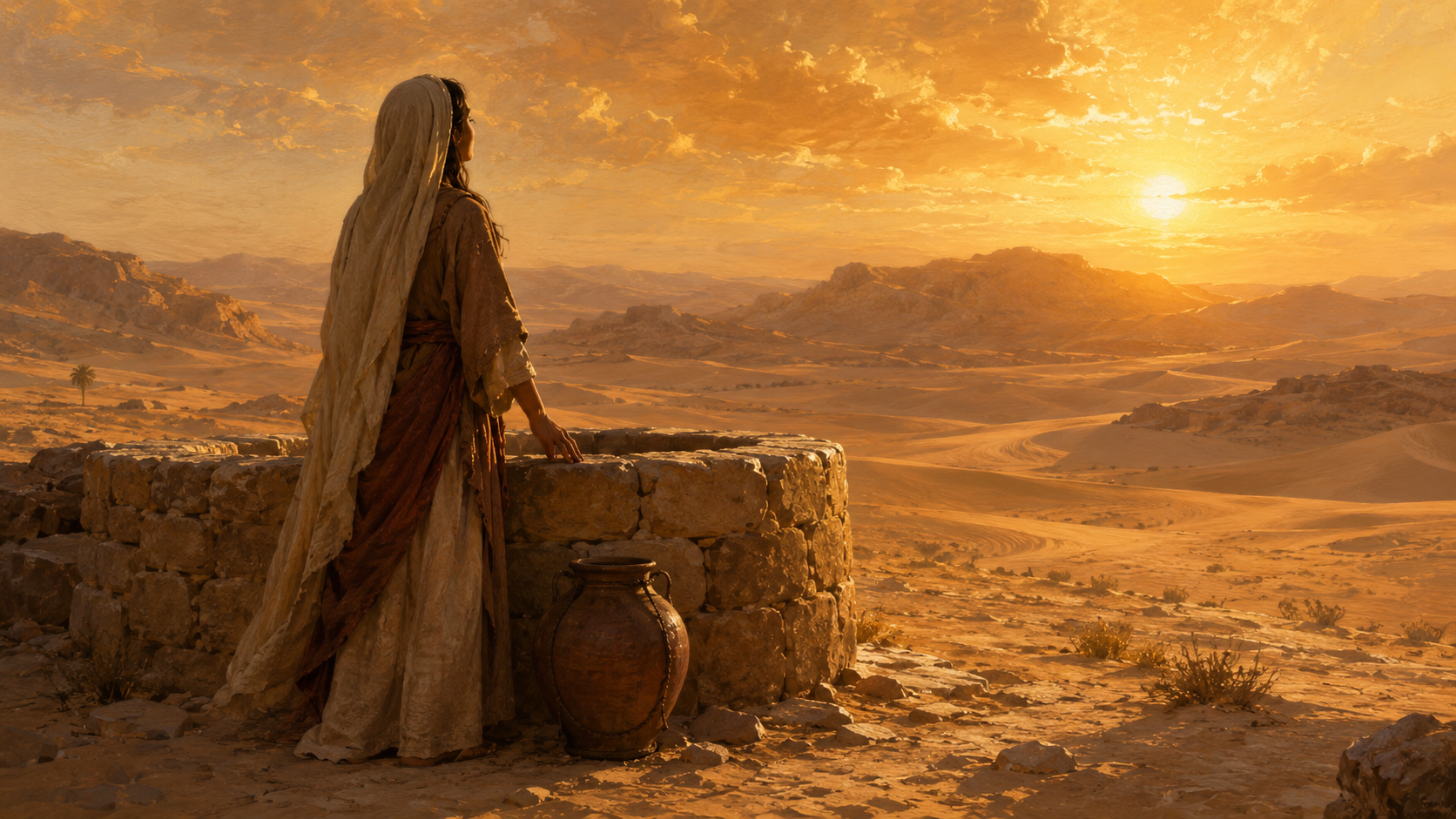
A pregnant Egyptian slave named Hagar knew that loneliness very well. She'd been handed over to a man who didn't love her. Mistreated by the woman who once owned her. And finally driven out into the wilderness with no one to mourn her absence. It was there, beside a desert spring, that she did something no one else in Scripture does. She gave God a name.
She called him El Roi — the God who sees me.
This is the only place in the entire Bible where this name shows up. It belongs to a foreign slave woman in crisis, and somehow it captures something about God's character that the great patriarchs never named for themselves. What did Hagar see in that moment? And what does El Roi mean for those of us who've felt invisible in our own wildernesses?
What does El Roi mean in Hebrew?
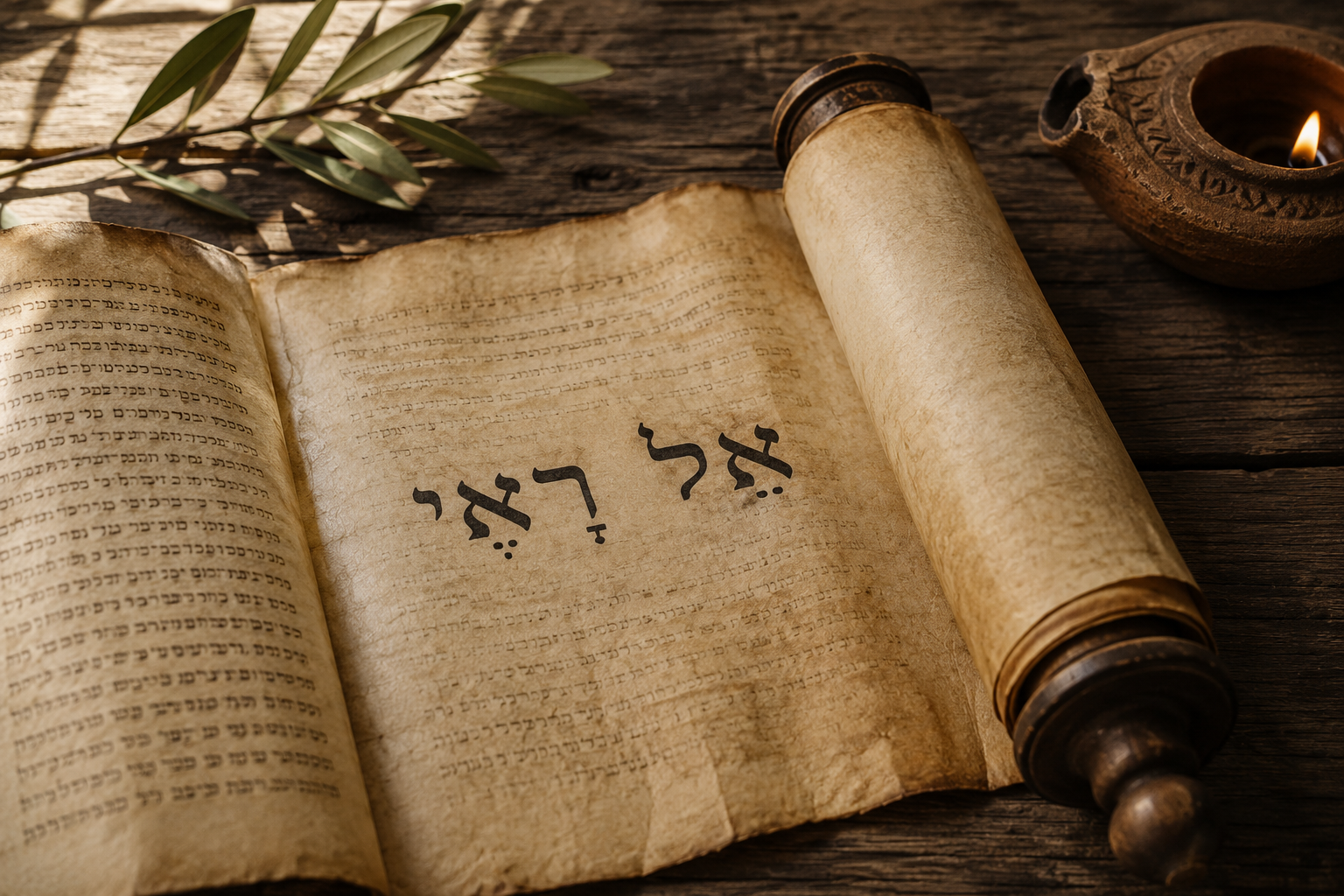
The name El Roi (אֵל רֳאִי) is built from two Hebrew words.
El (אֵל) is one of the oldest Semitic words for God, used throughout the Hebrew Bible. It carries connotations of strength, might, and divine power.
Roi (רֳאִי) comes from the verb ra'ah (רָאָה), meaning "to see," "to perceive," or "to look upon with attention." The form here is unusual. It can function as either active ("the seeing God") or passive ("the God who is seen"), and the ambiguity is probably intentional.
Translated together, El Roi means "the God who sees" or, more personally, "the God who sees me." Most modern translations render Genesis 16:13 with this personal sense. The NIV reads, "You are the God who sees me." The ESV translates it, "You are a God of seeing." The KJV preserves the older "Thou God seest me."
Here's what's worth pausing on. The Hebrew verb ra'ah isn't passive observation. In this context, it implies seeing with regard — to take notice of, to consider, to respond. When Hagar names God El Roi, she isn't simply saying God noticed she existed. She's saying God turned his attention toward her, considered her, and did something about it.
Where does El Roi appear in the Bible?
The name appears only once, in Genesis 16:13–14. But the story leading up to it gives the name its full weight. Here is the passage in three translations:
KJV (Genesis 16:13–14): "And she called the name of the LORD that spake unto her, Thou God seest me: for she said, Have I also here looked after him that seeth me? Wherefore the well was called Beer-lahai-roi."
NIV (Genesis 16:13–14): "She gave this name to the LORD who spoke to her: 'You are the God who sees me,' for she said, 'I have now seen the One who sees me.' That is why the well was called Beer Lahai Roi."
ESV (Genesis 16:13–14): "So she called the name of the LORD who spoke to her, 'You are a God of seeing,' for she said, 'Truly here I have seen him who looks after me.' Therefore the well was called Beer-lahai-roi."
The well itself was renamed to commemorate the encounter. Beer-lahai-roi means "the well of the Living One who sees me." Centuries later, Isaac would settle near this same well (Genesis 24:62, Genesis 25:11), as if returning to the place where his father's household first learned that God sees the forgotten.
The story behind the name: Hagar in the wilderness
To grasp what Hagar meant when she named God El Roi, you have to sit with where she was when she said it.
Hagar was an Egyptian slave in Abram and Sarai's household. When Sarai grew impatient waiting for God's promised heir, she gave Hagar to Abram as a surrogate wife. The arrangement was Sarai's idea. But the moment Hagar got pregnant, Sarai turned on her. The text says Sarai "dealt harshly" with her (Genesis 16:6). The same Hebrew word turns up elsewhere for the affliction of Israelites in Egyptian slavery. The reversal is striking. The future mother of Israel was inflicting on her Egyptian servant the same kind of cruelty her descendants would one day flee.
So Hagar ran. She was pregnant, alone, and heading back toward Egypt by way of the wilderness of Shur. She had nothing. No protector. No provisions. No future. And somewhere along that desert road, near a spring of water, the angel of the LORD found her.
What's remarkable about the conversation that follows is how God speaks to her. He calls her by name — "Hagar, servant of Sarai" (Genesis 16:8). He asks her two questions. He listens to her answer. And he gives her a promise about her son that mirrors, in its language, the promises given to Abram himself. Her descendants will be too numerous to count.
He sees her. Not in passing. He sees her circumstances, her grief, her future, and her worth.
Hagar's response is the first time in the Hebrew Bible that a human being assigns God a name. The patriarchs encountered God and built altars. Hagar encountered God and named him. And the name she gave wasn't about his power or his glory or his wrath. It was about the fact that he had looked at her.
 Why El Roi matters: three theological insights
1. God's seeing isn't passive — it's personal pursuit
When the text says God "saw" Hagar, the language carries the same weight as Exodus 2:25, where God "saw the Israelites and was concerned about them" before raising up Moses. Divine seeing in Scripture is always the prelude to divine action. It is never neutral observation.
El Roi doesn't see you the way a security camera sees you. He sees you the way a parent sees a hurting child across a crowded room — and then moves toward them.
2. God sees the people the world overlooks
It's no accident that the first person in Scripture to name God is a foreign, female, enslaved, pregnant runaway. Hagar had no social standing, no covenant claim, no family advocate. By every measure that mattered in the ancient world, she was nobody.
And yet she's the one to whom God reveals this aspect of his character. The pattern repeats throughout Scripture. God consistently shows up most visibly for the people the world has rendered invisible. Hagar is the first in a long line that includes Leah, Ruth, Hannah, the woman with the issue of blood, the Samaritan woman at the well, and countless others.
If you feel forgotten by everyone who should remember you, El Roi is the name of God that meets you there.
3. To be seen by God is to be given a future
When God saw Hagar, he didn't just acknowledge her pain. He gave her a promise and a direction. He sent her back into a hard situation. But he sent her back knowing her life — and her son's life — mattered to him.
The God who sees is the God who's already at work in the very circumstances you're trying to flee. Sometimes being seen by El Roi means receiving the strength to return, not the permission to escape.
El Roi in the New Testament: when seeing becomes incarnation
The specific name El Roi doesn't appear in the New Testament. But the theology of it runs through every page. Jesus consistently saw the people no one else saw.
He saw Zacchaeus in the tree (Luke 19:5). He saw the widow dropping her two coins into the temple treasury (Mark 12:42–43). He saw Nathanael under the fig tree before they had ever met (John 1:48). He saw the woman who had been bleeding for twelve years — the one who hoped to slip through the crowd unnoticed (Mark 5:25–34).
The most striking parallel might be Jesus's encounter with another outsider woman at another well. The Samaritan woman in John 4. Like Hagar, she came to draw water alone. Like Hagar, she was met by God in a place she didn't expect him. Like Hagar, she walked away naming him for what she'd experienced: "He told me everything I ever did" (John 4:39). The God who saw Hagar in Genesis 16 is the same God who saw her, in flesh, beside Jacob's well.
When you feel invisible: praying to El Roi today
There's a particular kind of comfort in the name El Roi that other names of God don't give in the same way. El Shaddai speaks of God's power. Jehovah Jireh speaks of his provision. El Roi speaks of his attention.
When you're walking through a season where nobody seems to notice — where your work is unacknowledged, your grief is unwitnessed, your loneliness is a private weight — El Roi is the name to pray. It's the name that says: my situation is not hidden from God. He sees what others miss. He sees what I can't even say out loud. And his seeing is the beginning of his help.
A prayer to El Roi
El Roi, God who sees me, thank you that there's no wilderness so far that you don't find me there. Thank you that you saw Hagar when no one else did, and that you see me now in the places I've learned to call invisible. Help me to trust that being seen by you is enough — that your attention isn't passive but active, not distant but near. Where I feel forgotten, remind me that you are the Living One who sees. In the name of Jesus, who became flesh so that we might see the one who has always seen us, Amen.
Frequently asked questions about El Roi
Is El Roi a name God called himself, or a name someone called God?
El Roi is a name Hagar gave God after her wilderness encounter in Genesis 16:13. It is one of the only names of God in Scripture that comes from a human being naming God in response to an experience of him, rather than God revealing the name himself.
How do you pronounce El Roi?
El Roi is pronounced el ROH-ee (with the "ee" sound at the end, like the word "see"). It is sometimes transliterated as El Ro'i with an apostrophe marking the Hebrew guttural.
Why does El Roi only appear once in the Bible?
While the specific compound name El Roi appears only in Genesis 16:13, the underlying idea — that God sees those who are overlooked — runs throughout Scripture. The single appearance doesn't limit the truth; it just marks the moment a particular outsider gave the truth its name.
What is the difference between El Roi and other names of God?
El Roi is one of many compound El names in Hebrew. Others include El Shaddai (God Almighty), El Elyon (God Most High), and El Olam (Eternal God). Each El name highlights a different attribute. El Roi specifically highlights God's attentive, personal seeing.