Everyday Foods That Support a Healthy Liver
Simple Choices for Caring Well for the Body You've Been Given
Some mornings your body just feels heavier than usual. You wake up tired, digestion drags, and your energy is slow to return. Maybe you start to wonder whether your liver could use a little more care.
The liver is one of the body's hardest-working organs — processing nutrients, supporting metabolism, filtering out harmful substances, and helping manage fats, sugars, and proteins. But it rarely sends loud warning signs. Many people only start paying attention after a routine blood test shows elevated liver enzymes or signs of fatty liver. For people of faith, there's a quiet motivation underneath all of this: the body isn't merely ours to use up, but a gift entrusted to us, worth tending with a little wisdom.
The encouraging part is that supporting liver health doesn't require extreme detoxes or expensive supplements. Major health organizations keep pointing back to the basics — a balanced diet, a healthy weight, regular movement, limited alcohol, and caution with medications. The American Liver Foundation and others consistently point toward a Mediterranean-style pattern: plenty of vegetables, fruit, whole grains, legumes, olive oil, nuts, and fish, rather than special "detox" plans. For most Americans, that can begin with familiar foods already in the kitchen.
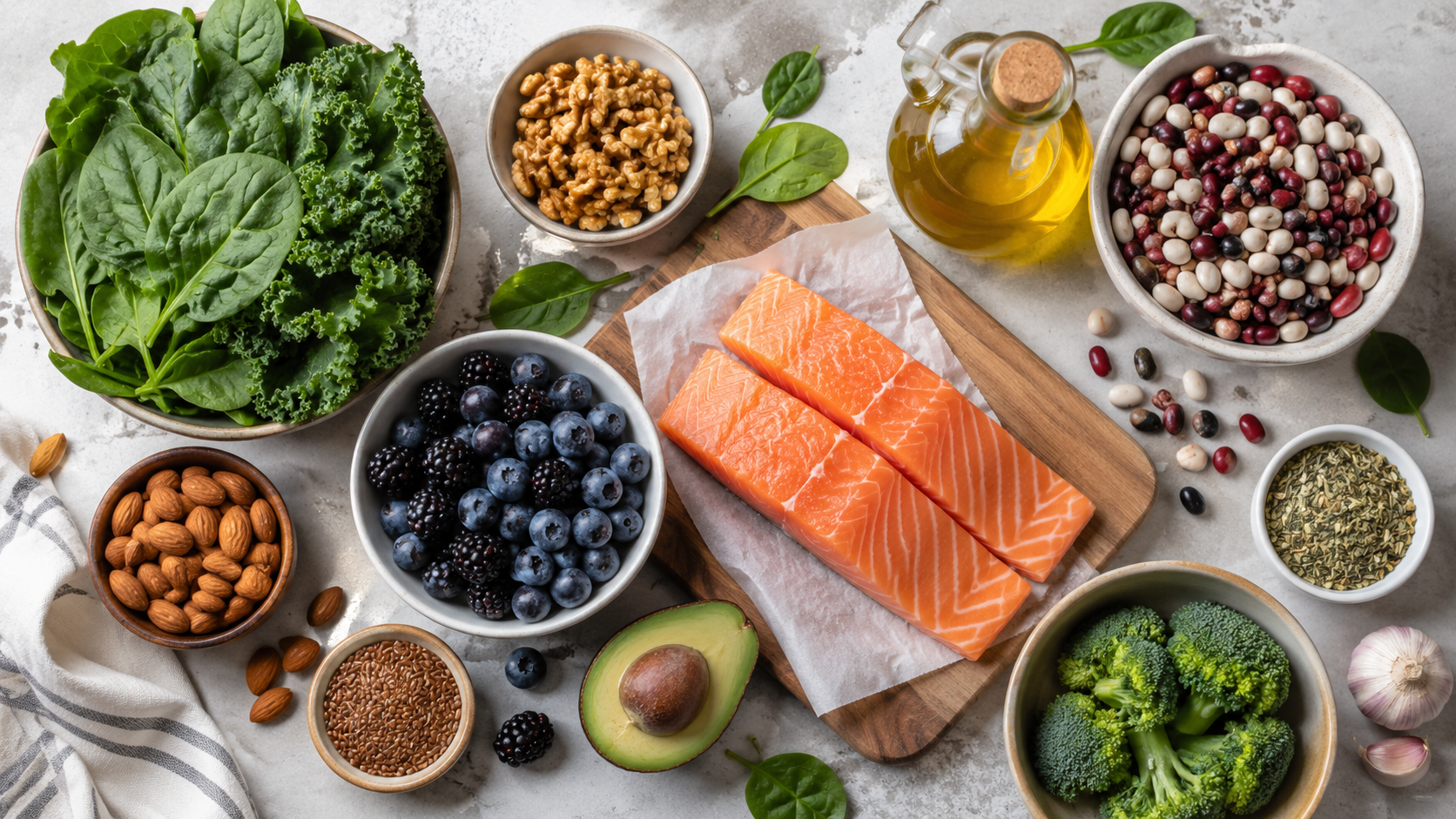 Leafy greens, berries, nuts, olive oil, salmon, and beans are everyday foods that can be part of a balanced diet for supporting liver health.
Coffee
Coffee is woven into American daily life, and it may be one of the friendliest things on this list for your liver. Research links regular coffee intake with better liver enzyme levels and a lower risk of some chronic liver conditions, and several liver specialists actually recommend around three to four cups a day for people concerned about fatty liver.
The catch is how you drink it. Black coffee, or coffee with a splash of low-fat or plant milk, is a world apart from a large drink loaded with sugar, syrup, and whipped cream — the American Liver Foundation specifically warns that the added sugar and fatty cream can undo the benefit. A simple cup in the morning can fit a liver-conscious routine, but it isn't medicine, and anyone sensitive to caffeine should be careful.
Oatmeal and Whole Grains
Whole grains bring fiber that supports digestion, blood-sugar control, and overall metabolic health — and a Mediterranean-style pattern built on 100% whole grains is widely recommended for people concerned about fatty liver. Good options include oatmeal, brown rice, whole-wheat bread, quinoa, barley, and low-sugar whole-grain cereals. A bowl of oatmeal with berries and a few nuts is a far better start than a sugary pastry or a heavily processed cereal.
Fatty Fish
Salmon is familiar in American homes and restaurants, and it's rich in protein and omega-3 fatty acids that support heart and metabolic health. For the liver, the bigger win is meal structure: choosing baked or grilled fish over fried food or processed meats lowers the overall load of saturated fat and excess calories. Sardines, trout, tuna, and mackerel are good options too. Lean toward baking, grilling, steaming, or a light pan-sear in a little olive oil.
Leafy Greens
Greens are some of the easiest additions to a liver-friendly plate. Spinach, kale, romaine, arugula, collards, and Swiss chard all bring fiber, vitamins, minerals, and protective plant compounds. You don't need to overhaul your diet — just make vegetables a normal part of the plate. Stir spinach into scrambled eggs, build a salad on romaine or kale, drop a handful of greens into soup, blend spinach into a smoothie, or serve grilled chicken or salmon over greens.
Berries and Other Fruit
Blueberries, strawberries, raspberries, and blackberries are easy to fold into breakfast, snacks, and desserts, and they bring fiber and antioxidants along with natural sweetness — which makes it easier to cut back on added sugar. Try them on oatmeal, in plain Greek yogurt, blended into smoothies, or in place of cookies after dinner. (One caution worth noting: because fruit sugar in excess can also burden the liver, whole fruit is the goal, not sugary fruit juices.)
Beans, Lentils, and Plain Greek Yogurt
This is where affordable, everyday proteins shine. Beans and lentils — black beans, pinto, chickpeas, kidney, white beans, lentils — deliver plant protein, fiber, and minerals, and they slot easily into chili, soups, salads, and grain or burrito bowls. With canned beans, watch the sodium and rinse them first. Plain Greek yogurt is another familiar, protein-rich option for breakfast or a snack; the key is choosing plain over the heavily sweetened versions, then adding your own berries, walnuts, or a small drizzle of honey.
Healthy Fats: Olive Oil and Nuts
Olive oil is the backbone of the Mediterranean diet so often recommended for fatty liver. Using it well doesn't mean pouring it on everything — it means swapping a healthier fat in for less healthy ones: roasting vegetables, dressing a salad, a light sauté, or a drizzle over beans or fish. Nuts and seeds — almonds, walnuts, pistachios, chia, flax, pumpkin seeds — round this out as a far better snack than chips or candy. Just keep portions in mind; nuts are nutritious but calorie-dense, and a handful is usually enough.
A Simple Liver-Friendly Day
Supporting liver health isn't about one magic food; it's about the overall pattern. A realistic American-style day might look like oatmeal with blueberries, walnuts, and black coffee for breakfast; a grilled salmon or chicken salad with leafy greens, beans, and olive-oil dressing for lunch; plain Greek yogurt with berries or a small handful of nuts as a snack; and baked salmon with roasted vegetables and brown rice or lentils for dinner. Late at night, herbal tea and a small piece of fruit beats alcohol or sugary snacks. Simple, familiar, realistic — no rare ingredients or strict dieting required.
What to Limit
What you reduce matters as much as what you add. For the liver, the biggest concerns are heavy alcohol use, sugary drinks, frequent fast food, highly processed snacks, excess refined carbohydrates, large amounts of saturated fat, and late-night overeating. The American Liver Foundation notes that frequent snacking, sugary drinks, processed meat, and added sugars — especially fructose — tend to make fatty liver worse, and that alcohol should be avoided when liver disease is present. No meal has to be perfect; it's the everyday pattern that counts.
The Bottom Line
Foods that support liver health don't have to be unusual or expensive. For most of us, a liver-conscious diet can be built from the familiar — coffee, oatmeal, salmon, leafy greens, berries, beans, nuts, olive oil, and plain Greek yogurt. The goal isn't a short-term detox; the liver already has its own detox system. What it needs from us is less overload and more steady support through balanced meals, movement, sleep, and moderation.
If you have abnormal liver test results, ongoing fatigue, abdominal discomfort, yellowing of the skin or eyes, or concerns about alcohol or medication safety, please talk with a healthcare professional. But for everyday care, small choices add up: a better breakfast, more vegetables, less sugar, a lighter dinner, a little more consistency. Caring for the body we've been given is built one ordinary meal at a time.
Note: This article offers general health information, not medical advice. If you have or suspect liver disease, consult a qualified healthcare professional before making significant dietary changes.