High Cholesterol: Can Changing Just What You Eat Really Make a Difference?
If you live in the U.S. long enough, there's a good chance a checkup will hand you the words "your cholesterol is high." The first thoughts are usually the same: Surely I don't need medication yet. Couldn't I fix this with food? What should I even be eating here to manage it?
High cholesterol often has no obvious symptoms, which makes it easy to brush off. But blood-vessel health doesn't go bad overnight. It's usually a signal that builds slowly — from daily meals, frequent eating out, late-night snacks, sweet drinks, and rich menus stacking up over time. So can changing only what you eat actually move the needle? It varies from person to person, but realistic changes to eating habits alone often shift both lipid numbers and how you feel day to day. The key isn't an extreme diet; it's choosing a little more wisely within the food Americans actually eat.
Why High Cholesterol Comes Easily on an American Diet
There are plenty of options here, but vessel-taxing foods are also everywhere. Breakfast easily means a bagel with cream cheese, sugary cereal, donuts, muffins, sausage, and bacon. Lunch leans toward burgers, fries, pizza, sandwiches, chicken tenders, tacos, and burritos. Dinner is often whatever's convenient — frozen meals, pasta, steak, cheesy dishes, takeout. Add sweet coffee drinks, soda, cookies, and ice cream, and saturated fat, trans fat, refined carbs, and sugar add up fast.
Managing high cholesterol doesn't mean "no American food." The point is to swap what you eat often, little by little.
"I Didn't Quit Burgers — I Changed How I Ordered"
A man in his 50s — let's call him A — got back high triglycerides at a checkup. Rather than starting medication right away, his doctor suggested a few months of dietary change first. A's changes were simpler than you'd think. With a burger, he chose a side salad instead of fries. He drank water or unsweetened iced tea instead of soda. On his morning bagel, he added avocado or egg rather than a thick layer of cream cheese. For lunch, he swapped processed-meat sandwiches for turkey, chicken, tuna, or veggie-heavy options. At dinner, he had more nights of grilled fish, chicken breast, salad, and brown rice instead of pizza. He didn't quit alcohol either — he just cut back on the fried chicken, nachos, and sausage he used to eat alongside the beer.
A few months later, his numbers were settling, his weight had eased down naturally, and — most of all — he felt "less heavy, and less sleepy in the afternoons." The lesson is clear: managing cholesterol isn't perfect self-denial. It's nudging everyday choices in a slightly healthier direction.
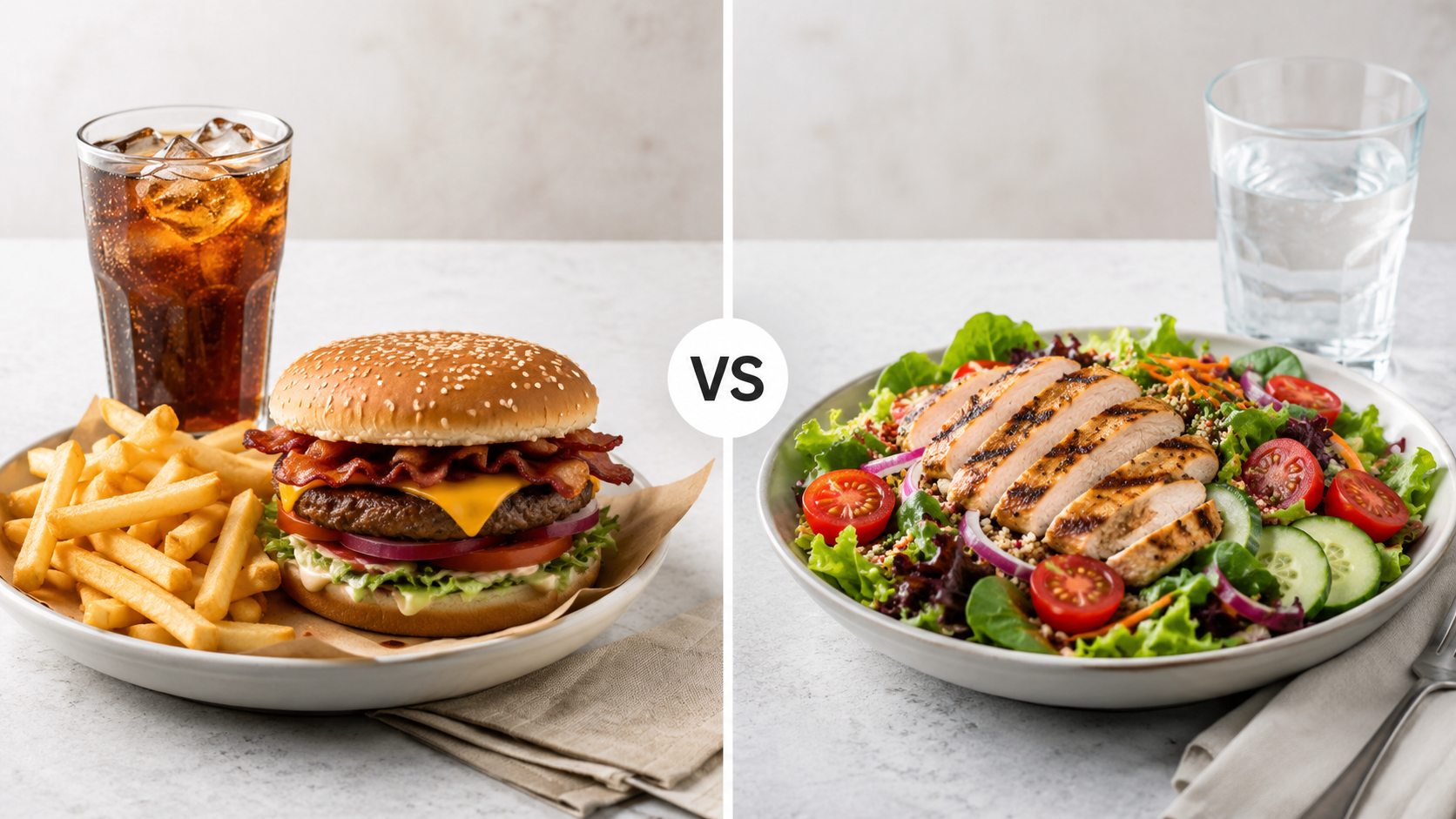 Choosing a grilled chicken salad and water instead of a burger, fries, and soda is a simple example of how small food swaps can support better cholesterol and heart health.
The Key Is "Swap," Not "Forbid"
People often ask, "What foods are good for high cholesterol?" There are helpful foods, for sure. But in American life, what you swap for what matters more than any single food. Two things drive it: cutting back on vessel-taxing foods, and slowly adding more of the helpful ones.
You can start with foods easily found at any U.S. store. Fish like salmon, tuna, sardines, and mackerel are good baked or oven-roasted rather than fried (for tuna salad, go light on mayo and use a little Greek yogurt or olive oil). Unsalted nuts beat chips and cookies as a snack — about a handful a day, and raw or unsalted over salted or honey-roasted. Oats and whole grains are the most realistic swap for an American breakfast, and there's a specific reason oats help: their LDL-lowering effect comes from a soluble fiber called beta-glucan. The U.S. FDA recognizes that about 3 grams of oat beta-glucan a day can help lower LDL cholesterol and cardiovascular risk. Just choose plain oats over sweetened instant versions and let fruit add the sweetness; likewise whole-grain bread over white, brown rice over white, whole-wheat pasta over regular. Beans, lentils, and tofu are filling and bring plant protein plus fiber, so if you eat meat daily, try swapping a few meals a week for bean chili, lentil soup, or a chickpea salad. Vegetables and salads are the easiest add — but a salad loaded with bacon, croutons, cheese, and creamy dressing isn't doing you favors. Build on leafy greens, go light with a vinaigrette, and ask for "dressing on the side" when eating out. And don't fear fat outright — the type is what matters. Lean on olive oil and avocado in place of butter, margarine, and cream sauces, keeping in mind that even these are calorie-dense.
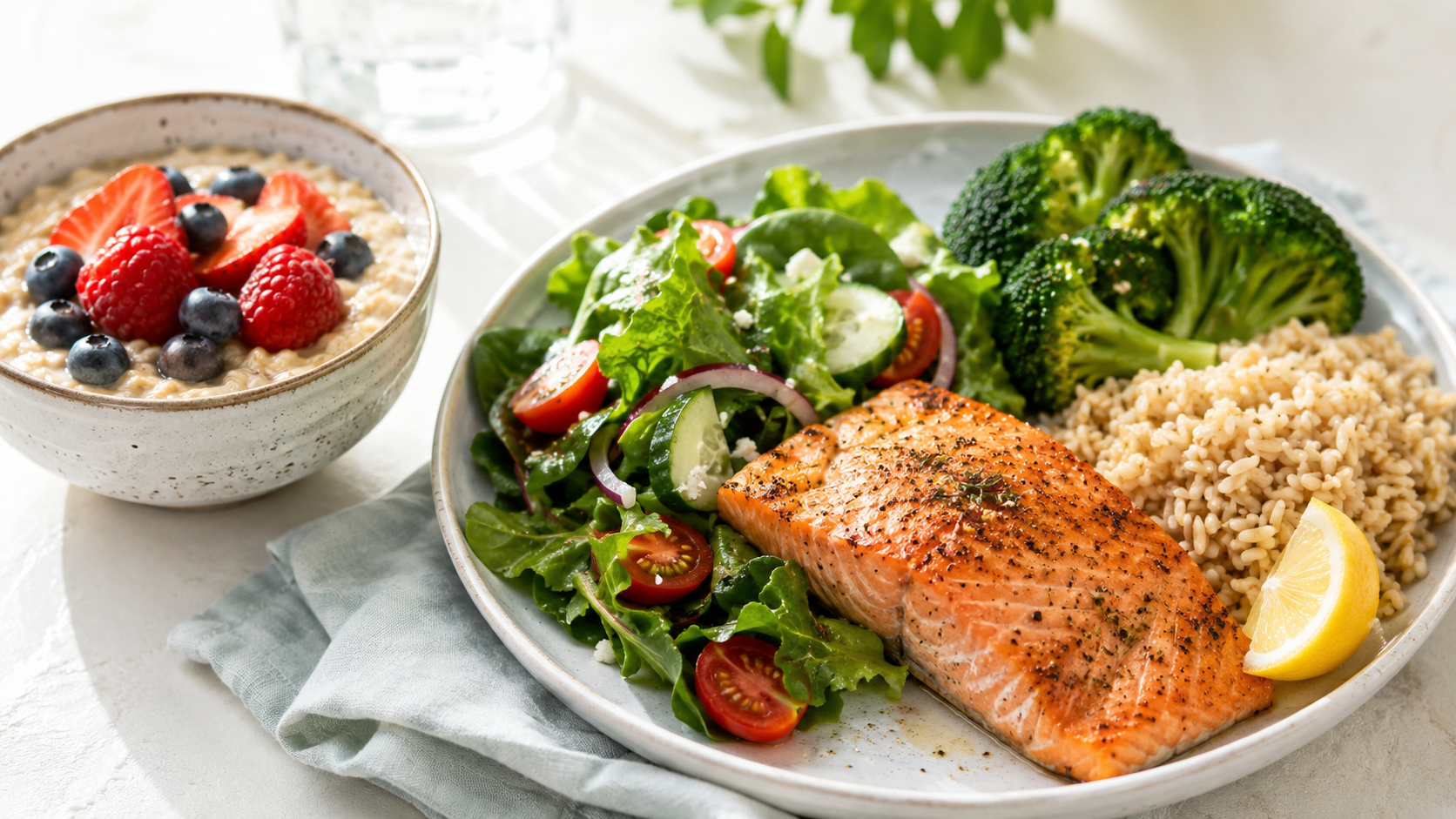 A balanced, heart-healthy meal with baked salmon, whole grains, fresh vegetables, and oatmeal with berries shows how simple food choices can support better cholesterol management.
Foods Worth Cutting Back
Knowing what to reduce matters as much as what to add: processed meats (bacon, sausage, hot dogs), fried foods (fried chicken, nuggets, fries), sweet bakery items (donuts, muffins, cookies, cake), dishes heavy in cream cheese, butter, and cheese, pizza, nachos, cream pasta, sweet coffee drinks and soda, and late-night ice cream or chips. This isn't "never again" — it's frequency and portion. Move a daily habit to once or twice a week, downsize large portions, switch drinks to unsweetened, and start there.
Eating Out and a Sample Day
Small swaps work when eating out, too. With a burger, a side salad or fruit cup instead of fries, and unsweetened iced tea instead of soda. Sandwiches on whole-grain bread with turkey, grilled chicken, or tuna, and mustard instead of mayo. For Mexican, a burrito bowl over fried tacos, brown rice over white, beans and grilled chicken over heavy meat. For pizza, a veggie option and one or two slices with a salad rather than three or four. At a café, an Americano, unsweetened tea, or a latte with less syrup instead of a frappuccino.
A day might look like: plain oatmeal with blueberries, a little banana, and walnuts — or whole-grain toast with avocado and a boiled egg — for breakfast; a grilled chicken salad, salmon bowl, turkey sandwich on whole grain, or a bean burrito bowl for lunch; oven-baked salmon with brown rice, broccoli, and salad, or lentil soup, tofu-and-vegetable stir-fry, or chicken breast with roasted vegetables for dinner; and unsalted nuts, Greek yogurt, an apple, carrot sticks, hummus, or berries for snacks.
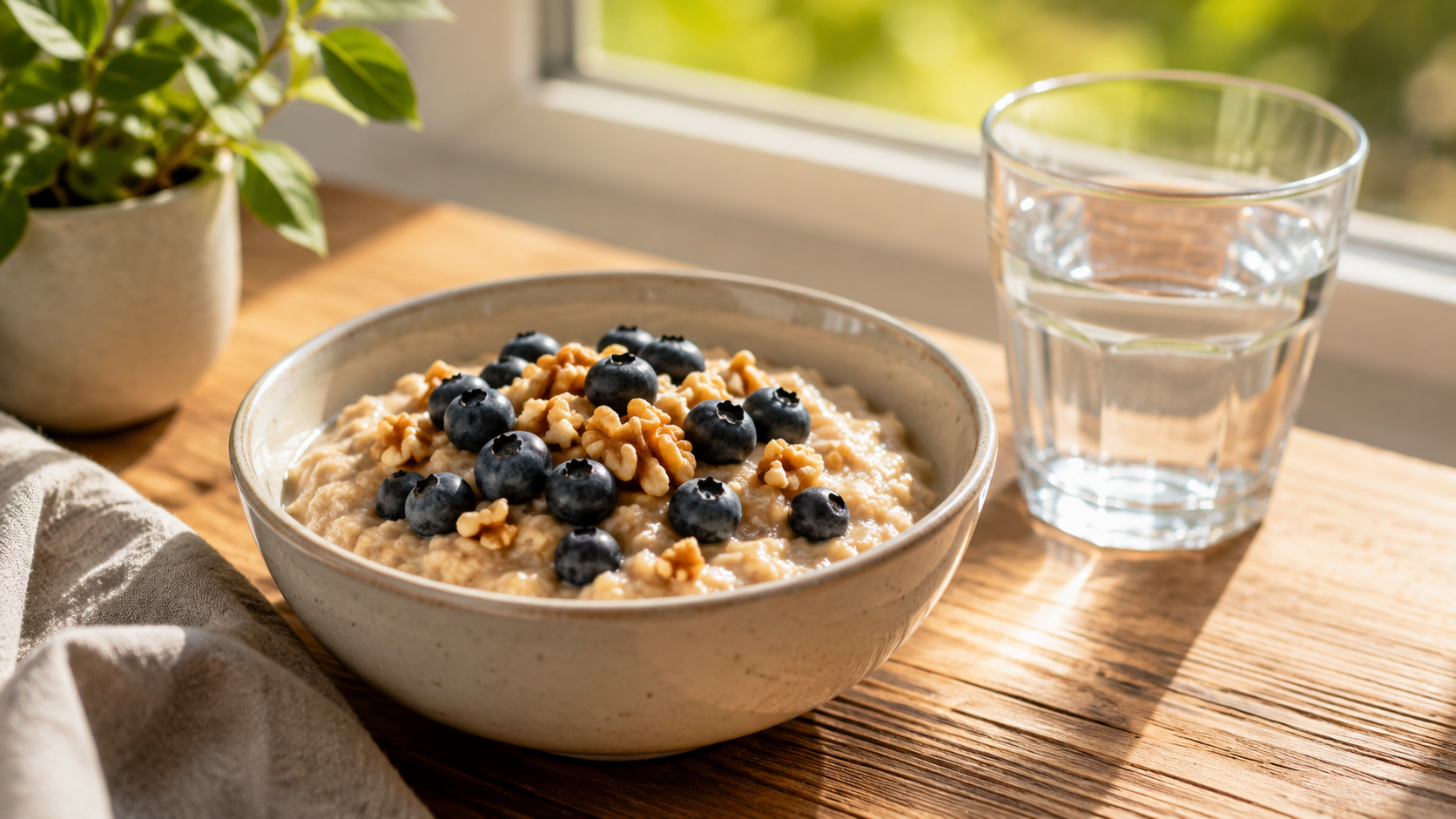 Starting the day with oatmeal, berries, walnuts, and water is a simple way to add more fiber and heart-healthy foods to your morning routine.
Diet Still Matters Even on Medication
Taking cholesterol medication doesn't mean you can ignore your diet. Medication is an important tool, but numbers are hard to keep stable if eating habits stay poor. Diet doesn't replace medication — it supports its effect and protects vessel health alongside it. If you're already on medication or your LDL or triglycerides are high, it's important to adjust your diet in consultation with your doctor.
A Closing Word
High cholesterol doesn't appear out of nowhere. It's a signal of habits built up over a long time, which is why managing it starts not with a crash diet but with small daily adjustments — a salad instead of fries, an unsweetened drink instead of a sweet one, whole-grain bread instead of white, an egg or avocado instead of bacon. Stack those choices and you have a realistic path to protecting your heart.
Our bodies are a gift entrusted to us by God. But one thing is worth saying plainly: health isn't the point of life — it's a tool for loving God and serving others, and our worth and our salvation don't hang on a cholesterol number. If you live with chronic illness, or simply can't always manage an ideal diet, that's not a sign of weak faith. So let caring for your body begin not from fear or guilt, but from gratitude and wisdom — starting at today's table, with whatever you can manage.
Note: This is general health information. If your cholesterol is high or you're already on medication, please consult a doctor or qualified professional based on your own health situation.