Mozart’s Clarinet Quintet in A Major: The Art of Listening to One Another
When you listen to a piece of music, which instrument catches your attention first? Maybe it’s the one carrying the melody, the brightest sound, or a high note that catches your ear. But there’s more to hear than any one instrument alone.
Who begins a musical idea? Who answers or takes it somewhere new? In this series, we’ll listen to how instruments exchange ideas and bring their different voices together to create something beautiful.
A Conversation Between Clarinet and Strings
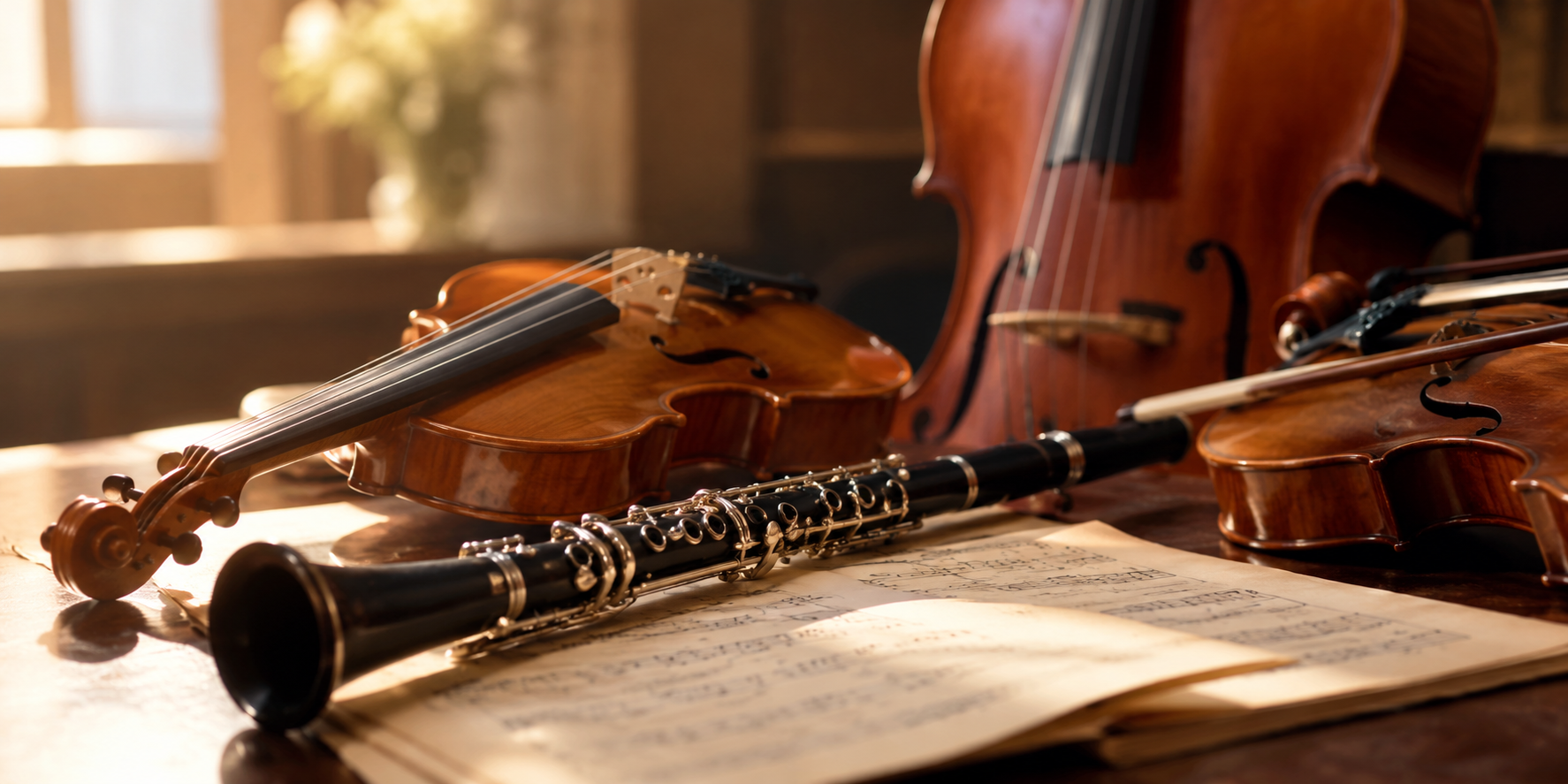
Wolfgang Amadeus Mozart (1756–1791) composed his Clarinet Quintet in A Major, K. 581 in 1789. It brings together a clarinet and a string quartet: two violins, a viola, and a cello.
The clarinet has a warm, singing tone that blends naturally with the strings. Sometimes it carries the melody; at other times, the strings seem to answer, echo, or extend its ideas. The strings do more than accompany the clarinet; they help shape the music as it unfolds.
Four Movements, Four Musical Moods
The quintet has four movements, each with its own character.
The first movement features an elegant, flowing melody, with the clarinet and strings sharing ideas and sometimes blending into a single musical texture.
The second movement is more intimate and lyrical, while the third brings a lighter, dance-like feel with contrasting sections.
The final movement presents a theme followed by variations. Listen for how changes in rhythm, texture, and expression give the same musical idea new character.
Listening Is Part of Making Music
The beauty of this quintet lies in how the five instruments work together. Each has its own role, whether leading the melody, responding, or quietly supporting the whole.
Our conversations are richer when we listen with the same care. We don’t have to think alike to understand one another; we simply need to make room for each other’s voices.
“Everyone should be quick to listen, slow to speak and slow to become angry.” — James 1:19
Mozart’s quintet offers a musical example of this kind of listening. Each instrument keeps its own voice, yet the music becomes richer through the way they respond to one another.
In When Instruments Talk to Each Other, we’ll explore how instruments share melodies, respond to one another, and create something together. Sometimes, the beauty lies not in one voice alone, but in what happens when they meet.
Read previous: Maurice Ravel’s Le Tombeau de Couperin: Remembering Friends Through Music