Music & Architecture (Part 1): Gothic Cathedrals and Counterpoint
Some music does not simply move forward in time.
It seems to rise.
Listening to contrapuntal music can sometimes feel like entering a Gothic cathedral. The experience is not only emotional, but structural.
This article explores the relationship between Gothic architecture and musical counterpoint, examining how both systems are built on layered structure, vertical thinking, and the interaction of independent lines within a unified whole.
Verticality: Stone Reaching Toward Light
Gothic architecture was born from a singular, almost obsessive desire to reach the heavens. This “verticality” is shared by both the great cathedrals of Europe and the musical art of counterpoint.
Between the 12th and 14th centuries, architects discovered rib vaults and flying buttresses—structural skeletons that allowed stone ceilings to rise to extraordinary heights.
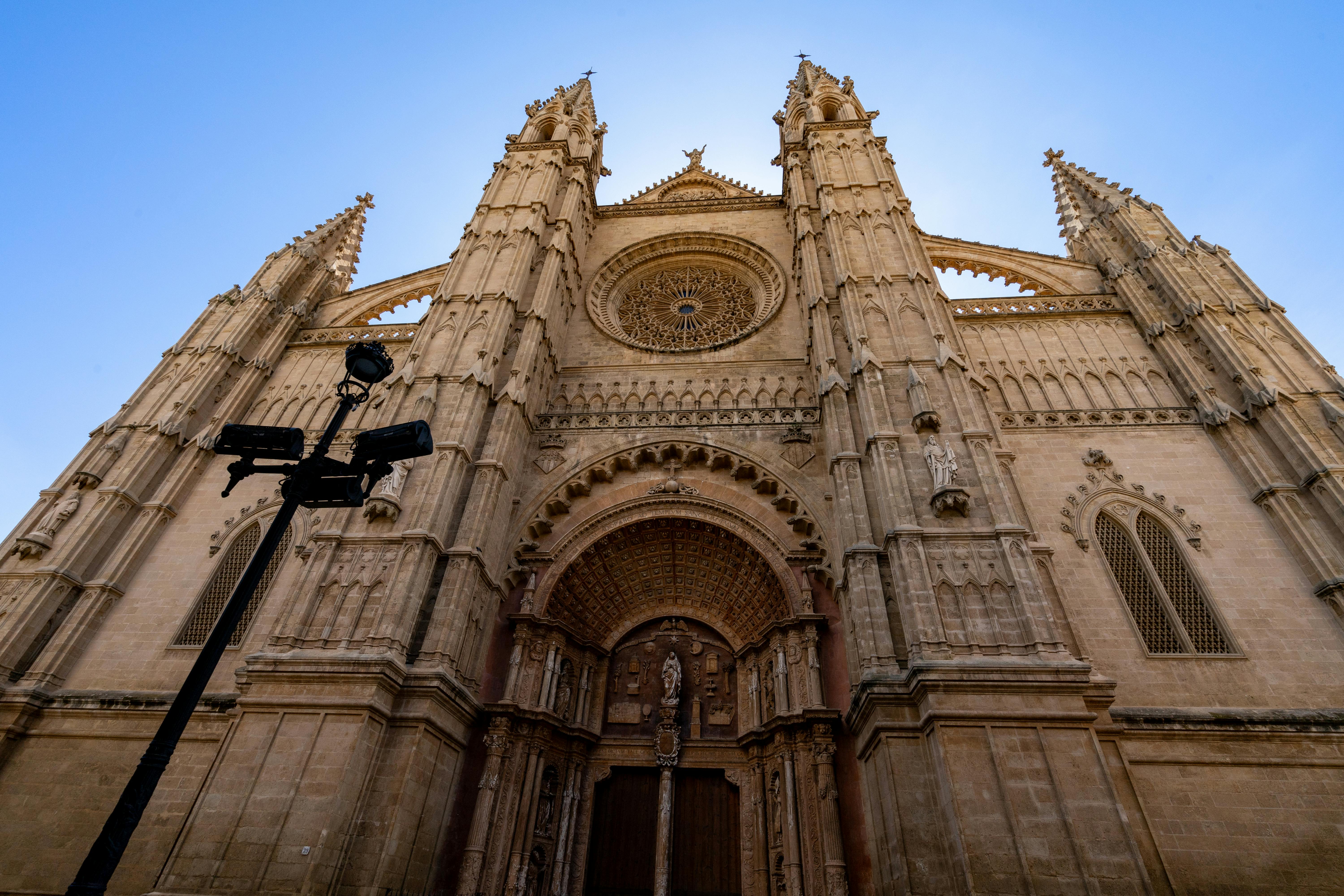 Gothic cathedral reaching toward the sky
Entering the Cathedral: Movement Through Space
Step inside a Gothic cathedral and your gaze rarely stays still. It moves upward along clustered columns, across branching ribs, and through shafts of light filtering through stained glass.
There is no single focal point — only a continuous sense of movement suspended between stone and light.
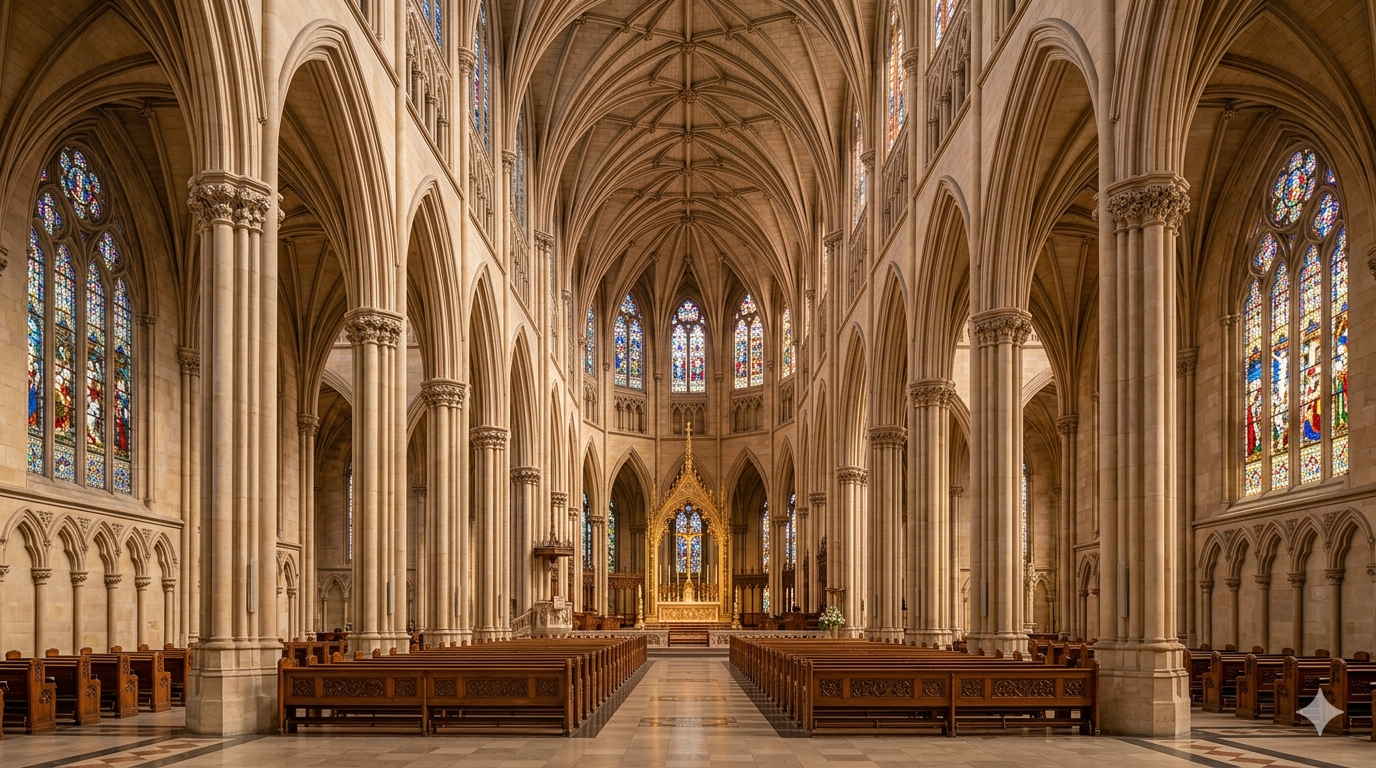 The interior of a Gothic cathedral
Counterpoint: Music as Vertical Structure
As Gothic cathedrals rose across Europe, composers at the Notre Dame School in medieval Paris were doing something similar with sound, layering independent melodic lines into increasingly complex polyphony.
This idea later reached its fullest form in the fugues of Johann Sebastian Bach. In the score below, notice how he builds musical architecture by stacking independent voices like invisible bricks.
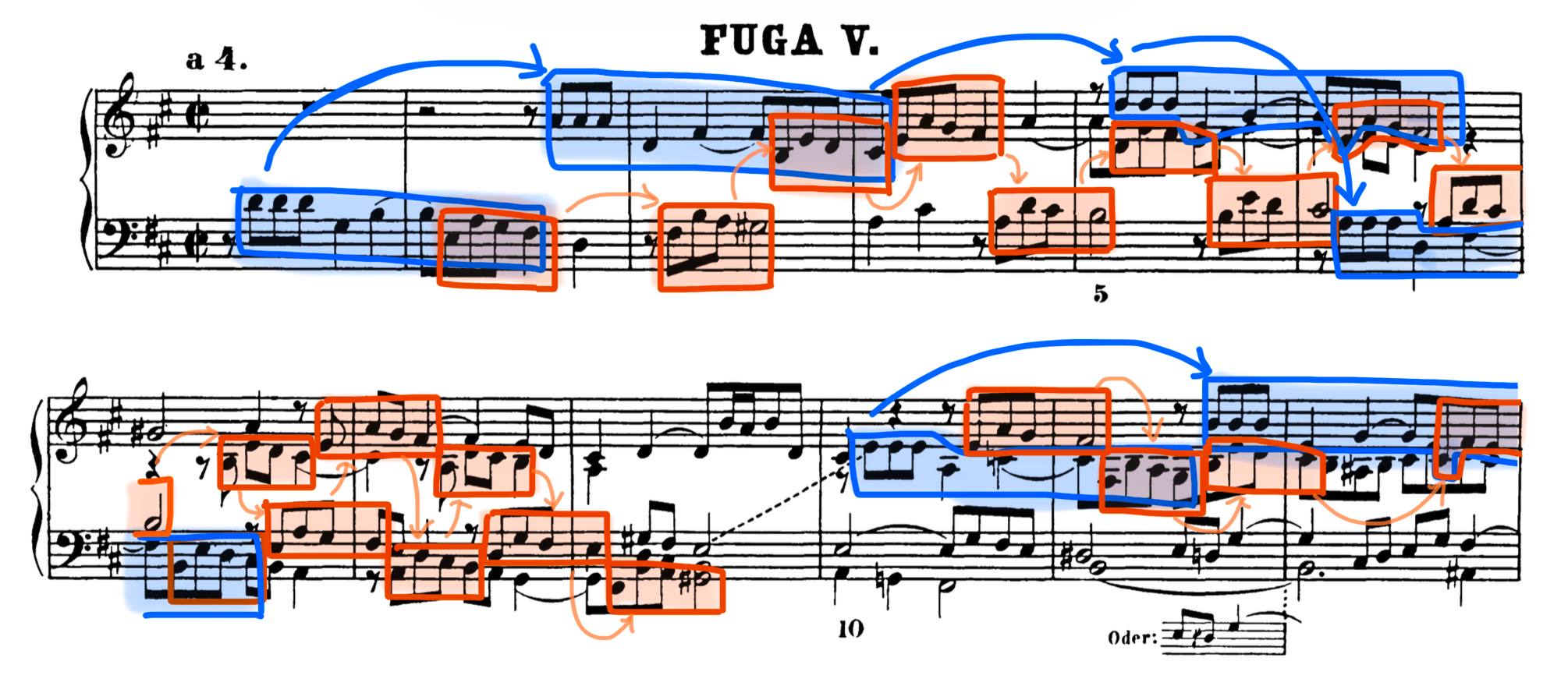 Bach – Prelude & Fugue No. 5 in D major, BWV 874
In a fugue, a theme is introduced, answered, and then woven across different voices. Each line moves in its own direction horizontally, yet all are precisely aligned at every moment vertically. It is a system that feels both free and tightly ordered, like a structure suspended in sound.
The video below shows this contrapuntal structure unfolding through the score and performance. Notice the final cadence, where all voices converge like the apex of a Gothic arch.
Structure as Beauty
What connects Gothic cathedrals and counterpoint is not surface similarity—it is a shared logic of construction. Both are built from many independent parts that are beautiful on their own, yet combine into a unified whole.
In both cases, structure is not hidden behind the beauty; it is what creates beauty.
Previously: [Music & Architecture (Introduction): Hearing Structure]