Radical by David Platt: Are We Following Jesus or the American Dream?
You're in the parking lot after church. The worship was good. The sermon covered something about grace. And yet, somewhere in the drive home, you feel it — a kind of low static, like something true is just out of reach.
You've done everything right. The small group. The quiet time — most mornings. You give when the plate comes around. But there's a gap you can't name between the life you're living and the life you sense you were made for. It's not dramatic. It doesn't feel like a crisis. It just feels like a costume that almost fits.
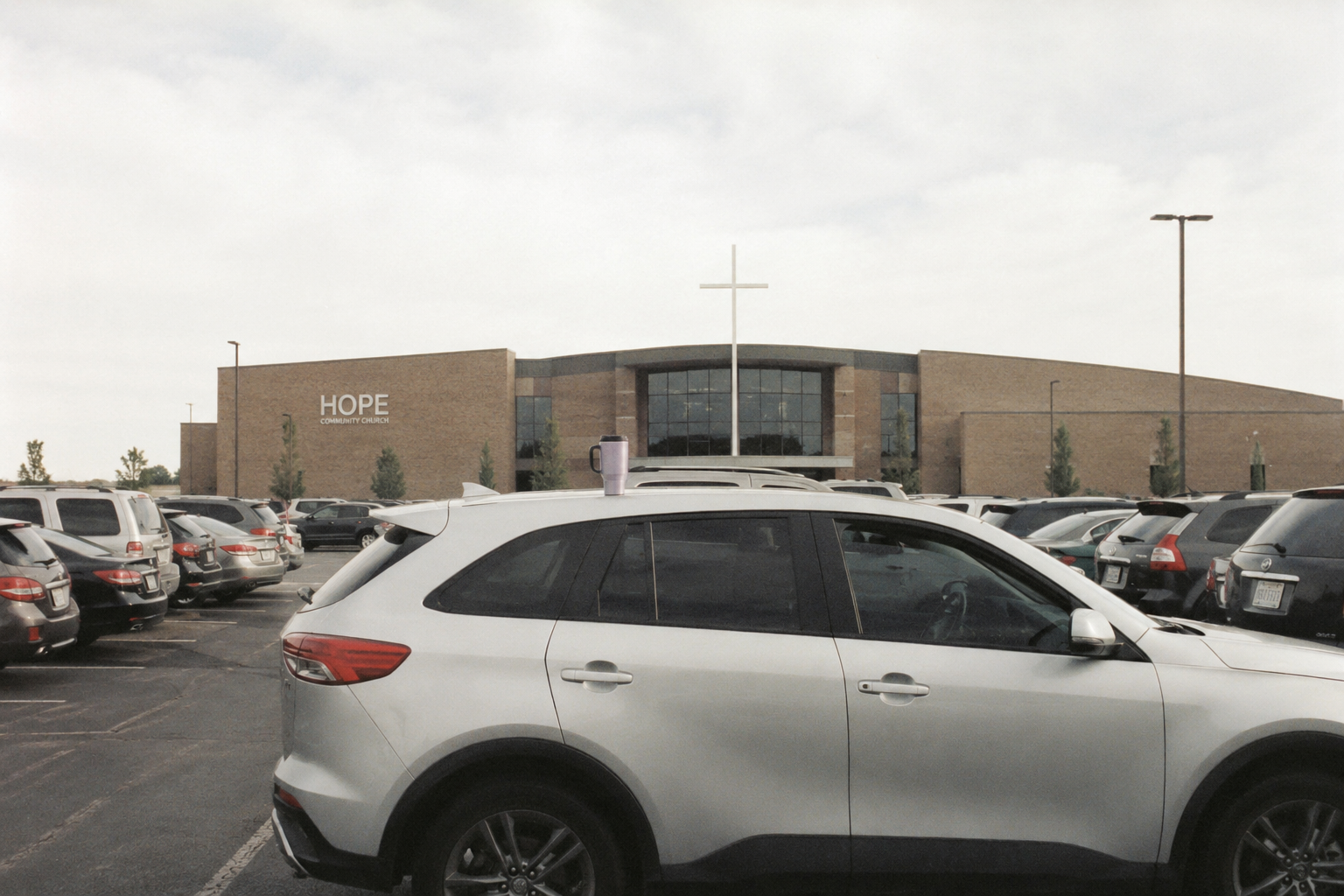 The service is over. The coffee's still on the roof. Something was left behind in there — you're just not sure what.When David Platt Looked at His Church and Didn't Recognize Jesus
He was twenty-six years old and pastoring one of the largest churches in America.
By every visible measure, it was working. Full seats. A growing staff. Programs that ran like clockwork. He had arrived somewhere that most young pastors spend their careers trying to reach.
And then he started reading his Bible differently — or maybe more honestly.
He noticed that Jesus never seemed particularly interested in building crowds. That the Teacher who said follow me was not talking about a weekend commitment. That the people who actually did follow him left things — real things, costly things — and didn't seem to ask when they'd be getting them back.
He started asking a question he couldn't unask: What if we've taken the Jesus of the Bible and quietly replaced him with a version we're more comfortable with?
Not out of malice. Not deliberately. Just gradually — the way a family photo fades on a wall until no one notices the colors have changed.
He began spending time with communities in Southeast Asia and the Middle East where following Jesus meant something entirely different than it did in suburban Alabama. He sat with people for whom costly faith was not a sermon illustration but a lived reality — people who had given up family, safety, sometimes their lives, not as a dramatic gesture but as a quiet and irreversible act of love.
He came home changed. And he started writing.
 Sometimes the turning point isn't a dramatic decision. It's the moment you realize following Jesus may require going somewhere you never planned to go.The Idea That Won't Leave You Alone
"I could not help but think that somewhere along the way we had missed what was radical about our faith and replaced it with what is comfortable."
That's it. That's the whole book in one sentence.
Not you need to do more. Not you're failing God. Something quieter and more unsettling: that the faith many of us practice has been slowly reshaped — by culture, by comfort, by a thousand small compromises — until it no longer resembles the thing Jesus was actually talking about.
The question it leaves you with isn't theological. It's personal: What would you do differently if you actually believed all of it?
BOOK OVERVIEW
The book moves chapter by chapter through specific claims Jesus made — about wealth, about mission, about the unreached peoples of the world — and holds them next to the way most American Christians actually live. Radical: Taking Back Your Faith from the American Dream is structured like a slow revelation, not a lecture. Each chapter opens a door you can't quite close afterward.
What it keeps returning to is this: the gap between the American Dream and radical discipleship isn't just a lifestyle preference. It's a theological problem. Platt argues that comfortable Christianity isn't a softer version of the gospel — it may be a different gospel entirely. The call to follow Jesus, in the actual text, is a call to reorient everything: money, ambition, safety, even family. Not as punishment, but as freedom. The unreached peoples of the world — billions who have never heard the name of Jesus — are not a statistic in this book. They are the reason urgency matters.
Platt draws from Scripture throughout, particularly the Gospels and Paul's letters, and from his own experience as a young pastor wrestling with what it means to lead a church that actually looks like the early church. He references Jim Elliot, the missionary martyred in Ecuador in 1956, whose life and death thread quietly through the book's argument.
People who tend to find this book at the right moment are often somewhere in their thirties or forties — doing well by most measures, churched their whole lives, but carrying a low-grade unease they've never quite named. They've started to wonder whether they've been following Jesus or following a very Christian-sounding version of the life they would have wanted anyway.
I sat with that question for two weeks before I could answer it honestly. The answer was uncomfortable. I think that means it was the right question.
If that question is already forming in you, Radical by David Platt may have been sitting on someone's shelf waiting for you.
It's the kind of book worth having nearby — find it here. Set down mid-chapter, coffee gone cold. But the question it left is still sitting there.
📚You Might Also Like
The Paradox of Love: Why a "No" is the Kindest "Yes" — Boundaries
The Spear You Don’t Throw Back: A Masterclass in Radical Silence — A Tale of Three Kings
You're Not Too Busy. You're Just Hurrying — The Ruthless Elimination of Hurry