Steve Reich’s Music for Pieces of Wood: Finding the Rhythm

A runner settles into a steady stride. A swimmer repeats the same stroke, coordinating movement with breathing. After a while, these movements begin to feel natural, creating a rhythm that helps the body keep going.
Music, like sports, uses rhythm to bring repeated sounds or movements together into a steady flow. Steve Reich’s Music for Pieces of Wood explores this idea through repeating rhythms and gradual change.
Repetition and the Pulse
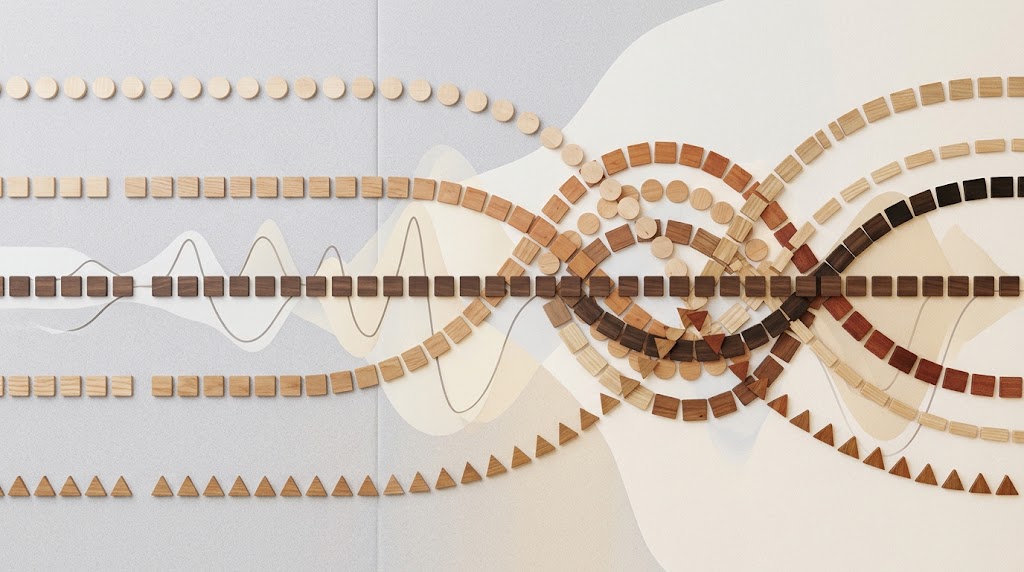
American composer Steve Reich (born 1936) is known for music built around repetition and gradual change. In Music for Pieces of Wood, performers strike wooden claves—pairs of wooden sticks that produce a crisp, woody click—to create repeating rhythmic patterns.
As the patterns overlap and develop, the music becomes more intricate, even though the sounds themselves remain simple. As you listen, try following one pattern at a time, then notice how the patterns fit together. Does the beat seem to change as new patterns emerge, even when the underlying pulse stays steady?
Finding Rhythm in Movement
Rhythm plays a similar role in sports. Runners learn to coordinate their strides with their breathing, while swimmers synchronize their strokes, kicks, and breaths to move efficiently through the water. With practice, these movements become more consistent and natural.
Although athletic movements serve different purposes from musical patterns, both show how repetition brings separate actions together. In music, patterns combine to create rhythm; in sports, coordinated movements help athletes move more smoothly and efficiently.
The Flow Within Repetition
Repetition can seem monotonous, but listening closely reveals subtle shifts in emphasis and interplay between patterns. In Reich’s Music for Pieces of Wood, these details keep the music engaging even without a familiar melody.
The piece invites us to look beyond what stays the same and notice how individual patterns shape the larger musical experience. Sometimes, the interest lies not in a dramatic change, but in hearing familiar sounds in a new way.
Read previous: Rachmaninoff’s Prelude in C-sharp Minor: From the Practice Room to the Playing Field