Why Do We Get Stuck When Learning Music? The Hidden Growth Behind a Plateau
Have you ever practiced a piece over and over and wondered why you still cannot seem to play it any better? You slow down the difficult measures, repeat them the next day, and yet somehow, it feels like you are exactly where you started.
If you have ever learned an instrument, you probably know this feeling. Learning music does not always feel like progress. Sometimes, no matter how much we practice, improvement seems to disappear. But what if being stuck does not mean that we are not growing?
When Progress Seems to Disappear
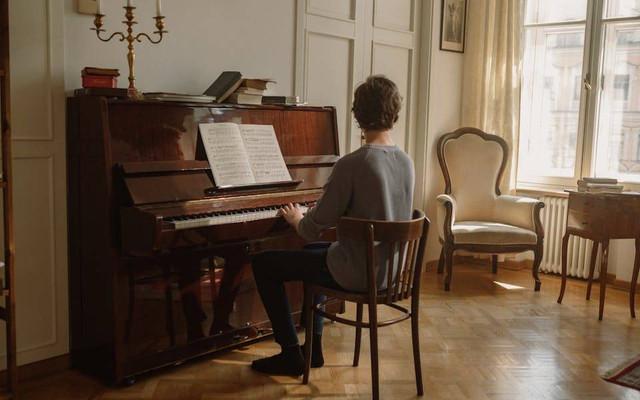
One of the most frustrating parts of learning music is the plateau—that period when improvement seems to slow down or stop. A new piece may begin with exciting progress, but eventually the notes still feel difficult, mistakes remain, and practice can start to feel repetitive. It may seem like you are standing still.
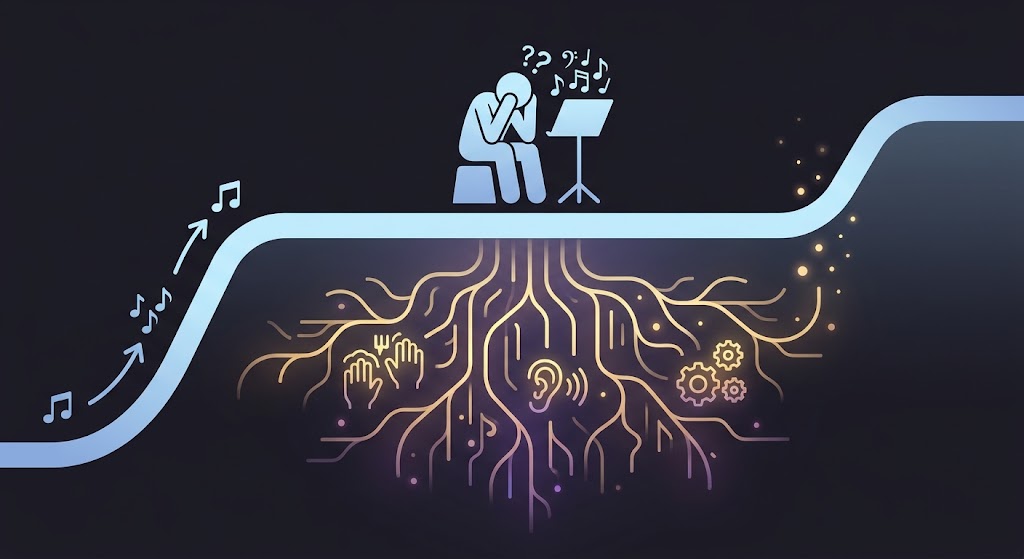
But something may still be happening beneath the surface. Your fingers are becoming more familiar with the patterns, your ears are learning to notice subtle differences in pitch, rhythm, and tone, and your coordination may be improving without you realizing it.
It is easy to notice when we can play a passage faster than before. What is harder to see is how our listening, confidence, and understanding are growing.
Growth Is Not Always Visible
This is one reason learning music can teach us so much about life. We often expect growth to be obvious, but some of the most important changes happen quietly.
A student may practice the same passage for weeks without seeing much improvement, only to discover one day how much those hours of practice have changed.
Life can be like that too. There may be seasons when we keep learning, working, praying, and trying again without seeing much change. But the lack of visible results does not mean that nothing is happening. Sometimes, we are growing in ways we simply cannot see yet.
Learning to Keep Going
The Bible gives us a simple but powerful reminder:
“Let us not become weary in doing good, for at the proper time we will reap a harvest if we do not give up.” — Galatians 6:9
The phrase “at the proper time” reminds us that there can be a difference between doing the work and seeing the results. Learning music takes time; progress comes through practicing, listening, making mistakes, correcting them, and coming back the next day.
Sometimes, the most important thing we can do is simply keep going—not because we see immediate progress, but because we are moving in the right direction and the work still matters.
What a Plateau Can Teach Us
Perhaps the next time you feel stuck while learning music, ask a different question: “What am I learning during this season?” You may be becoming more patient, listening more carefully, or learning to keep going when things do not come easily. These are all part of becoming a stronger musician—and a more resilient person.
Music teaches us that progress is not always a straight line. Sometimes we move quickly, and sometimes we seem to stand still. But if we are moving in the right direction, slow progress is not failure. Growth that is difficult to see is still growth—and learning to keep going is part of the journey.
Read previous: Why Does Music Make Us Feel Wonder? — Mendelssohn's Hebrides Overture