Why Do We Sing the Same Songs Over and Over?
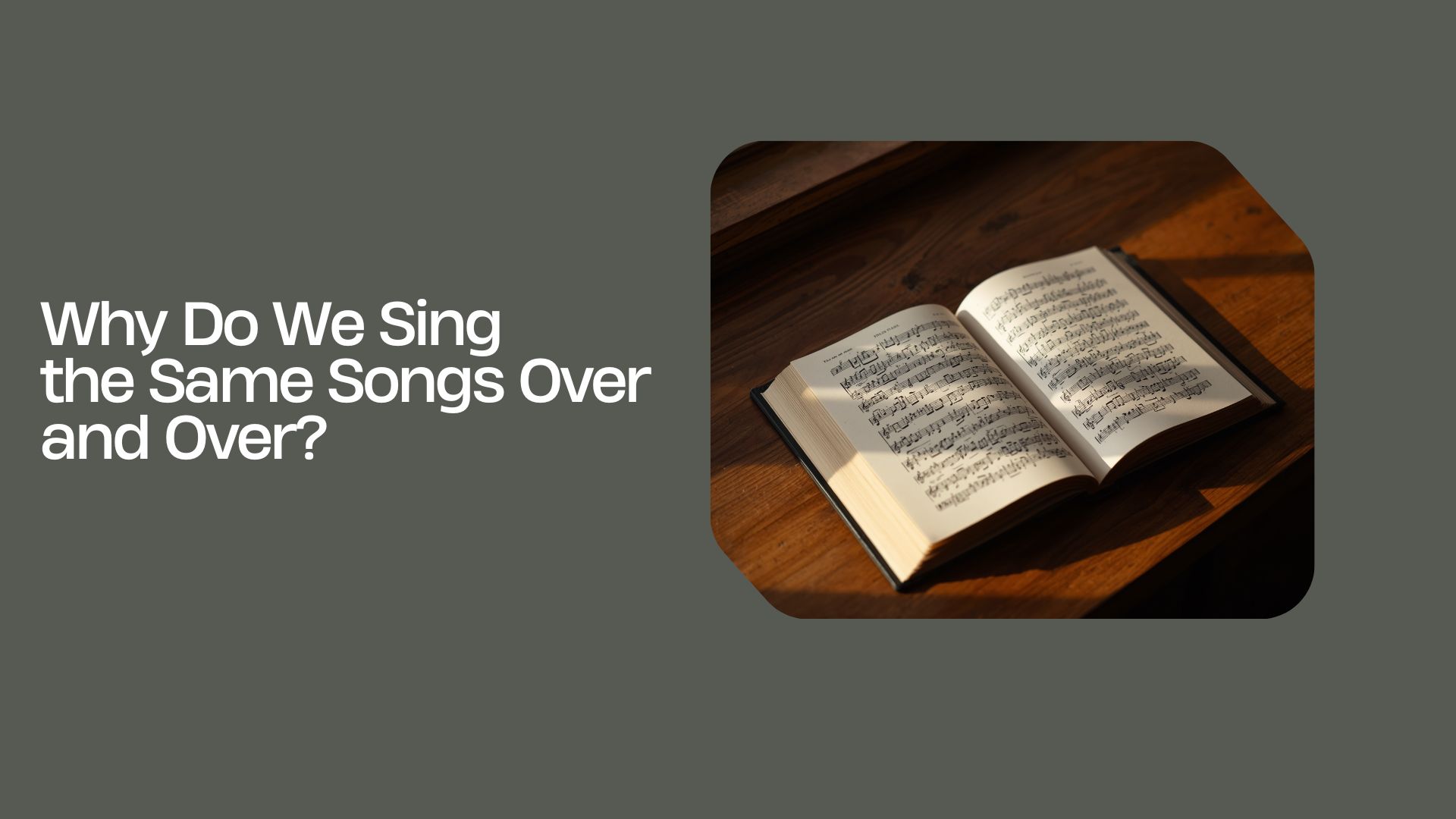
I have led the same song probably three hundred times.
I'm not exaggerating. There's a song we used at the church I served for almost a decade — a simple one, not particularly clever, nothing that would win a songwriting award. We sang it in the opening set. We sang it when things felt heavy. We sang it at the end of a series, when we needed something everyone already knew. Three hundred times is probably conservative.
And somewhere around the hundredth time, I started to wonder if I was doing something wrong.
Not wrong theologically. Wrong pastorally. Was I being lazy? Was I failing the congregation by leaning on what was already familiar instead of finding something new? The people in the front rows knew every breath mark. The teenagers had stopped looking at the screen. Nobody was discovering anything.
That unease stayed with me for a while. Until I watched something I didn't expect.
A woman in our congregation — I'll call her Ruth — had been attending for about six years. Quiet, faithful, the kind of person who is always there but rarely draws attention. One Sunday we sang that song again, the three-hundred-times song, and I glanced out at the congregation mid-chorus the way you do when you're trying to read the room.
Ruth was crying.
Not dramatically. Just — tears. She wasn't embarrassed by them. She wasn't trying to stop them. She looked like someone receiving something she'd been waiting a long time to receive.
I found out later that her husband had been diagnosed that week. Cancer. Early stages, they hoped, but still — the kind of news that rearranges your entire interior life overnight. And she had come to church that Sunday carrying all of that, and we had sung the same song we always sing, and something in the familiarity of it had reached her in a way that a brand new song never could have.
She knew exactly where the song was going. She didn't have to track it. She could just — receive it.
I kept leading. But I didn't forget what I'd seen.
I've thought about that moment a lot since then.
There's a reason we find repetition suspicious in worship. We live in a culture that rewards novelty. Streaming platforms exist to give us something new every time. Familiarity gets labeled stagnation. Repetition gets mistaken for laziness.
But the church has always known something different. The Psalms were not written to be sung once and retired. The liturgies that have shaped Christian worship for centuries are built on the same words, the same rhythms, the same movements — week after week, year after year. Not because the people who wrote them lacked creativity. Because they understood something about how formation actually works.
You are not formed by things you encounter once. You are formed by things you return to.
The song Ruth cried to that Sunday had been doing something in her for six years that she probably couldn't have articulated. The repeated singing of it — in ordinary weeks, in good weeks, in weeks she'd already forgotten — had built something. A pathway. So that when the hard week came, she didn't have to find the song. The song was already in her. It met her there.
This isn't an argument for never learning anything new. New songs matter. They expand vocabulary, they reflect the ongoing life of the church, they keep worship from calcifying into something we do on autopilot.
But there's a difference between singing on autopilot and singing something that has become part of you.
Autopilot is when the words have stopped meaning anything because you've never let them mean anything in the first place. Formation is when the words have been sung so many times, through so many seasons, that they now carry the weight of everything you've lived while singing them.
The same song at twenty and at fifty is not the same experience. At twenty, it's a song. At fifty, it's a record of all the Sundays in between — the grief and the relief and the ordinary Tuesdays that somehow accumulated into a life. The repetition is the point. The repetition is the mechanism.
I still lead that song. I'll lead it a few hundred more times before I'm done.
I no longer apologize for it, even silently to myself. Because I've learned to ask a different question. Not is this getting old? But what is this building?
Most of the time, I don't know the answer. I can't see what six years of a song does to a person from the front. I only catch glimpses — a woman crying in the third row, unexpectedly, on a hard week she almost didn't come.
That's enough for me.