Why It's Worth Eating Carrots Regularly
A Little Wisdom from the Everyday Table
There's one vegetable that's almost always in the fridge: the carrot. It's so familiar that it rarely feels special, but look a little closer and the carrot turns out to be a quietly generous food, steadily supplying nutrients our bodies can use.
Scripture invites us to see our bodies not as something to treat carelessly, but as something precious that God has entrusted to us. Caring for our health isn't simply an effort to live longer; it connects to the life of a steward who wisely tends what God has given. In that light, the humble carrot is a good, low-pressure way to look after your health in everyday life.
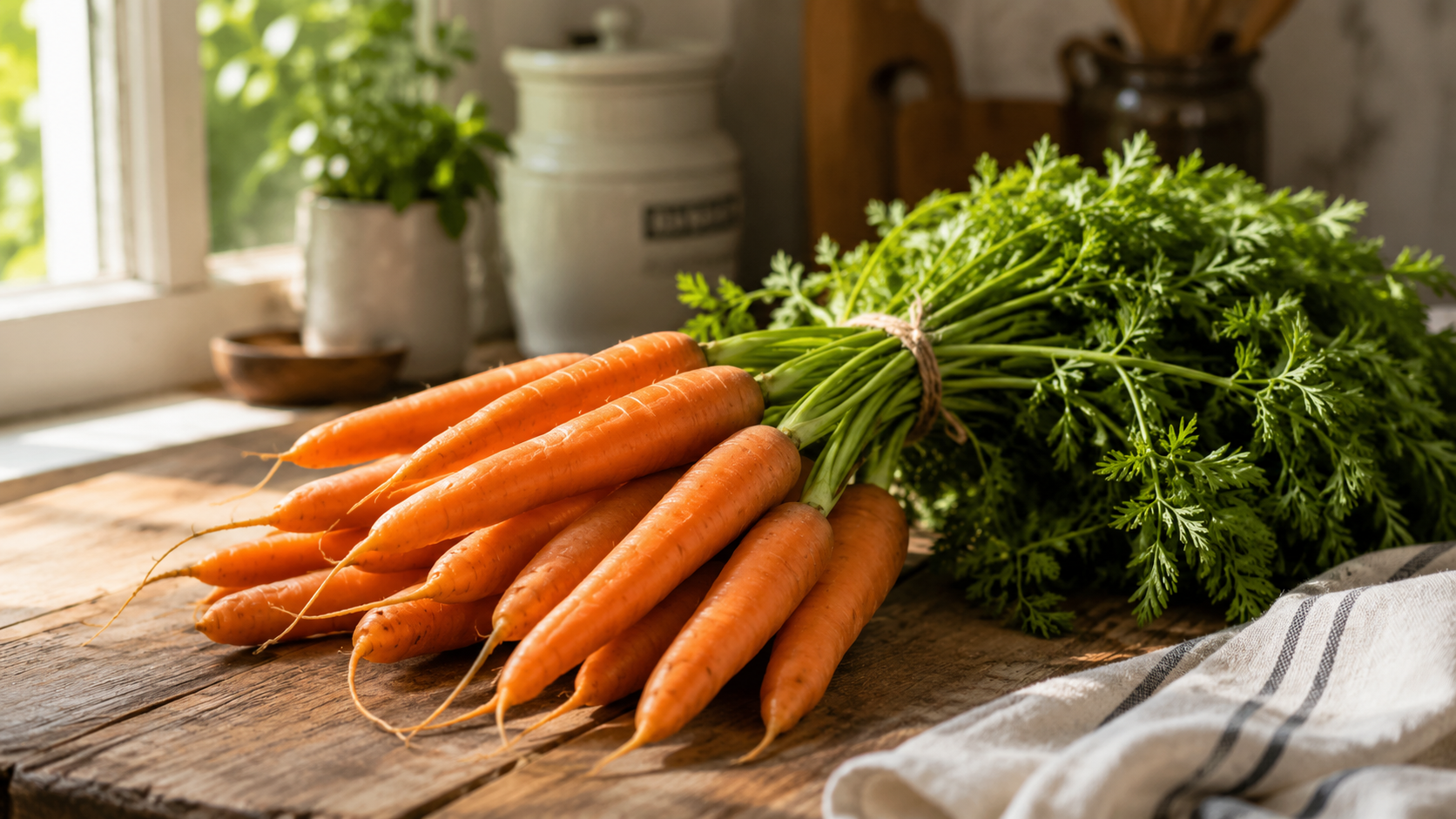 Fresh carrots on a sunlit kitchen table offer a quiet reminder that God often provides nourishment through simple, ordinary gifts in our daily lives.
Carrots and Eye Health
The first thing most people associate with carrots is eye health. The beta-carotene that carrots are rich in converts to vitamin A in the body, which helps maintain healthy eye function.
These days we spend long hours staring at phone, computer, and tablet screens, and tired, dry eyes have become common as a result. Working carrots into your meals regularly can be one small way to care for your eyes. It's worth keeping the claim modest, though: carrots won't sharpen vision you already have — they supply nutrients that help your eyes keep doing their job.
The Benefit of Antioxidants
Carrots contain not only beta-carotene but also antioxidants like lutein and polyphenols. Antioxidants help protect cells from the excess free radicals that build up in the body.
Of course, no single food solves every health concern. But eating vegetables like this consistently, day after day, helps keep the body in balance. Health rarely comes from a one-time resolution; it starts with the repetition of small habits.
Easy on the Gut
Carrots are relatively high in dietary fiber, which can support healthy digestion and regularity. They're also fairly gentle for people who find spicy or rich foods hard to handle. They're good raw, and cooking makes them softer and easier to eat.
Our bodies are interconnected. When the gut is uncomfortable, our overall condition dips, and when our condition dips, the mind grows weary too. So healthy eating habits are more than a lifestyle choice — they can be part of preparing to meet the day we've been given.
A Help for Blood Pressure, Too
Carrots contain potassium, a nutrient known to help the body flush out sodium. If you tend to eat salty foods or you're keeping an eye on your blood pressure, adding carrots to your meals more often can be a good move. That said, anyone who needs to manage their diet for blood pressure or kidney conditions should eat in balance under a doctor's or specialist's guidance, rather than loading up on any one food.
Raw vs. Cooked
The advantages of carrots shift a little depending on how you eat them. Raw, they're a great source of fiber and an easy, light snack — cut them into sticks and you can grab them even on a busy day. Cooked, they make beta-carotene easier to absorb, especially when prepared with a little oil, since beta-carotene is fat-soluble. A simple carrot sauté, a carrot rapée salad, or carrots folded into eggs or fried rice all work well.
A healthy meal doesn't have to be elaborate. Just adding a bit of carrot to today's plate is already a good start.
Too Much Can Backfire
Even good food becomes a burden in excess. Eat too many carrots and your skin can take on a yellowish tint; carrot juice can sneak in more sugar than you'd expect; and too much raw carrot leaves some people with an unsettled stomach. So the key isn't "a lot" — it's a moderate amount, kept up consistently.
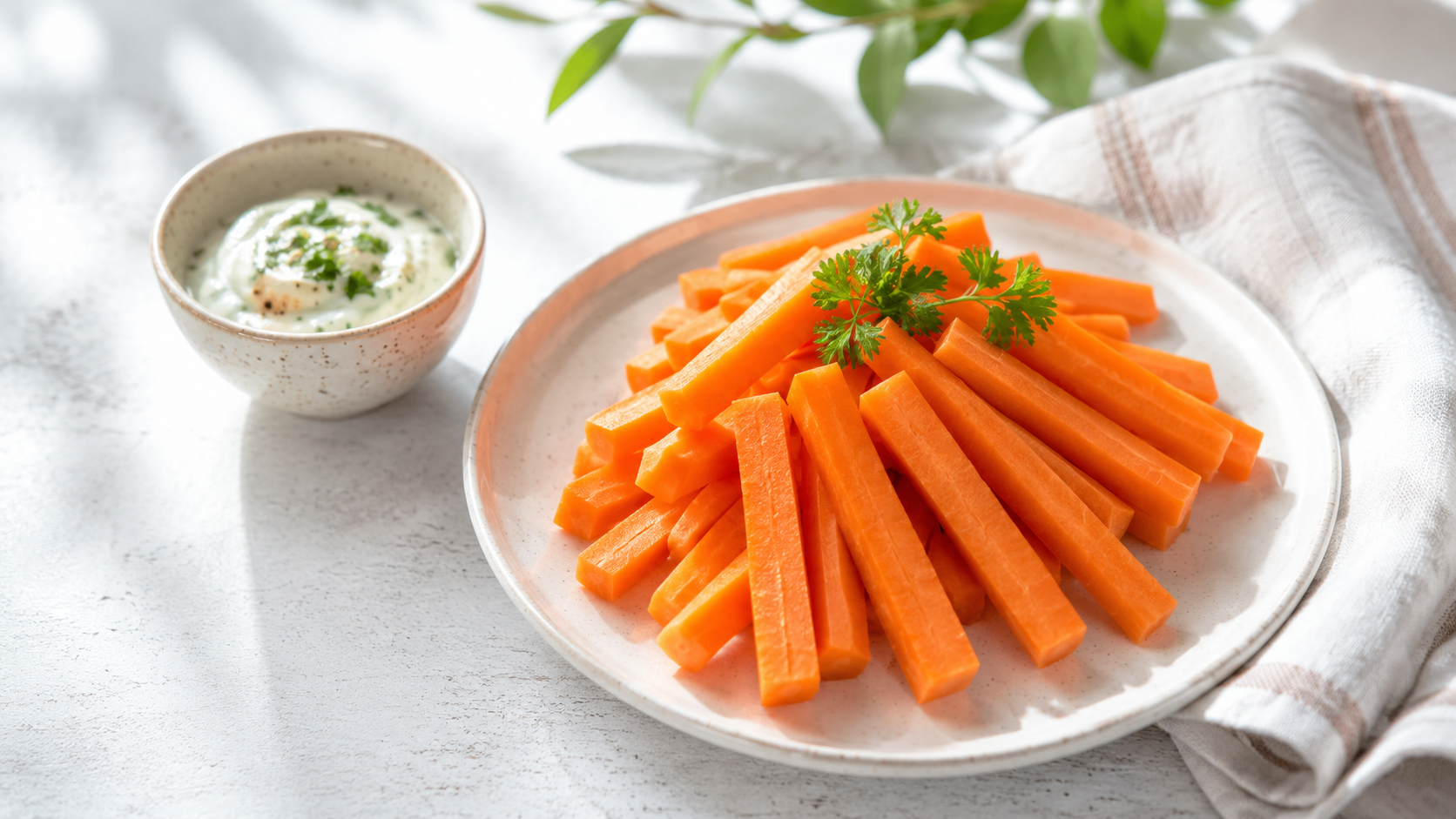 A plate of fresh carrot sticks in soft daylight reminds us that God often provides nourishment through simple foods and ordinary daily habits.
To Sum Up
The carrot may not be a flashy health food. But it's a good vegetable that quietly supports the body, day in and day out, from the ordinary table. It can help with eye function, antioxidant protection, gut health, and blood pressure — and best of all, it's easy to find and easy to use across all kinds of dishes.
Treating the body God has given us as something worth caring for is an important posture in the life of faith. And small habits sustained every day bear deeper fruit than grand resolutions. The simple choice to add one carrot to today's table can be the beginning of a wise habit — one that cares for the body and brings a little order to the day.