William Herschel the Astronomer: Symphony No. 8 in C Minor — From Music to the Stars
Before William Herschel (1738–1822) became known for discovering Uranus, he earned his living through music. He taught music, composed, conducted, and served as a church organist. For years, music was his profession and his everyday life.
Then his curiosity led him somewhere unexpected: the night sky.
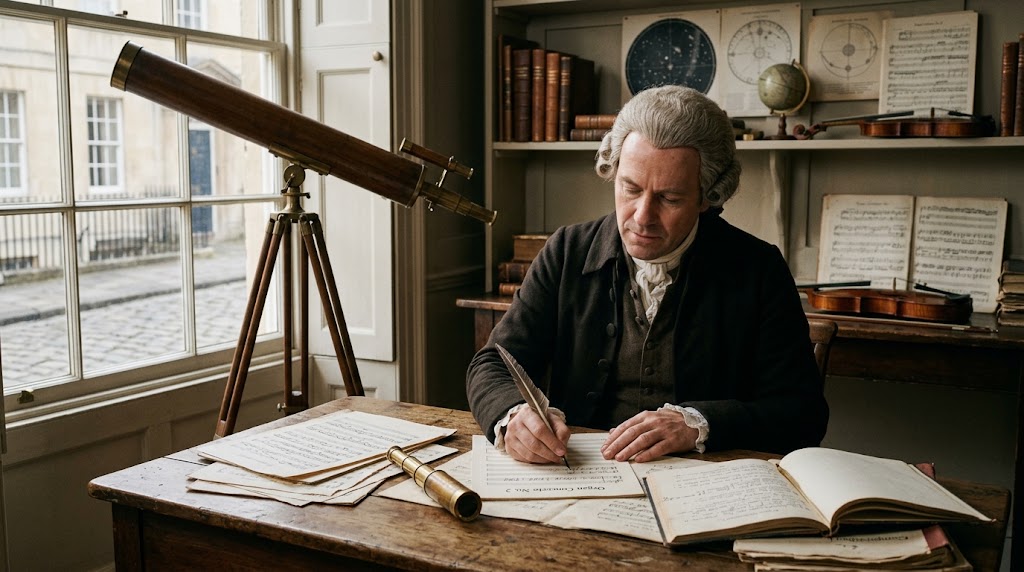
From Music to Astronomy
Born in Hanover, in what is now Germany, Herschel later moved to England, where he worked as a musician. Over time, astronomy began to capture his attention. He studied the night sky, built his own telescopes, and spent long hours observing and recording what he saw.
In 1781, he discovered Uranus, the first planet discovered since antiquity. The discovery transformed his life, allowing him to devote himself more fully to astronomy and the study of stars, nebulae, and the Milky Way.
When One Interest Leads to Another
What makes Herschel’s story interesting is that music did not disappear when astronomy entered his life. Though the two fields seem different, both required patience and close attention. Herschel brought those habits from music into his astronomical work.
He continued to compose even as astronomy became a major part of his life. His Symphony No. 8 in C Minor reminds us that the astronomer was also a musician, with a lifelong interest in both musical composition and the wonders of the universe.
The things we learn in one season of life may prepare us for something completely different later. A skill may become useful in an unexpected place, or a small curiosity may grow into something more. Herschel probably did not imagine how far his curiosity would take him. He kept looking.
Looking Up
There is something fitting about Herschel's lifelong habit of looking toward the sky.
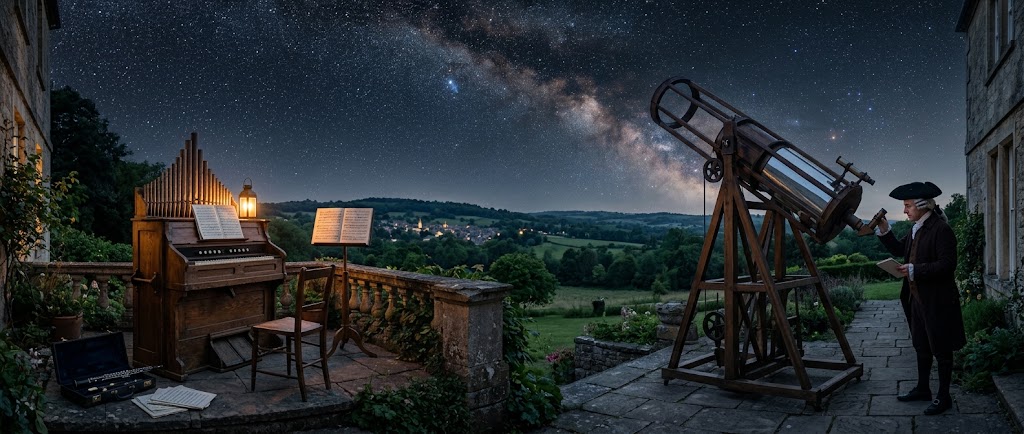
The more he observed, the more there was to discover. His work helped expand our understanding of the universe and reminded people that the heavens held far more than they could see with the naked eye.
“The heavens declare the glory of God; the skies proclaim the work of his hands.” — Psalm 19:1–2
The night sky can put our own lives into perspective. There is so much we cannot see yet and so much we do not understand. Perhaps we do not always need to know exactly where the road is going.
Herschel’s life took an unexpected turn—from music to astronomy, from the organ to the telescope. Our own paths may hold surprises too. God may use the interests we already have, the skills we are learning, or unexpected turns to lead us somewhere we never imagined.
Sometimes we do not need to see the whole path. We can simply keep learning, keep wondering, and keep looking up.
Read previous: Ignacy Jan Paderewski the Prime Minister: When Music Served a Nation — Menuet in G Major