A Hymn of Deep Meditation on the Cross Born in Suffering: The Story of “Were You There”
A Nameless Song, Yet a Clear Confession
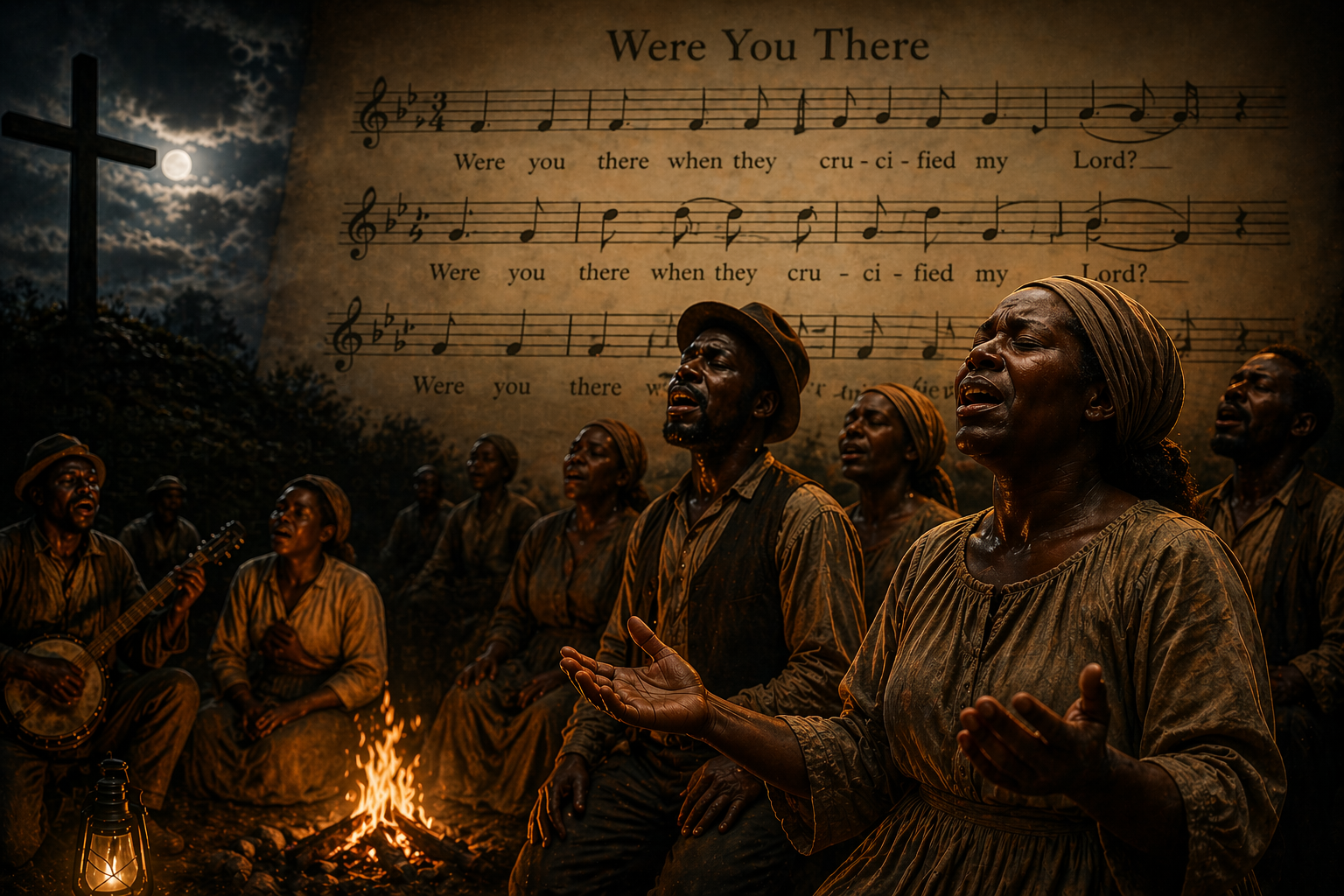
Today, we sing naturally in worship. Familiar melodies flow from our lips, sometimes even without deep reflection. Among these is Were You There, a hymn that stands apart from many others. Unlike most hymns, its author and composer are unknown. It did not begin as the creation of a single individual, but was formed gradually over time.
What is striking is that despite its unknown origin, this hymn has not disappeared. Instead, it has endured through generations, carried by countless voices, leaving a deeper resonance as time passes. This is because the hymn is not merely music, but a confession offered by a community before God. It is not the voice of one person, but the faith and tears of many unnamed people woven into its words.
Worship That Began Where Singing Was Not Free
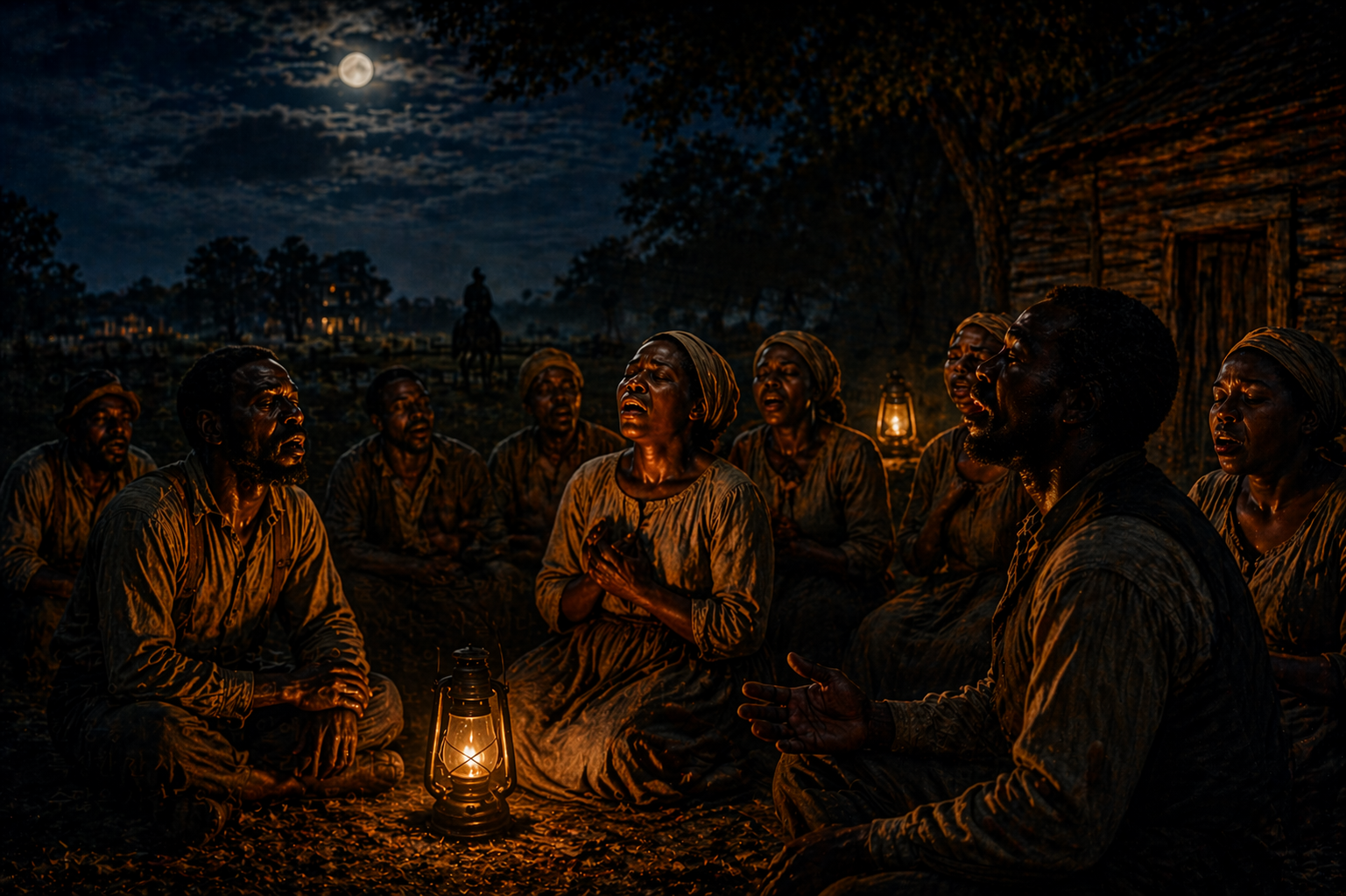
This hymn did not emerge from a formal church setting or structured musical tradition. Its beginning was in a place where even the freedom to sing did not exist. In 19th-century America, enslaved African Americans lived under oppression, deprived of both freedom and the ability to worship openly. Many were even forbidden from learning to read, leaving them with very limited ways to express their faith.
In such a context, song became their primary language of faith. At night, they gathered in secret, away from watchful eyes, and quietly lifted their voices. It was in these hidden moments that this hymn was born. “Were you there when they crucified my Lord?” was not simply a repetition of a biblical story. It was a deeply personal confession. For those who sang it, the crucifixion of Jesus Christ was not a distant historical event, but something that spoke directly into their present reality.
Within this background, the hymn took on a meaning far beyond music. It became a prayer, a source of hope in despair, and a way to express pain that could not be spoken aloud.
From a Question About the Past to a Question That Confronts the Present
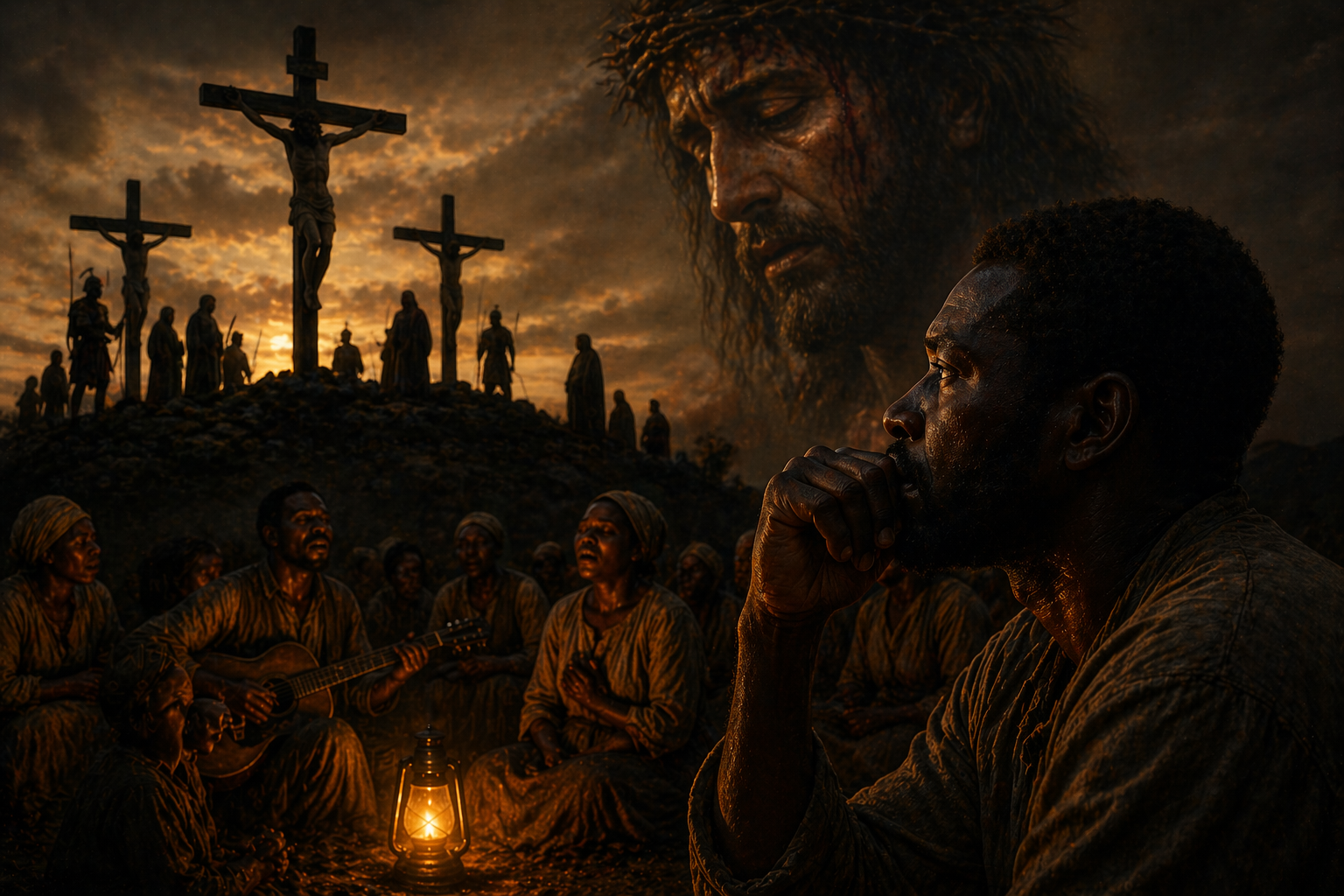
At the heart of this hymn is a repeated question: “Were you there?” At first, it appears to point back to the historical event of Christ’s crucifixion, asking whether one was present at that moment. However, for those who first sang this hymn, the question did not remain in the past.
Because they themselves were living in suffering, they could not hear the story of the cross as something distant. The suffering of Christ overlapped with their own lives. His pain became something they could personally understand. As a result, the meaning of the question shifts. “Were you there?” becomes “Am I standing there now?”
This transformation turns the hymn from a simple reflection on history into a confession that confronts the present. It calls each listener to examine their own life and their relationship to the cross. The hymn no longer explains a past event; it reveals the current position of the one who sings it.
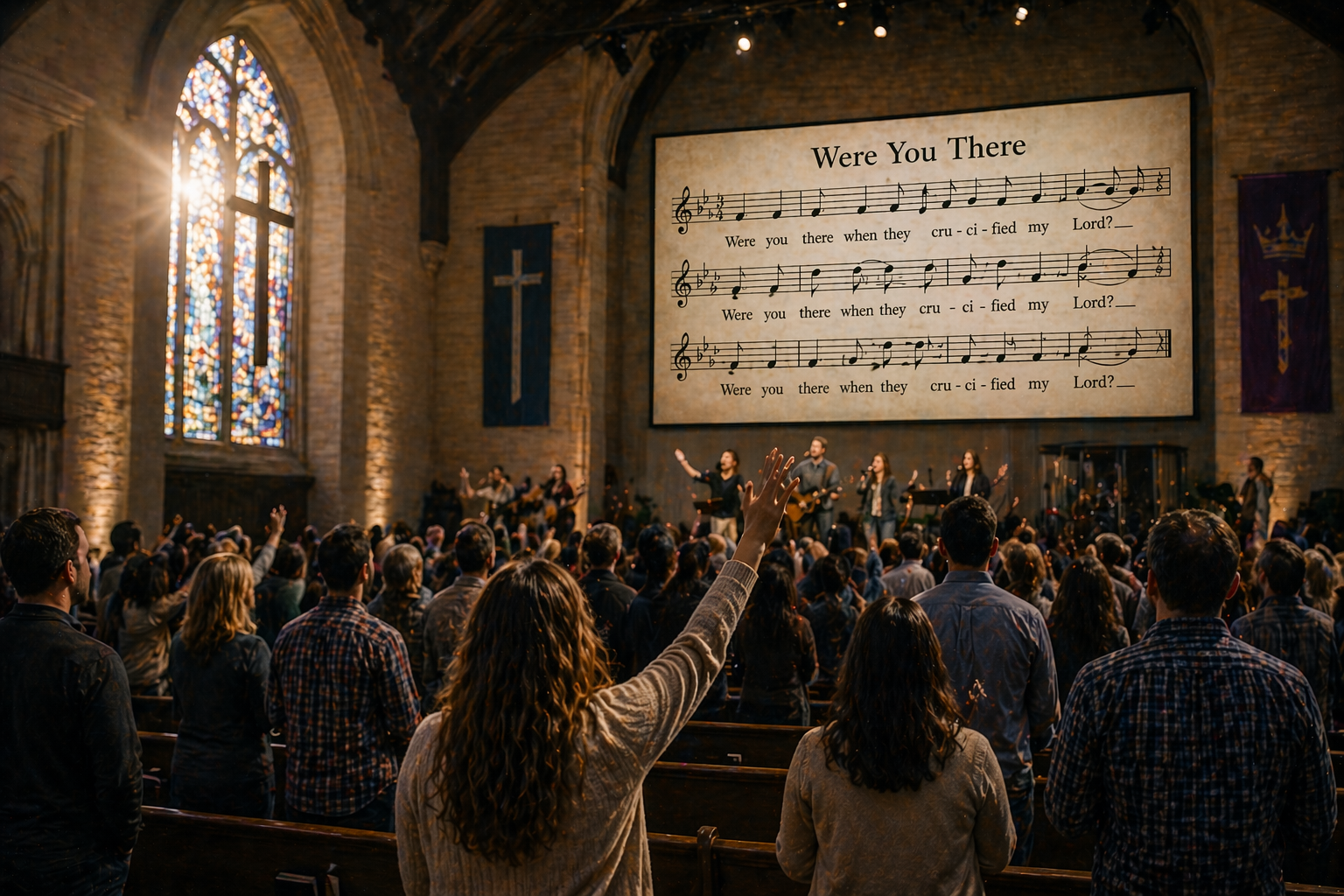
Our Worship Today, and the Question That Remains
Over time, this hymn was written down and became part of the global Christian tradition. Today, it is sung freely in churches around the world. We now have the freedom to lift our voices openly, something those who first sang this hymn did not have.
Yet the question within the hymn remains unchanged. As we sing, we must ask whether we are truly engaging with its meaning. Do we treat the cross as something we simply know, or as something that defines our lives? Are we merely repeating words, or are we standing before the reality they express?
A hymn is not only something we sing with our lips, but something that must be lived out in our lives. The reason this hymn continues to endure is not because of its melody, but because of the question it carries. “Were you there?” As long as this question remains within us, this hymn will not become a relic of the past. It will continue to live as a confession of faith in the present.