Caring for the Body God Gave You: A Closer Look at Goat Milk
 A bottle of fresh goat milk rests on a rustic farmhouse table as morning sunlight streams through the window. Surrounded by the beauty of the countryside, this simple scene reflects the goodness of God's provision through creation and reminds us to care for our bodies with gratitude and wisdom.
"Do you not know that your bodies are temples of the Holy Spirit, who is in you, whom you have received from God?" — 1 Corinthians 6:19
If you've spent any time around health-conscious circles lately, you've probably heard goat milk come up more than once. It's easier to digest. It's good for your skin. It sits lighter than regular milk. The claims tend to arrive in that casual, secondhand way — something a friend mentioned, or a line you caught in a podcast.
Let's be clear about one thing up front: no single food is a cure-all, and goat milk isn't either. But among the many good things God has woven into creation for our nourishment, goat milk is one worth a thoughtful look. So let's walk through what it actually offers — and why, for a Christian, even a question about what's in the fridge can connect to something larger.
A Small Act of Stewardship
Scripture calls the body a temple of the Holy Spirit. That image reframes the whole conversation. Taking care of your health isn't merely about adding years to your life or chasing some cultural ideal of fitness. It's part of stewardship — tending well to something that was entrusted to you, not something you manufactured on your own. Seen that way, even ordinary decisions carry a little more weight. What we choose to eat and drink isn't spiritually neutral; it's one of the countless small places where gratitude and faithfulness can show up.
That's where goat milk earns its place. One of its most talked-about qualities is digestibility. It has smaller fat globules than cow's milk, and they stay more evenly dispersed rather than separating out, which can make it feel lighter going down. Its protein structure is different too — goat milk contains less of the particular casein protein that gives some people trouble with cow's milk. That combination is why so many people who feel bloated or sluggish after a regular glass of milk find goat milk noticeably gentler.
It's worth saying plainly, though: this varies from person to person. Goat milk is not a guaranteed fix, and what works beautifully for one body may do little for another. The faithful posture here isn't hype — it's attentiveness. Try it, notice how your own body responds over a week or two, and let that guide you rather than a stranger's testimonial.
A Gift for the Skin
Goat milk also contains nutrients that support skin health, including vitamin A and naturally occurring lactic acid. That's a big reason it shows up so often as the base for soaps, lotions, and moisturizing creams. The lactic acid gently aids exfoliation, while the fats and vitamins contribute to a soft, hydrated feel — which is why goat milk skincare has quietly become its own corner of the market.
There's a gentle truth tucked into this. Scripture says God made our bodies "fearfully and wonderfully," and our skin is part of that handiwork — the body's largest organ, in fact. Caring for it isn't vanity by default. Done with the right heart, looking after your skin is simply one more way of honoring a body you didn't design but were given to keep.
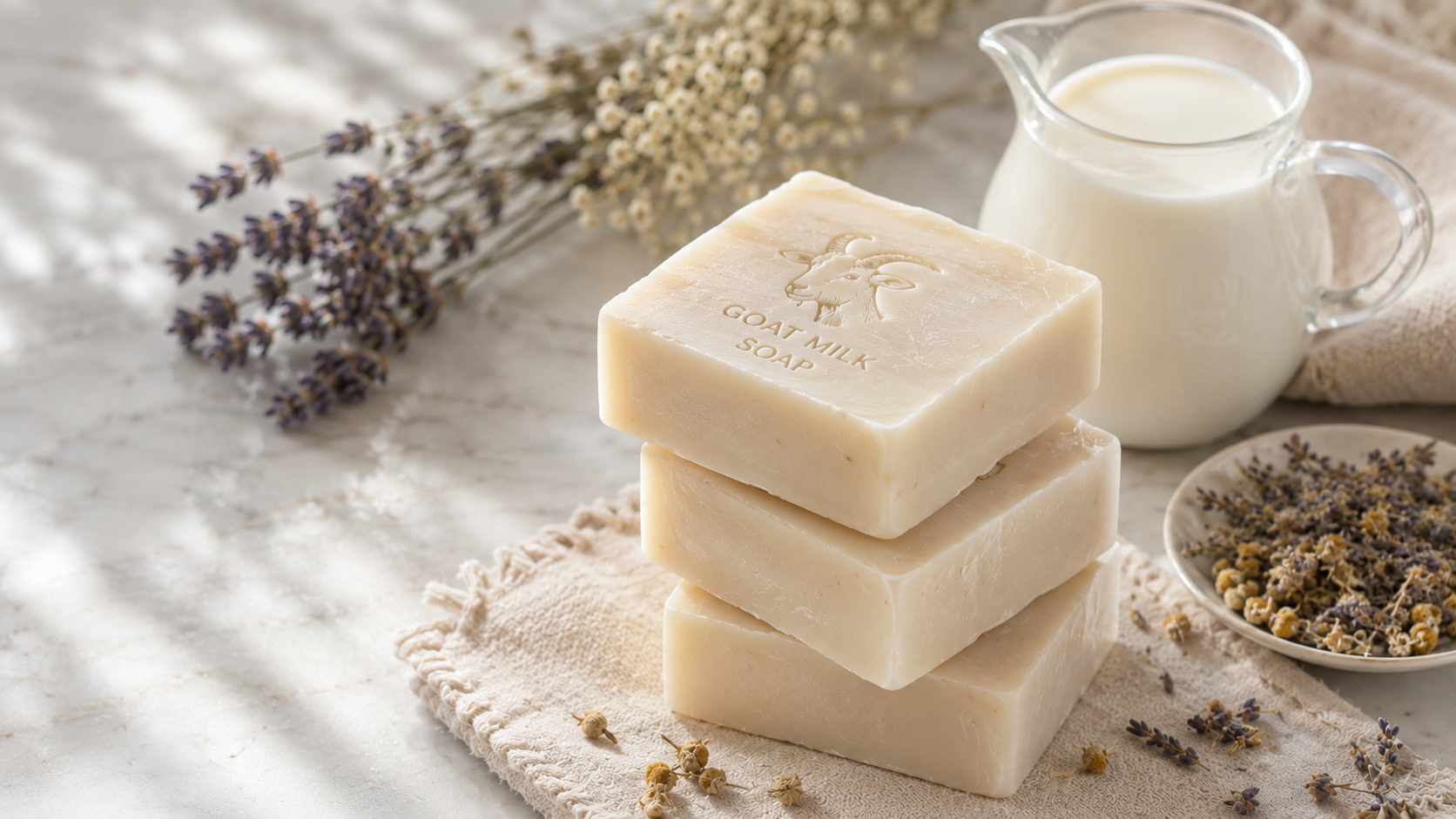 Handcrafted goat milk soap bars are displayed alongside a small pitcher of milk and dried botanicals, creating a calm and natural skincare scene. Known for its gentle cleansing and moisturizing qualities, goat milk soap has become a popular choice for those seeking a simple, nourishing approach to skin care.
Gut Health and Balanced Nutrition
We tend to underestimate how much our daily lives hinge on gut health. When digestion isn't working well, it doesn't stay politely contained in your stomach — it spills into your energy, your focus, your mood, and your ability to be present with the people around you.
Goat milk brings a useful mix of nutrients to the table: calcium for your bones, protein for repair and steady energy, potassium for healthy muscle function, and smaller amounts of vitamin A and certain B vitamins. Some research has also explored its potential benefits for gut health, though it's wise to hold those findings with humility rather than treating them as settled promises. Nutrition science moves slowly, and yesterday's miracle food is often today's "well, it depends."
The deeper point is this: a healthy body is a foundation, not a finish line. When you feel well, you can work with more energy, serve others more freely, and love the people in your life more fully. It's hard to be patient with your children or generous with your time when your body is running on empty. The goal was never the glass of milk itself — it's the kind of life that good health quietly makes possible.
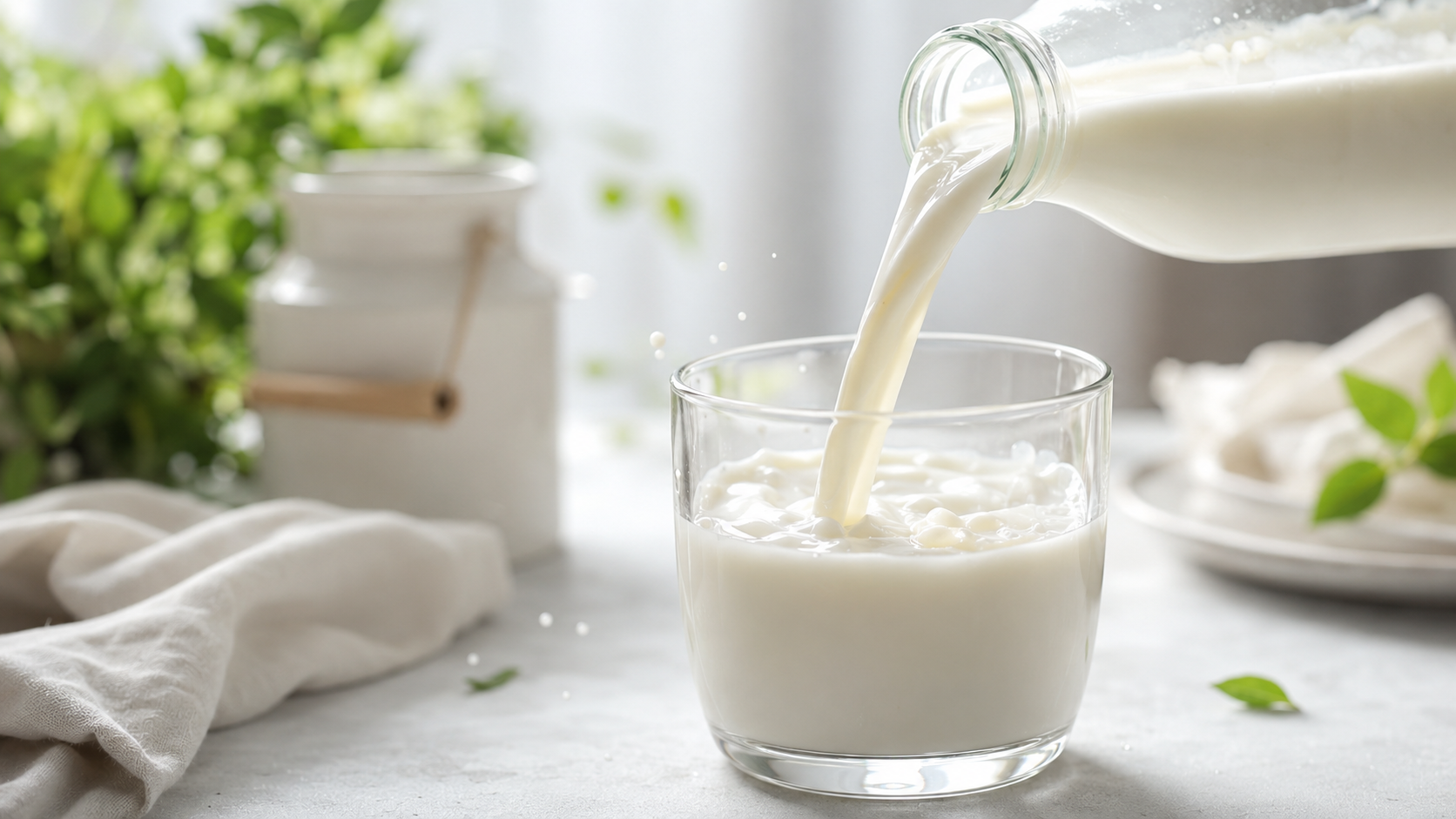 Fresh goat milk is poured into a clear glass in a bright, sunlit setting, highlighting its creamy texture and wholesome simplicity. Often chosen by those seeking a gentle and nourishing dairy option, goat milk has become a popular addition to healthy lifestyles focused on natural nutrition and wellness.
Health as a Companion to Faith, Not a Rival
Somewhere along the way, many of us absorbed the idea that attention to physical health is somehow less spiritual than prayer, worship, or study — as if caring for the body were a distraction from caring for the soul.
But Scripture doesn't draw that line. It insists that both body and soul belong to God. The point of tending to your health isn't to make an idol of the body, obsessing over appearance or chasing an image. It's the opposite: we care for our bodies so we can live out the life God has entrusted to us more faithfully and for longer. Choosing nourishing food, moving your body, getting enough rest — these can each be quiet expressions of gratitude, ways of saying with actions rather than words, thank You for this life; I want to steward it well.
It's worth holding the balance carefully, though. The same culture that once treated the body as unimportant now often swings to the opposite extreme, treating health and appearance as ultimate things — a source of identity, anxiety, and endless comparison. Scripture corrects both errors at once. The body matters, but it is not the point. We tend to it the way a faithful steward tends a garden that belongs to someone else: with genuine care, but without pride or panic, knowing the garden was never ours to begin with.
Who Might Benefit
Goat milk may be worth trying if you find regular cow's milk hard on your stomach, if you're looking for a dairy option that feels lighter, or if you simply want to round out your nutrition with something whole and natural. Families thinking through nutrition for growing children or aging parents sometimes consider it too, and it tends to appeal to anyone drawn toward a more nature-friendly approach to eating.
A Few Honest Cautions
Goat milk isn't right for everyone, and it would be dishonest to pretend otherwise. It is not lactose-free, so it won't solve a true lactose problem on its own. Anyone with a diagnosed milk allergy should talk to a doctor before trying it, since cow's and goat's milk proteins can overlap. Its flavor is distinctive, a little earthier than cow's milk, and not everyone enjoys it. And it usually costs more, sometimes noticeably so. None of this disqualifies goat milk — it just means the wise approach is the one Scripture commends in so many areas of life: try it thoughtfully, pay attention to how your body responds, and don't let enthusiasm outrun discernment.
A Closing Reflection
God entrusted us with both a soul and a body, and He cares about the whole of who we are. That means even the small, repeated choices of daily life — what we eat, how we move, when we rest — can become places where gratitude and stewardship take root.
Health was never meant to be the point of our lives. It's a tool, a gift that frees us to love God more wholeheartedly and serve the people around us more generously. Whether or not goat milk ever finds a place in your kitchen, may today be a day you tend wisely to the body you've been given — and find, in that small care, one more reason to be thankful.