How Bach’s Music Became a Silent Sermon: The Faith Hidden Inside His Scores
 1. Is Bach’s music simply classical music?
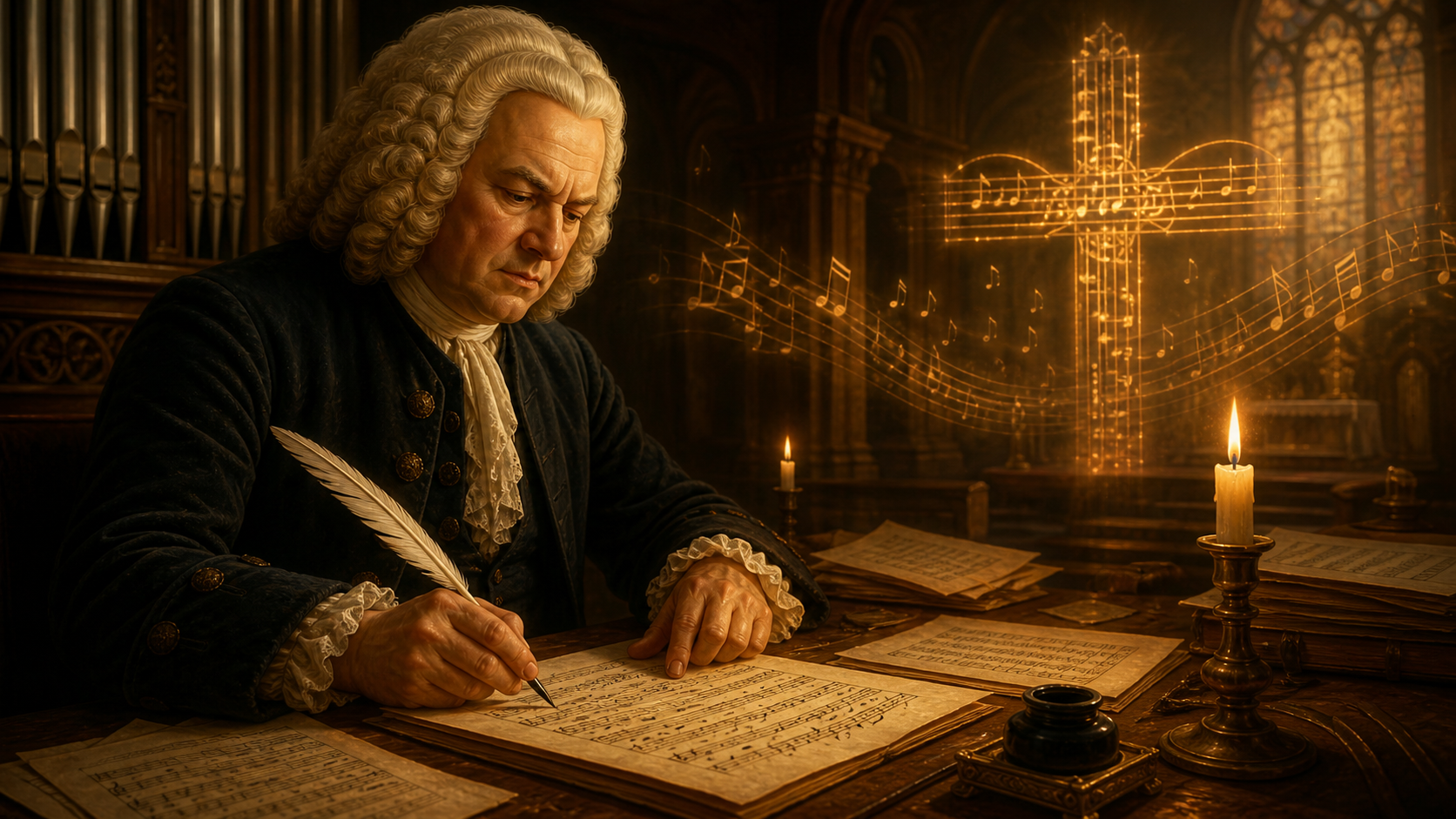
When we think of Johann Sebastian Bach today, we usually think of classical music at its highest level. We think of complex fugues, beautiful chorales, careful counterpoint, and musical structures that feel almost impossibly perfect.
This is why Bach is often called the father of music. His work shaped the foundation of Western music, and countless composers after him looked to his music as a model. In music history, Bach stands like a mountain.
But when we look more closely at his music, we begin to notice something more than technique. Inside his scores, there are traces of numbers, musical patterns, hidden names, familiar hymn melodies, and movements that seem to point toward the cross.
Of course, we should be careful. Not every note in Bach’s music should be treated like a secret code. That kind of interpretation can easily go too far. But it is also clear that Bach did not see music as simple entertainment or artistic display.
For Bach, music was a confession before God. Composition was not only the work of creating beautiful sound. It was also a way of giving order to faith, shaping theology through melody, and turning belief into something people could hear.
So the question becomes this.
Was Bach’s music only music?
Or was it a silent sermon?
To answer that, we have to begin with the way Bach approached his work.
 2. A score that began with prayer and ended with glory
To understand Bach’s music, we should first look not only at how he composed, but at the spirit with which he composed.
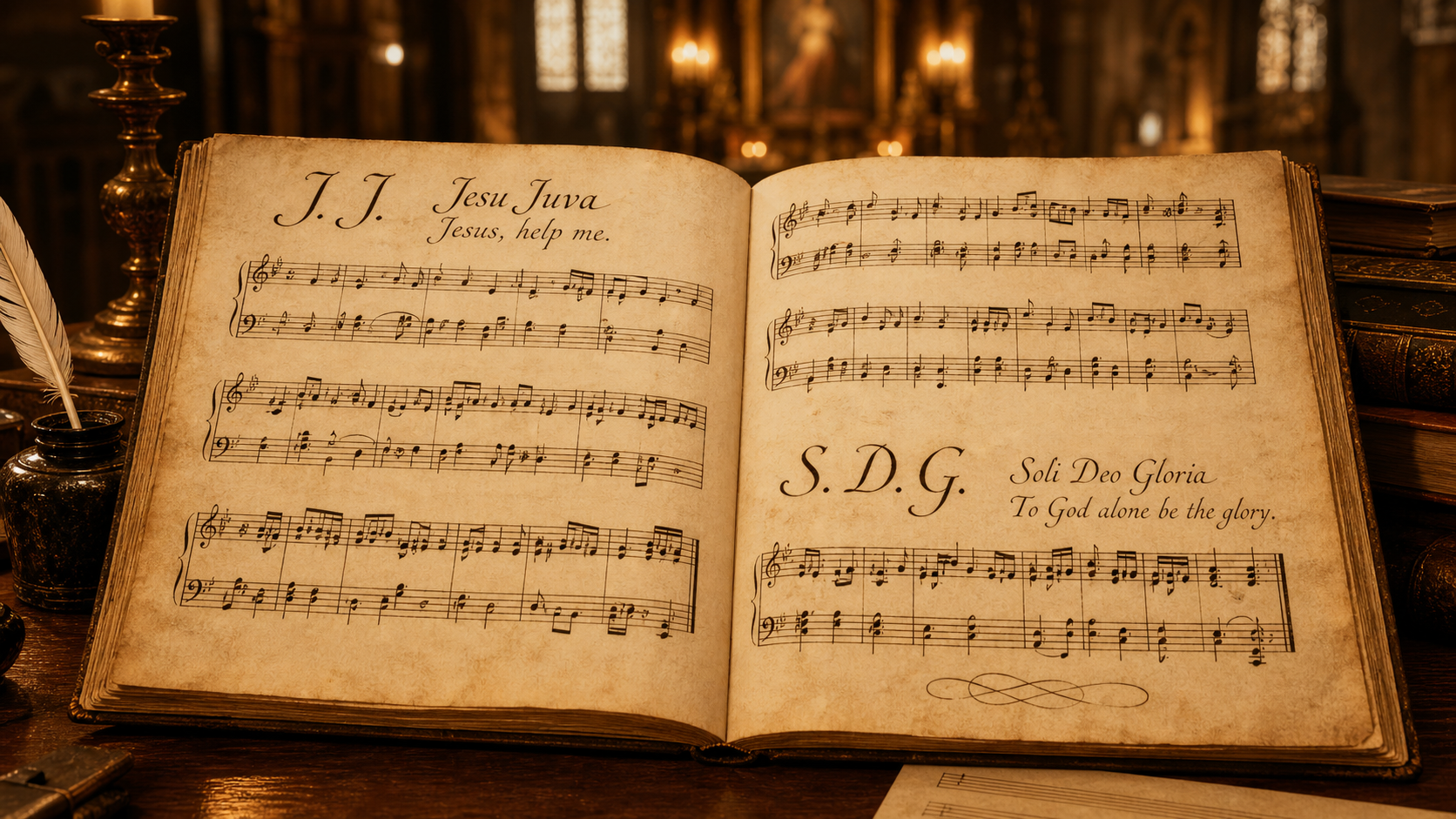
Bach is known to have written J.J. at the beginning of some of his works. These letters stand for the Latin phrase Jesu Juva, meaning “Jesus, help me.”
At the end of some works, he wrote S.D.G. This stands for Soli Deo Gloria, meaning “To God alone be the glory.”
These two phrases reveal something deeply important about Bach’s world.
For him, composing was not just a creative task. He began by asking for Christ’s help, and he ended by returning the glory to God.
In that sense, Bach’s score was like a journey of faith. It began with prayer and ended with praise.
This matters because Bach did not seem to understand his talent as something meant only for personal fame. He saw his musical gift as something received from God, and his work became a way of offering that gift back to God.
That is why his music can be extremely technical, but the technique does not feel empty. His counterpoint, structure, and musical order were not merely meant to impress people. They became a way of reflecting the order and beauty of God’s creation.
Bach’s music was not mainly a stage where he displayed himself.
It was a place where he offered worship.
So when we look at his scores, we are not only looking at notes. We are seeing the quiet prayer of a composer.
“Jesus, help me.”
And at the end, we hear his final confession.
“To God alone be the glory.”
 3. The order of faith hidden in numbers and melodies
One of the most fascinating things about Bach’s music is the way numbers and musical symbols often appear around his work.
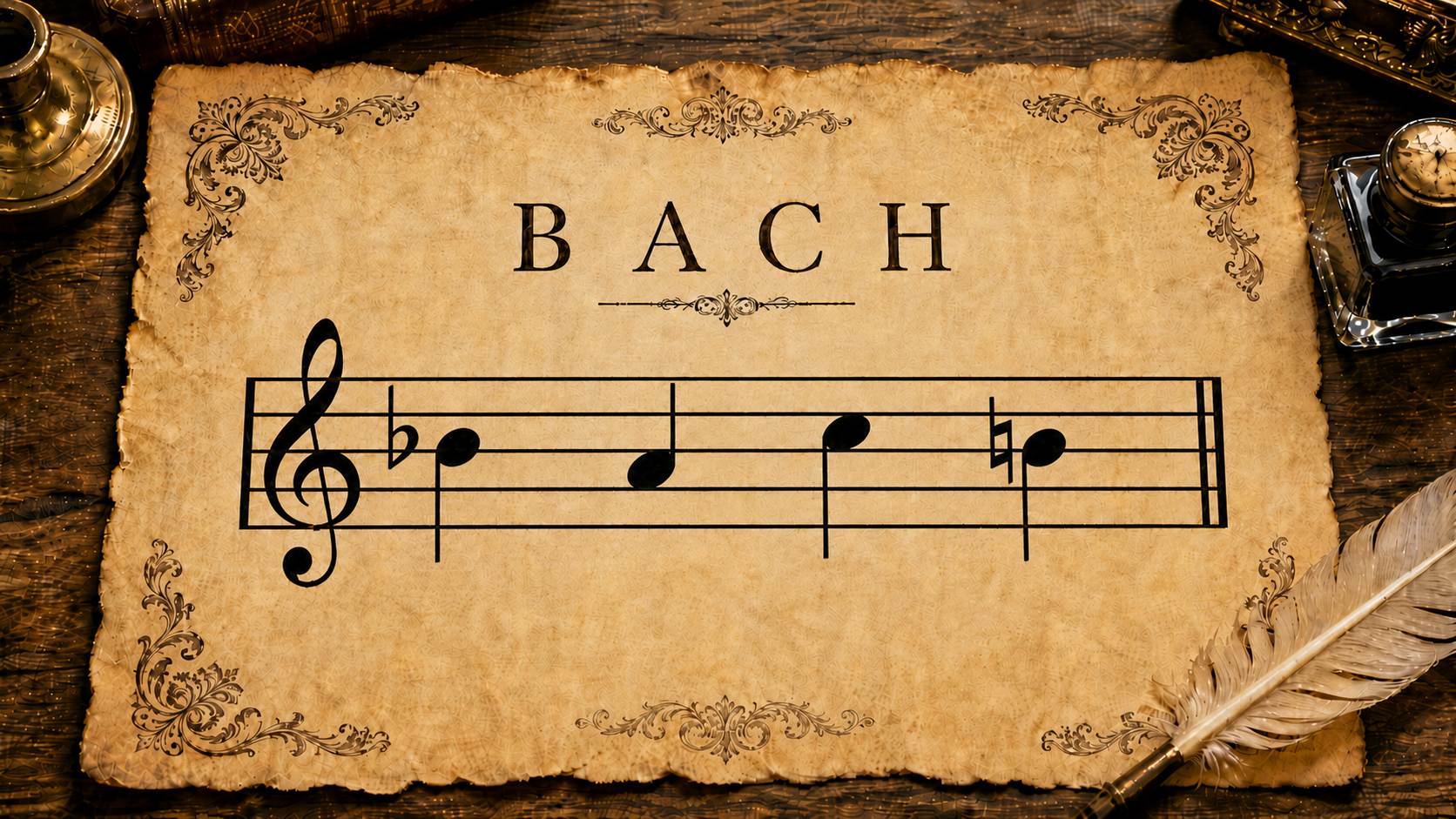
A famous example is the B A C H motif.
In the German system of note names, B means B flat, A means A, C means C, and H means B natural. This means that Bach’s own name can actually become four playable notes.
His name becomes a melody.
It is almost as if the composer quietly placed his name inside the music itself. Instead of writing his identity in words, Bach could let it sound through notes.
Numbers also play an interesting role. When the letters of BACH are counted according to their order in the alphabet, B is 2, A is 1, C is 3, and H is 8. Added together, they make 14. Because of this, the number 14 is often mentioned in discussions about Bach’s music.
Again, we have to be careful. We cannot say that every appearance of a number in Bach’s music was intentionally placed there as a spiritual code. Some interpretations may go too far.
But the deeper point is not just the number itself. The deeper point is that Bach built music with remarkable order.
His music was not simply emotion flowing wherever it wanted to go. A theme appears. It is repeated, transformed, developed, and placed in conversation with other musical lines. Slowly, a deep and beautiful structure begins to emerge.
In this way, Bach’s method can feel very close to preaching.
A preacher takes a biblical text, finds the central message, repeats it, develops it, and brings it before the congregation in a way that can be understood and felt. Bach did something similar with musical themes. He took a musical idea and unfolded it patiently, carefully, and meaningfully.
So his fugues and cantatas are not merely displays of skill.
They have order.
They have structure.
They have meaning.
And beneath that order, we can sense a worldview shaped by faith.
For Bach, music was not chaos.
Music was order.
And that order reflected the God who created the world.
 4. A silent sermon filled with hymns and the cross
The faith in Bach’s music becomes even clearer when we see how deeply he drew from the Lutheran hymn tradition.
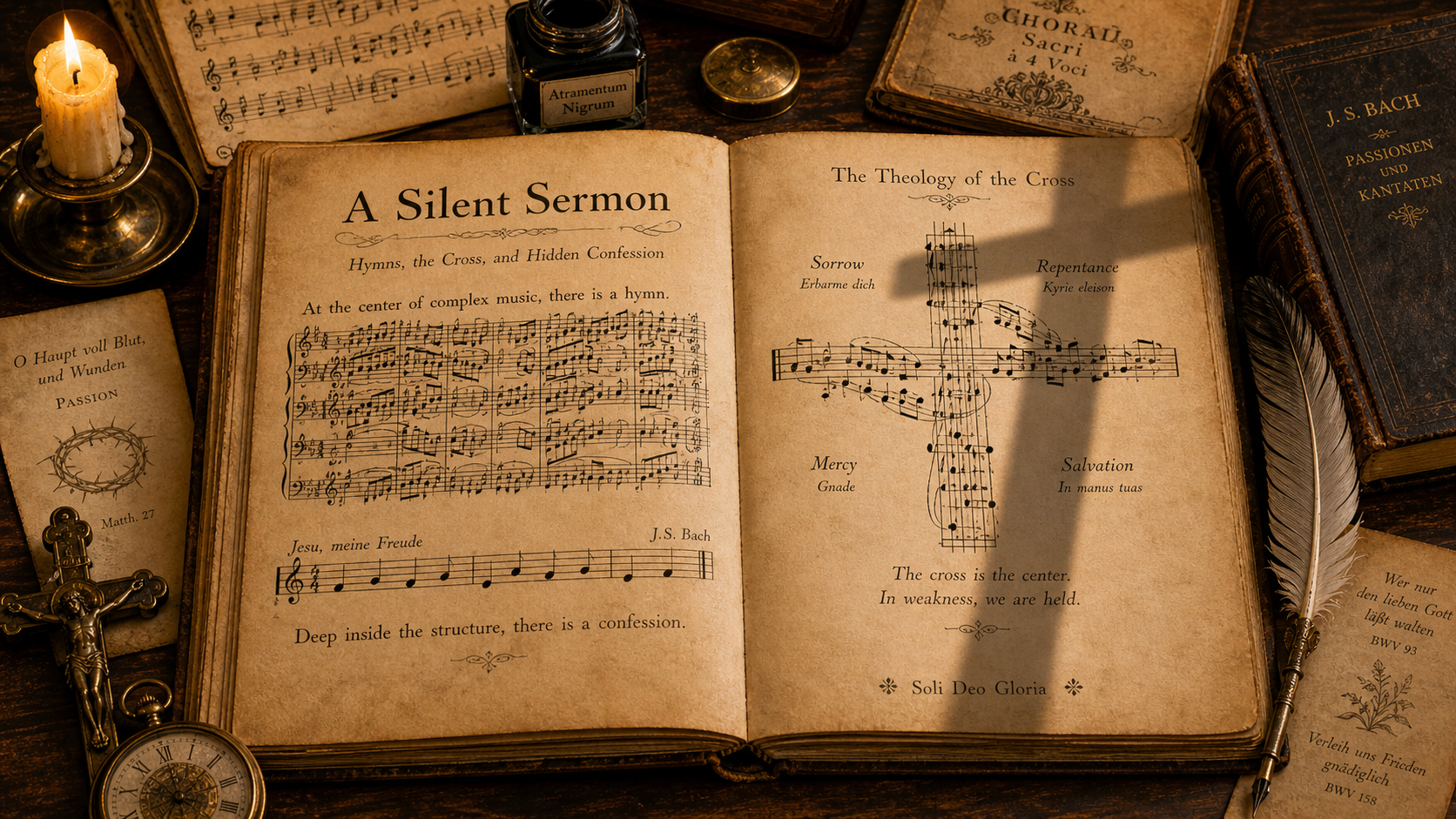
Bach often used chorales, which were Lutheran hymn melodies, in his works. Sometimes the melody is easy to hear. Other times it is hidden deep inside the music, surrounded by many moving voices and rich musical textures.
On the surface, we may hear complex counterpoint. But underneath it, a familiar confession of faith is still flowing.
That is a beautiful image.
At the center of complex music, there is a hymn.
Deep inside the structure, there is a confession.
This also feels close to real life. Our lives often look complicated on the outside. We carry responsibilities, questions, emotions, and struggles. But at the center of a life of faith, there should still be a quiet confession moving beneath everything.
In Bach’s music, the hymn can be hidden, but it is still there.
In the same way, faith may not always be loud, but it must still be present.
People have also noticed musical movements in Bach’s works that seem to suggest the cross. Some melodic lines move upward and downward in crossing shapes. Some musical figures fall like a sigh. These sounds can make us think of human sorrow, repentance, suffering, and the soul standing before the cross.
Of course, we should not claim that every crossing line or falling phrase was a deliberate hidden message. But it is hard to deny that Bach’s music is deeply shaped by the theology of the cross.
This becomes especially clear in his Passion works. Bach does not treat the suffering of Christ as only a sad story. He brings together human sin, Christ’s pain, divine mercy, and the mystery of salvation.
His music does not merely explain the cross.
It brings us before it.
That is the power of Bach’s music.
He did not preach with spoken words.
He preached with notes.
Inside his scores, there is prayer.
There is order.
There is hidden confession.
There is the shadow of the cross.
And all of it moves toward one final statement.
Soli Deo Gloria.
To God alone be the glory.
In the end, Bach’s music asks us a quiet question.
Is this only beautiful music?
Or is it the deep confession of a soul before God?
Perhaps Bach’s score answers softly.
Music can become a sermon.
And true art becomes deepest when it gives glory to God.