Is This Worship… or Just a Show? A Question Rising Again in Today’s Worship
1. At some point, we began to watch worship
Today, we step into worship and naturally follow along. We listen to the music, look at the screen, and move with the flow. High quality sound, thoughtful lighting, and well prepared musicians have become a familiar part of many churches. At times, we are moved by it. At times, we are deeply touched by the atmosphere it creates.
And yet, a quiet question begins to surface.
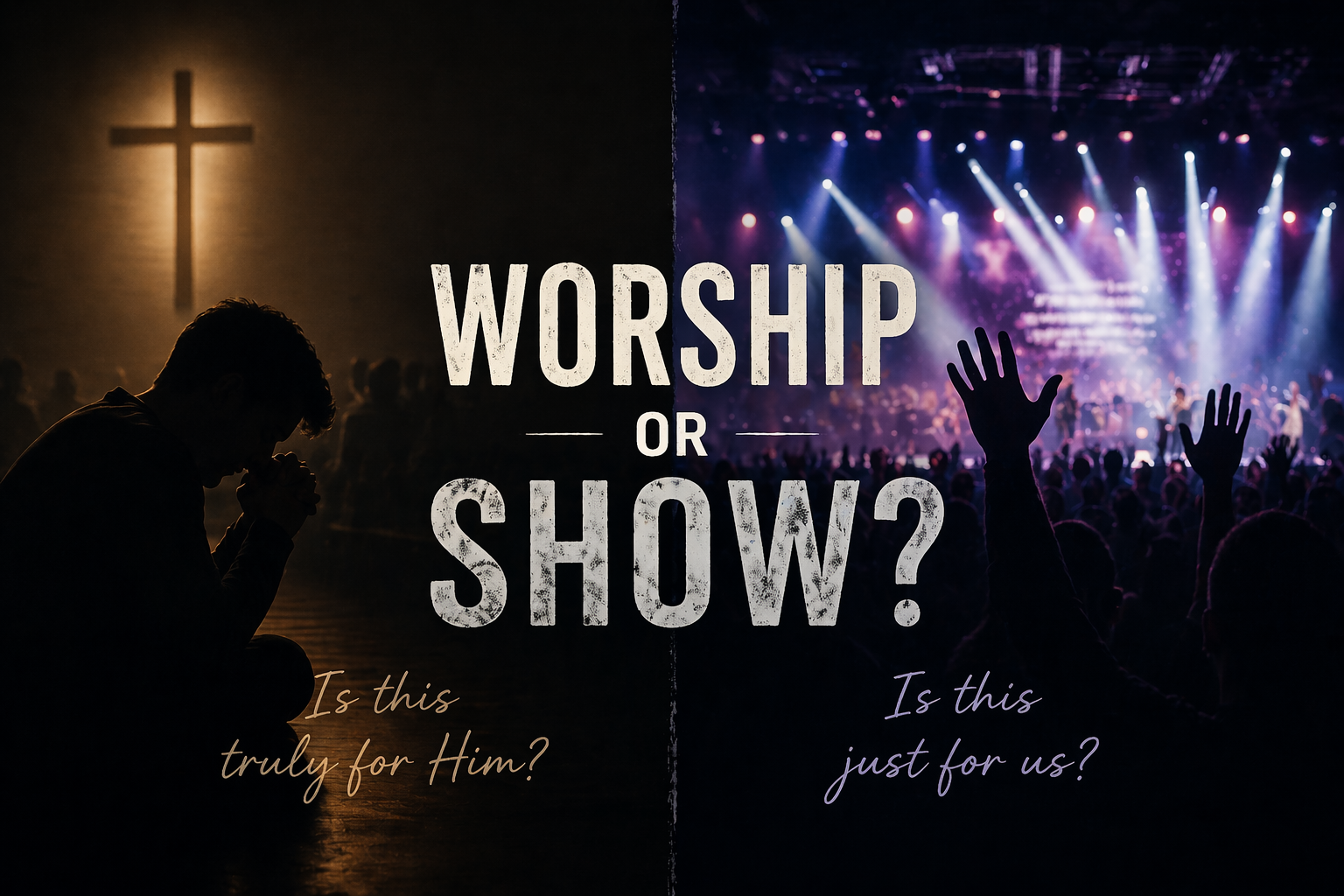
Are we worshiping… or are we watching worship?
It was not always like this. Worship was once the shared confession of a community before God. Each person brought their own voice, and together they offered something that belonged to all of them. It was not something to observe, but something to participate in.
But over time, worship has grown more refined, more structured, and more beautifully arranged. And in that process, something subtle has shifted.
The distance between those who lead and those who follow has slowly widened. The stage has become clearer. The congregation has grown quieter. The songs are still being sung, but often by a few, while the rest follow along or simply listen.
This shift does not feel dramatic. In many ways, it feels natural, even positive. But beneath the surface, the nature of worship is quietly changing. Those who once participated are slowly becoming observers. And in that moment, we are forced to ask again. Is worship something we offer, or something we watch?
2. When emotion becomes the measure, what do we lose
To feel something in worship is not wrong. Joy, gratitude, repentance, and even tears are all natural responses when we encounter God. These are not problems. They are part of what makes worship real.
But something changes when emotion becomes the standard.
We begin to measure worship by how deeply we were moved.
Whether the atmosphere felt strong.
Whether our hearts were stirred.
And without realizing it, the center begins to shift.
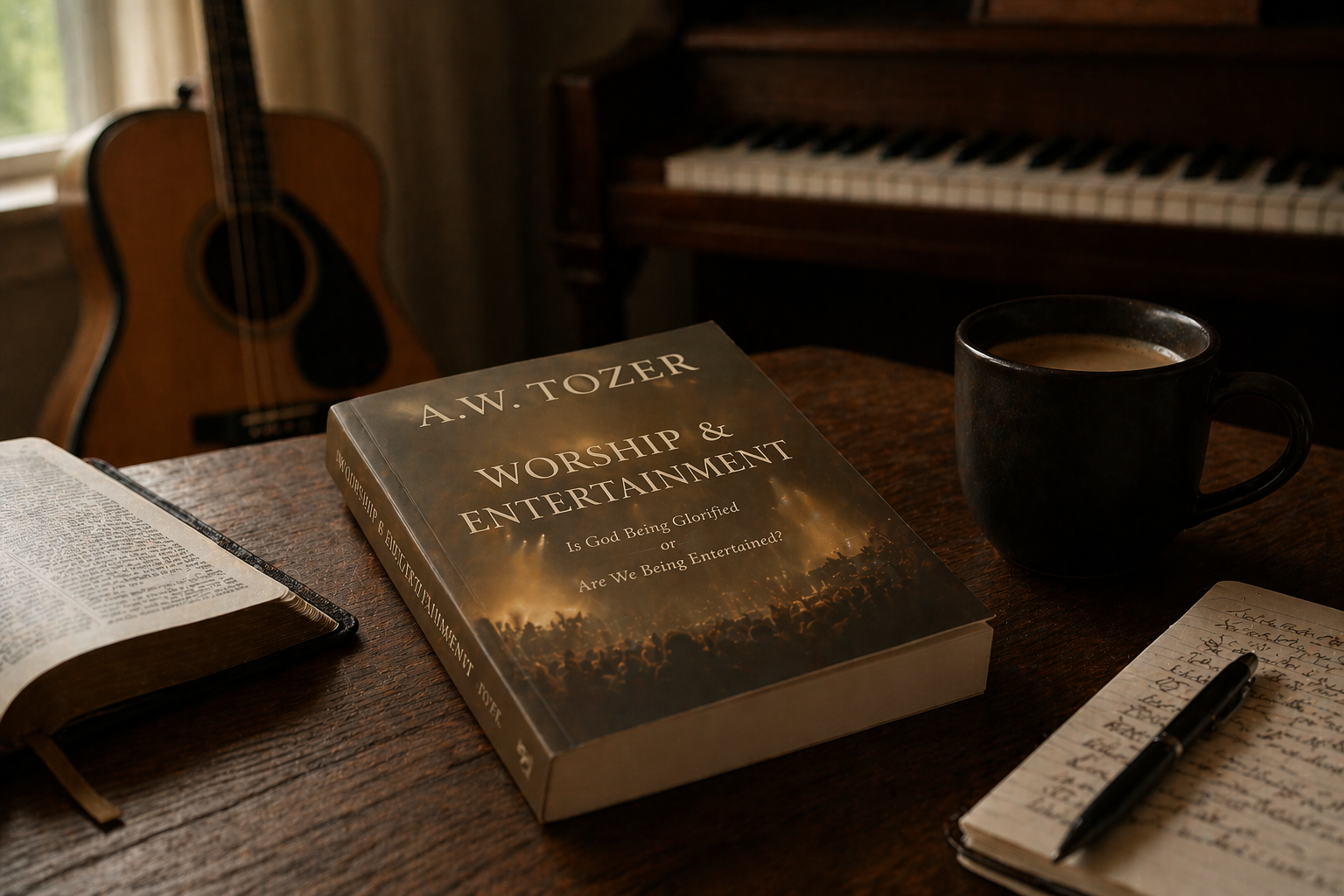
A. W. Tozer once warned about this very movement. He saw that worship could slowly drift from being centered on God to being centered on human experience. Not all at once, but gradually, almost unnoticed.
Emotion can be a response to worship, but it cannot be its foundation. The moment we define worship by what we feel, we have already placed ourselves at the center.
There may be moments when we feel very little, and yet offer something true to God. And there may be moments when we feel deeply moved, but remain centered on ourselves.
The question is not how much we feel.
The question is who we are looking at.
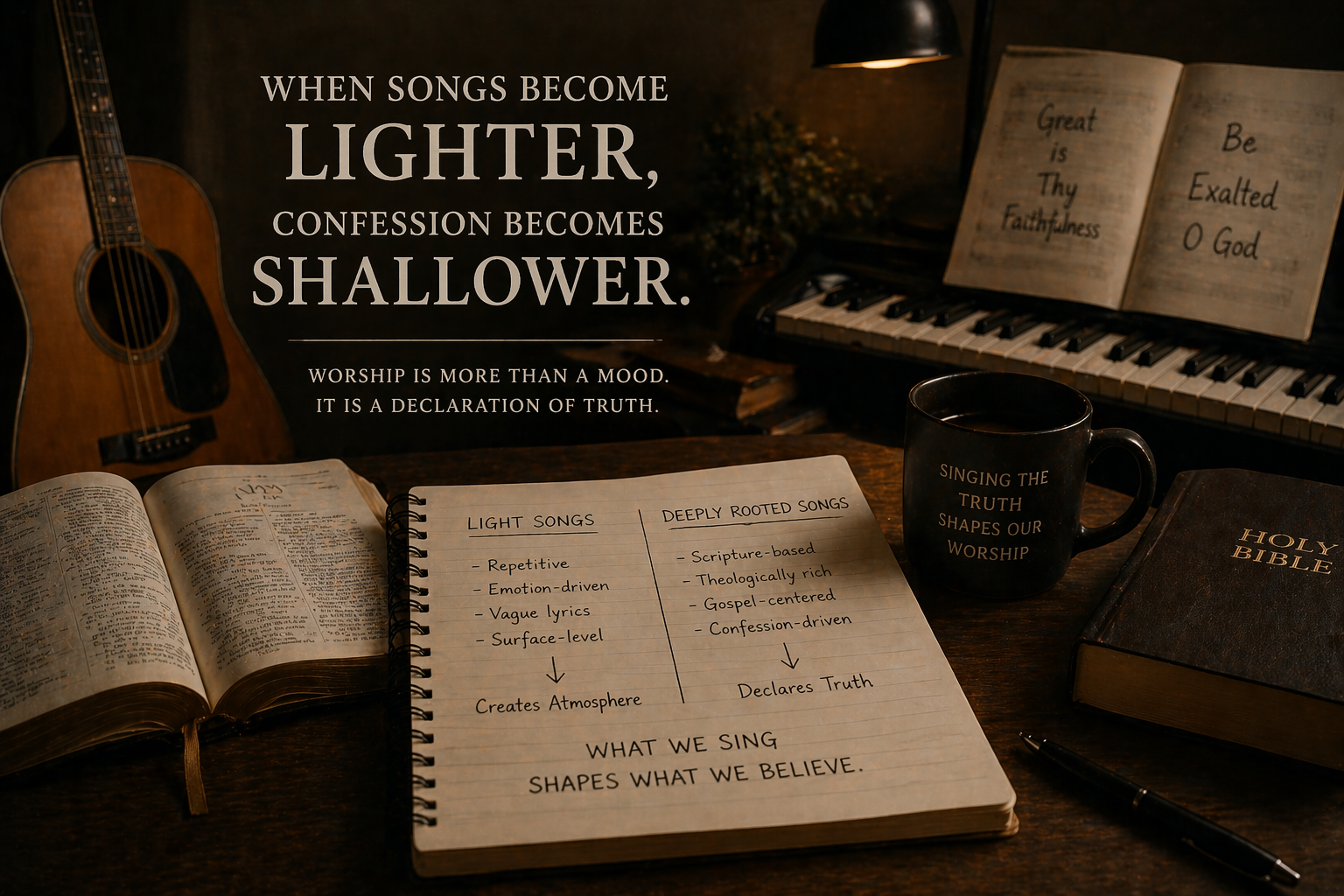
3. When songs become lighter, confession becomes thinner
Another noticeable shift in today’s worship is found in the lyrics of the songs we sing. Many songs have become simpler, more repetitive, and easier to follow. This has clear advantages. It allows more people to join in. It makes worship more accessible.
But when simplicity turns into emptiness, something important is lost.
When the nature of God is no longer clearly expressed,
when the truth of the gospel becomes less defined,
when faith is reduced to emotion rather than confession,
the song may still be sung, but its depth begins to fade.
In response to this, a quiet movement has begun to grow. Some are returning to Scripture based songs. Others are rediscovering hymns and theologically grounded worship. There is a renewed desire not just to sing, but to say something true.
This is not a rejection of modern worship. It is a correction of imbalance.
Because worship is not only about melody.
It is about confession.
And what we confess shapes what worship becomes.
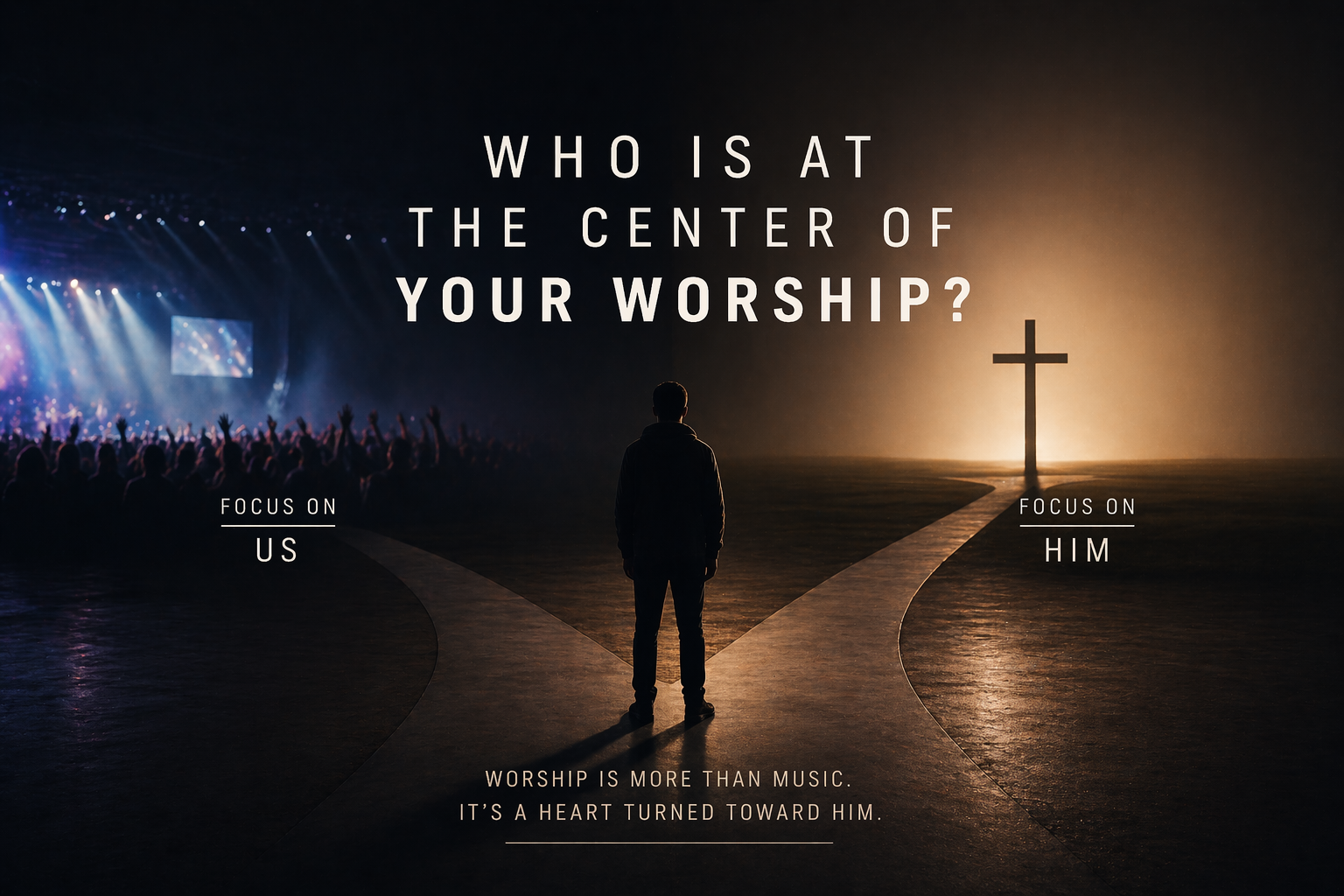
4. In the end, everything returns to one question
All of these changes and tensions eventually lead back to a single question.
Who is at the center of this worship?
Styles may differ. Some may prefer traditional forms, while others embrace contemporary expressions. Some worship may be simple, others more complex. But beyond all of these differences, one thing matters more than anything else.
Is God at the center
or are we
This question is simple, but it is not easy. It requires honesty. It requires reflection. And often, it reveals more than we expect.
What we are seeing in today’s worship culture may feel like confusion, but it may actually be a process of restoration. A deeper hunger for something real is emerging. A desire for worship that is not only beautiful, but true.
And so worship continues to ask us, quietly but clearly
Am I standing before God
or am I still centered on myself
As long as this question remains, worship will not become empty form. And in the place where this question is alive, worship begins to return to where it belongs.