New York Times Bestselling Author Lee Strobel on Suffering, the Supernatural, and 'The Case for Miracles'
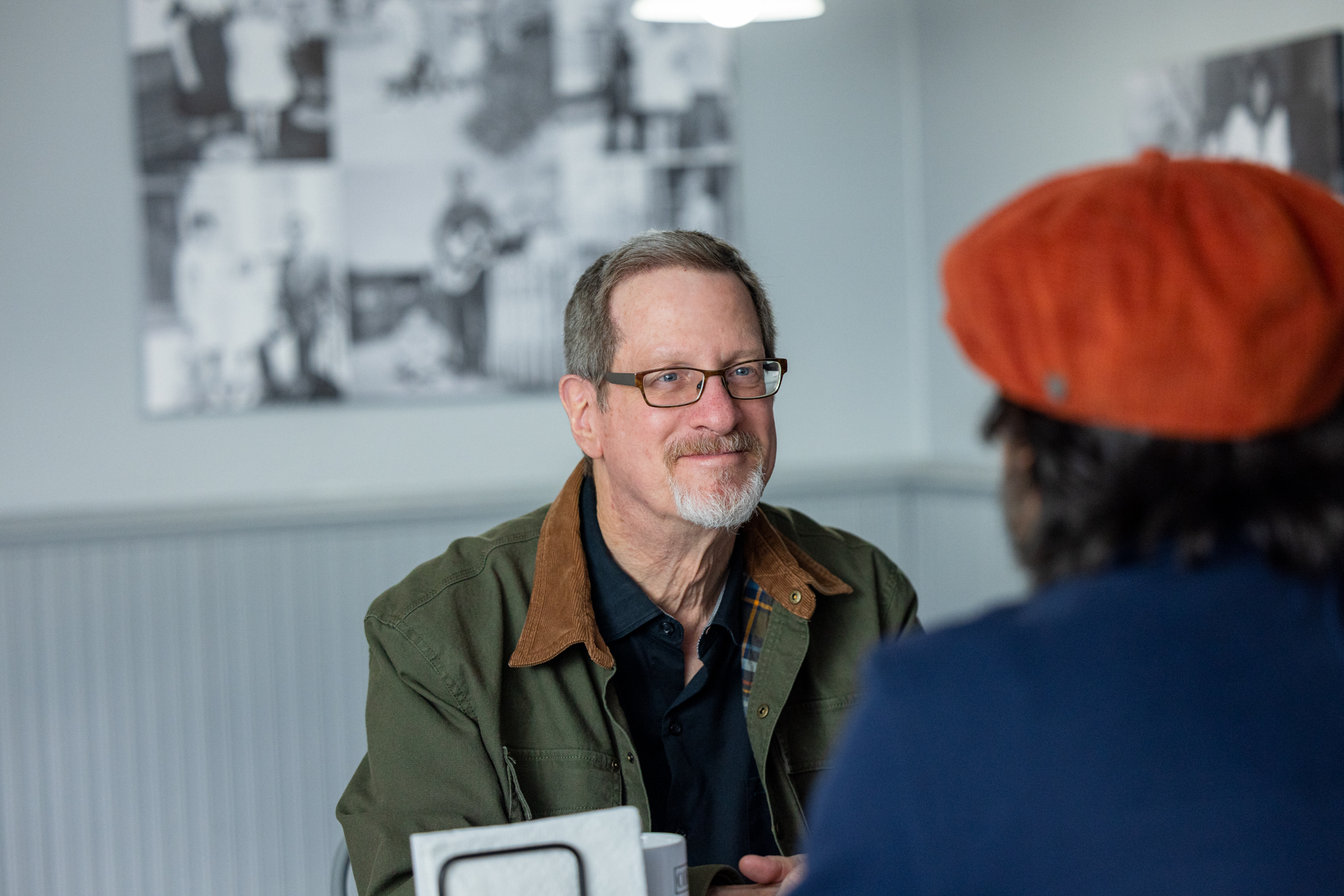 Lee Strobel in 'The Case for Miracles'. Photo image courtesy The Sandoval Agency
New York Times bestselling author Lee Strobel’s journey to his faith in Jesus Christ is well documented. A highly successful editor at the The Chicago Tribune, Strobel was an atheist who set out to prove that Christ was nothing more than a solid teacher rather than the Son of God. What he found forever changed his life and the lives of millions who read his book, The Case for Christ.
Over the years, this author of more than 25 books, including 11 from his The Case For series, has meticulously researched and investigated many of the claims made in the Bible, only to find them accurate and true each and every time.
Strobel’s latest project is a continuation of his 2018 bestseller The Case for Miracles, a work that was designed to answer an age-old question: Do miracles still happen today? Set to release as a Fathom movie event in theaters December 15 through the 18, The Case for Miracles is a documentary that takes viewers on a cinematic journey through suffering and ultimately joy to reveal the true essence of God’s design for miracles.
In the film’s 147 minutes, Strobel uses his trademark journalistic style to craft a case that challenges skeptics, strengthens believers, and ultimately leads audiences to the ultimate miracle, the Messiah’s birth in a stable more than 2,000 years ago.
I recently sat down with the affably astute Strobel to discuss the sociological and physiological impact or miracles in our lives, common threads he found in people who have experienced a miracle, and the most spectacular miracle he uncovered while working on this documentary.
You have had so much success as an author with your The Case For … books over the years. Regardless, there always seems to be a moment or trigger where you say to yourself, “I have to do this project!!” For The Case for Miracles, what was that moment for you?
My wife has an incurable neuromuscular condition. She's been in pain for 20 years and she will be in pain the rest of her life. It's an incurable condition unless God does a miracle. And He hasn't chosen to do a miracle in her life. So even though we've prayed for it, that was kind of the impetus for me to ask, is God still doing this stuff? Is this just stuff you read about in the Gospels, or do we have solid documentation that He's really intervening to this day? And what about those cases where you pray and nothing happens? What do you do with that? And so, in the book and in the movie, we deal with those questions and the different cases, but we don't shy away from the tough questions about why everybody isn't healed immediately when they ask God for a healing.
Why a Fathom Movie event for this in addition to your 2018 book of the same name? Why did you decide to go the extra mile with this one?
Because it seems that cinema is the language of young people. They tend to respond to theatrical productions or visual presentations like this. I have a great passion to reach young people with the Gospel and with the message of Jesus. And so, we wanted to speak their language. It's almost like learning another language as you go on a mission trip to some other land to learn how to speak their language well, to speak the language of young people. I think you have to understand how to visually present something in a clear and compelling way that is still based on reality and truth, but uses the skills of cinematographers, directors, and producers to present it in a way that has access to their soul.
Many cultures see miracles differently. For the sake of our conversation, how would you define a miracle?
Yes, they do. This is important because I think a lot of times people throw around the word miracle casually. Oh, it's a miracle, I found a parking spot. That kind of thing. There was a philosophy professor by the name of Richard Purtill. I think he came up with the best definition. He said, “A miracle is an event brought about by the power of God that is a temporary exception to the ordinary course of nature for the purpose of showing that God has acted in history.” It's an intervention. It's a temporary exception. And that's important because a lot of the skeptics will say, ‘Well, miracles are impossible 'because they violate the laws of nature.’ You can't violate the laws of nature. That's not true. I have a pen here somewhere, and if I were to take that pen and drop it, the law says it would hit the floor. But if I drop that pen and you reach in and grab it before it hits the floor, you haven't violated the law of gravity. You haven't overturned the law of gravity. You're merely intervening. And if we have good evidence from cosmology, physics, and biochemistry, that there is a creator of the universe, and I believe the evidence is clear and convincing that we do, then He certainly should be able to intervene in the laws of nature that He himself created.
So often we hear about people who say, I'm believing for a miracle. It's usually in relation to a loved one who's suffering and struggling, or some sort of a situation with their job or their finances. But it begs the question, what is the sociological or psychological impact of believing in miracles?
I think there's a hope that comes when we believe that God is capable and willing to be active in our lives, even today, 2000 years after Jesus walked the earth. I think that's part of what it is. There is a hope. I believe God will heal all of His children. It may not be for many of them like my wife until she moves on into heaven. But after 549,263,921 perfect days in the presence of God in heaven, her memory of suffering that she's gone through in this world's going to be no worse as one old saint put it as one night in a mediocre hotel. It puts things into perspective. Besides, God gives us a verse, Romans 8:28 that says, “God causes all things to work together for good, for those who love Him and are called according to His purpose.”
And sometimes we throw that out like a greeting card verse No, this is from the Bible. This is true. And people who say that God can't do that in my life, He can't draw any good from the suffering that I'm going through. What I like to say is, wait a minute. God took the worst thing that could ever happen in the universe, which is the death of the Son of God on the Cross. And from that, He produced the best thing that's ever happened in the universe, which is the opening of heaven to all who follow Him. So, if He can take the worst thing in the universe, and from that create the best thing, then He can even take my wife's pain and create good from it, as we have seen Him do. She is a woman of compassion and empathy. I don't believe she would be if she had not herself gone through these difficult times.
Let’s dive into the film. You traveled around the country visiting with people who had experienced a miracle of some sort in their lives. In each of these cases, were there any common threads that you found in each person who had experienced a miracle?
The common thread to the ones that we documented was the solid medical documentation of them. In other words, they come from very different backgrounds. One was a woman stricken with multiple sclerosis, who was diagnosed in the Mayo Clinic as a teenager, and had rapidly deteriorated in hospice. She was on her deathbed. And she hears a voice of God saying, ‘Get up my child and walk.’ She's instantly healed of multiple sclerosis. Two doctors wrote about it in books. They wrote. “We have a woman who was blind for a dozen years.” Juvenile Macular Degeneration is an incurable condition. She went to a school for the blind, learned braille, and married a Baptist pastor. And one night he prayed and said, ‘Lord, I know you can heal my wife. I know you can do it, and I pray you do it tonight.’ And with that she opened her eyes and saw her husband for the first time.
She said, “I was blind. I was in darkness for years. But now I can see perfectly.” And her eyesight remained for the rest of her life, another 50 years. So, the commonality to me as a researcher was, are these cases for which we have solid medical documentation? There is no natural explanation. There's no other case of instantaneous healing like that, of Juvenile Macular Degeneration in the annals of history. We interviewed another guy who was born with a paralyzed stomach. They had to put tubes in him as an infant where they could feed him through tubes. It stayed that way for the first 16 years of his life until someone prayed for him. He felt an electric shock go through his body and he was able to eat normally. They went in and found his stomach was the only case of spontaneous healing of gastroparesis in history, and they took out the tubes. During our interview, he pulled up his shirt so we could see the scars where they had put the tubes that he was fed through for 16 years. The thing I love about these cases is they are well documented and they're believable. They're not just things you hear about in the street.
I think someone asked you this in the film, but what's the craziest miracle you've ever come across?
Oh man. I think that was Barbara Snyder, the one I mentioned with multiple sclerosis. Here's a woman curled up and dying. She has a tube in her throat so she could breathe connected to oxygen. She was curled up like a pretzel. Her body was rigid. One lung was at half capacity. The other one was depleted. She had lost control of her urination and bowels. She was blind. All she could see was gray shapes. We documented that 450 people were praying for her. And she hears the voice of God from the corner of her room saying, ‘Get up my child and walk.’ And she rips the tube out from her throat and jumps out of bed. And it was Pentecost Sunday. She's completely, instantaneously healed. They go to church to celebrate, to tell the church, because all they knew was she hadn't walked in seven years. Her legs were atrophied but here she is completely healed. And they go to church to thank God. There's a service going on. The pastor gets up and says, ‘Does anyone have any announcements?’ And she comes walking down the center aisle and the entire place erupts with people singing, ‘Amazing grace. I once was blind and now I see.’ She ended up marrying a pastor and pastoring a little church in Virginia for the rest of her life.
After people have had a chance to get out there to see The Case for Miracles, what would you like to see people take away from their viewing experience? What's your greatest hope for this film?
I hope that Christians will come to the movie. Maybe they come by themselves or with a group. I hope it deepens their faith to the degree that they get on the phone the next day and call a friend who's spiritually confused, or spiritually wandering. They didn't even know where they were spiritually. They could say, ‘Hey, I just saw a film about God continuing to do miraculous things in our midst. Why don't you come with me tonight? Let's see the movie. ’ They could bring someone who's not a believer and then afterward have a conversation and talk about what you saw, and maybe invite them to come to Christmas services at your church. That would be my ultimate outcome.
The Case for Miracles will be released in theaters nationwide, December 15 - 18 as a Fathom Movie Event.
WATCH A TRAILER FOR THE CASE FOR MIRACLES: