That Day, One Song Changed the Direction of Worship
 1. The unexpected direction created by one song
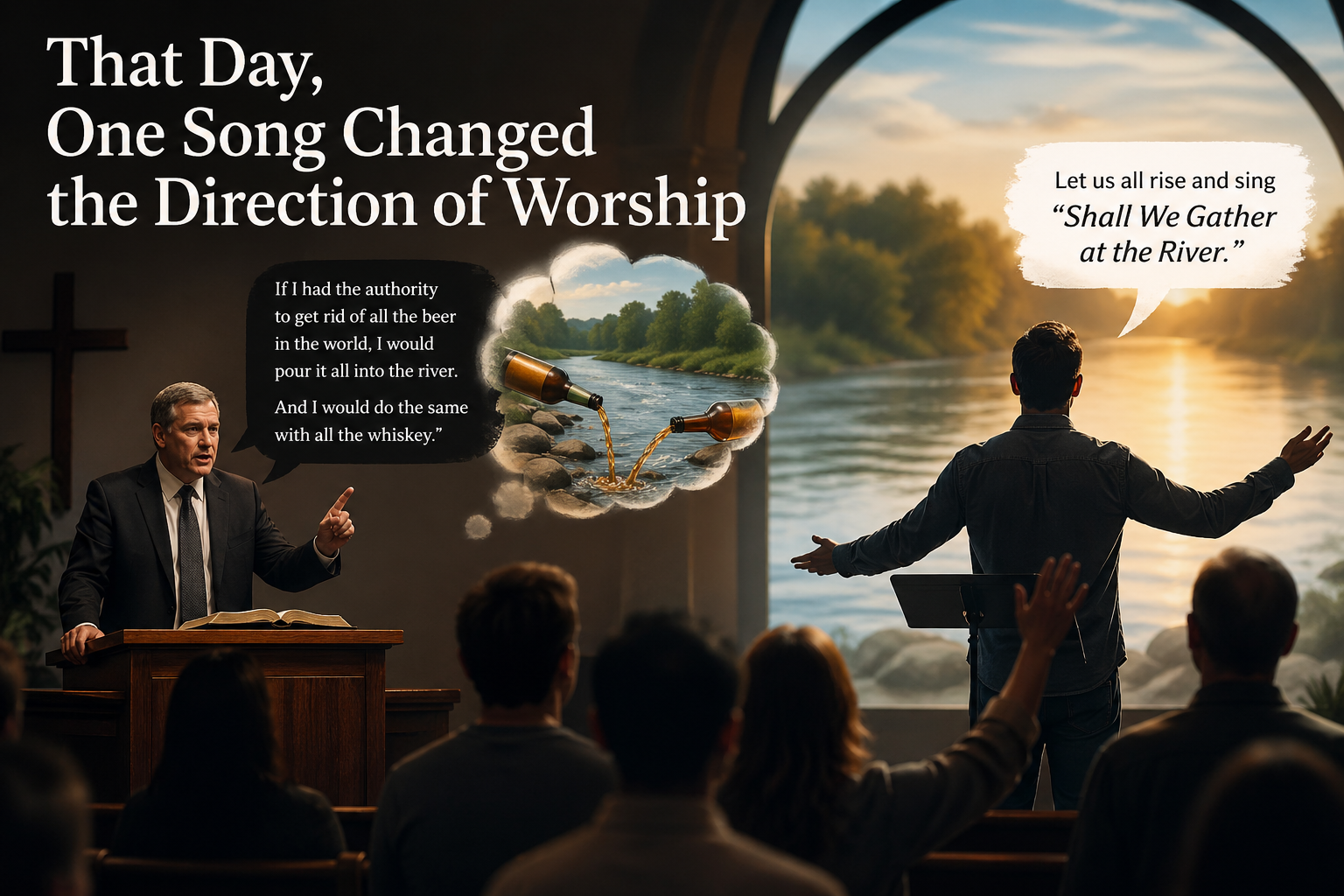
A pastor once said during his sermon that if he had the authority to get rid of all the beer in the world, he would pour it all into the river. Then he added that he would do the same with all the whiskey. After the sermon ended, the worship leader stood up and said, let us all rise and sing “Shall We Gather at the River.”
Most people hear this story as a simple joke. It often makes people smile. But this short moment does not end as humor. It reveals something important that we often overlook in worship. Song selection is never neutral. The song that was chosen in that moment did not support the message of the sermon. Instead, it quietly redirected the meaning of the entire service.
We tend to think of songs as just one part of the order of worship. But that is not really true. A single song can move the emotions of a congregation, shape how people think, and even redefine what they remember from the sermon. Music reaches the heart faster and deeper than words. Because of that, the placement of a song can change the entire story of a service. Once we begin to see this, it becomes difficult to treat song selection lightly.
 2. Worship is a flow and a story
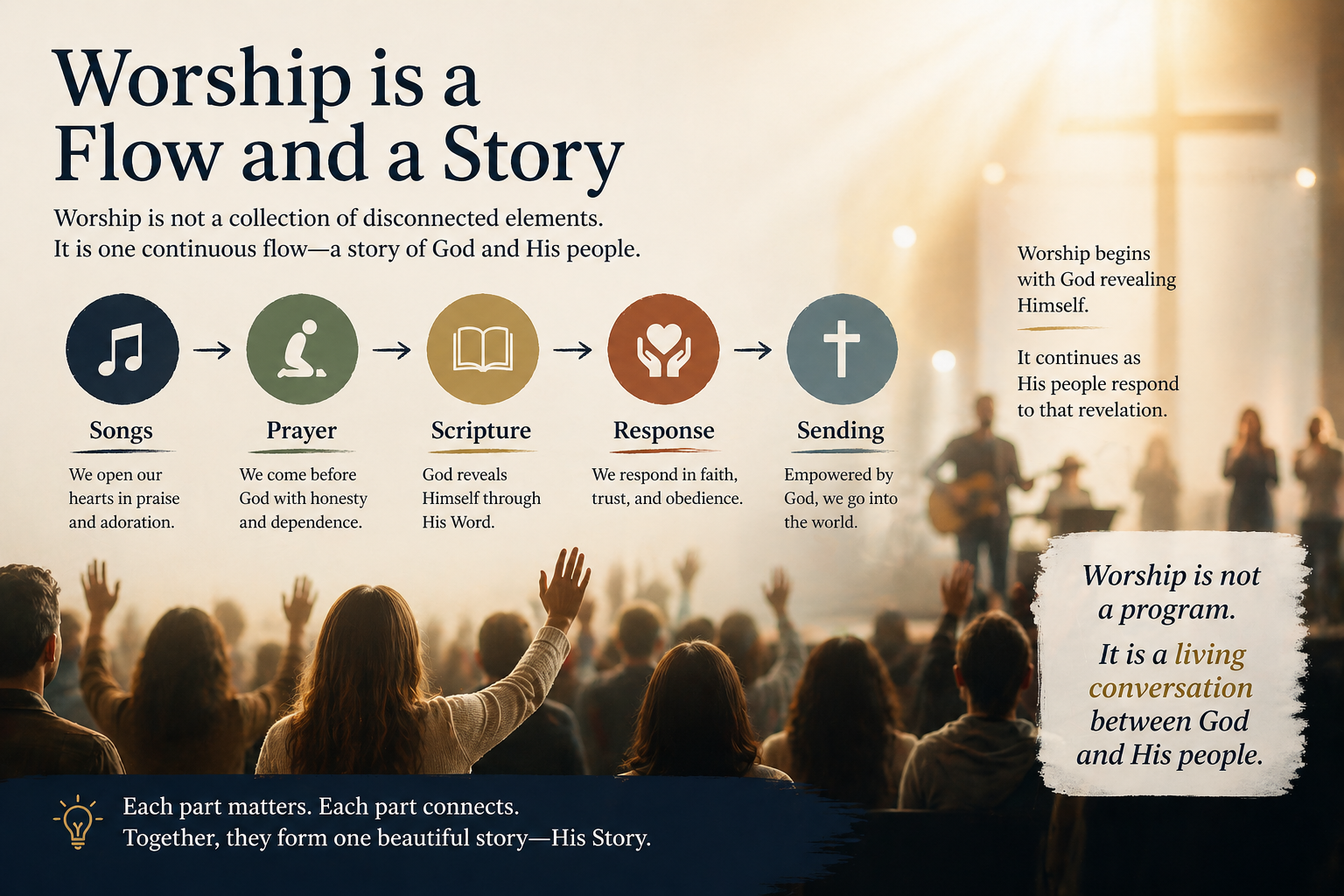
At this point, something becomes clear. Worship is not a collection of disconnected elements. If one song can reshape the meaning of a service, then the entire service must already be connected as a single flow.
In many churches today, worship includes songs, prayer, Scripture, and other elements. These are not meant to stand alone. They belong together within one unfolding story.
From a theological perspective, worship begins with God revealing himself. Then it continues as people respond to that revelation. When we miss this structure, worship starts to feel like a program. But when we understand it, we begin to see why each part matters and how everything connects.
Within this flow, songs are not just there to create an atmosphere. They help people stand before God. They give language to what the congregation believes and confesses. The first song can open hearts, and the songs that follow can guide people deeper into focus. In the end, worship is not a well organized event. It is a living conversation between God and his people.
 3. The worship leader as a spiritual guide
If worship is truly a flow and a conversation, then someone has to carry that flow with care. That responsibility falls on the worship leader.
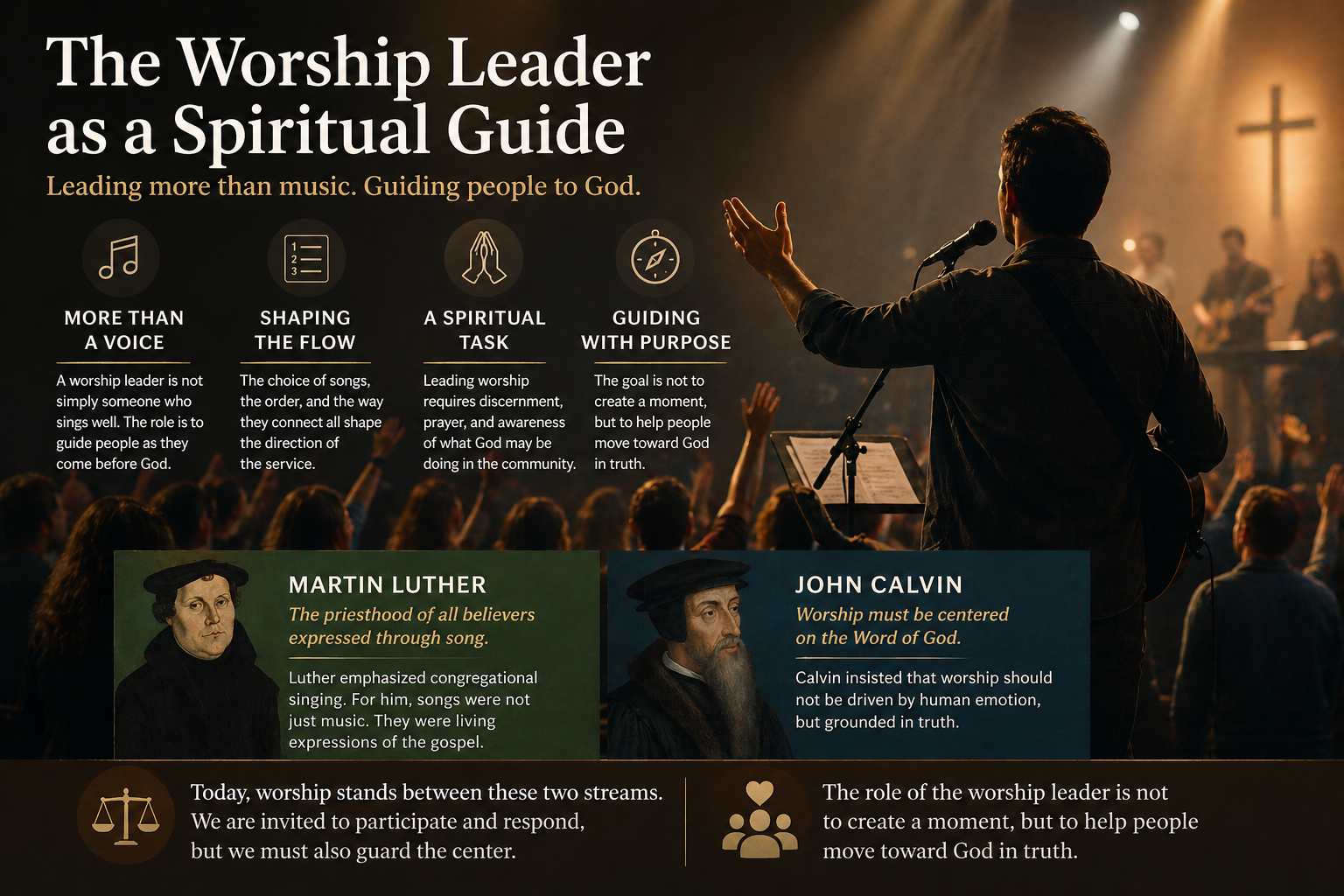
A worship leader is not simply someone who sings well. The role is to guide people as they come before God. The choice of songs, the order, and the way they connect all shape the direction of the service.
This is why leading worship cannot be reduced to musical ability. It is a spiritual task. It requires discernment, prayer, and a deep awareness of what God may be doing in a community.
Here we can remember two important voices in church history. Martin Luther emphasized the importance of congregational singing. For him, songs were not just music. They were living expressions of the gospel. On the other hand, John Calvin insisted that worship must remain centered on the Word of God. He believed that worship should not be driven by human emotion, but grounded in truth.
Today, worship stands somewhere between these two streams. We are invited to participate and respond, but we must also guard the center. The role of the worship leader is not to create a moment, but to help people move toward God in truth.
 4. Where is worship really centered
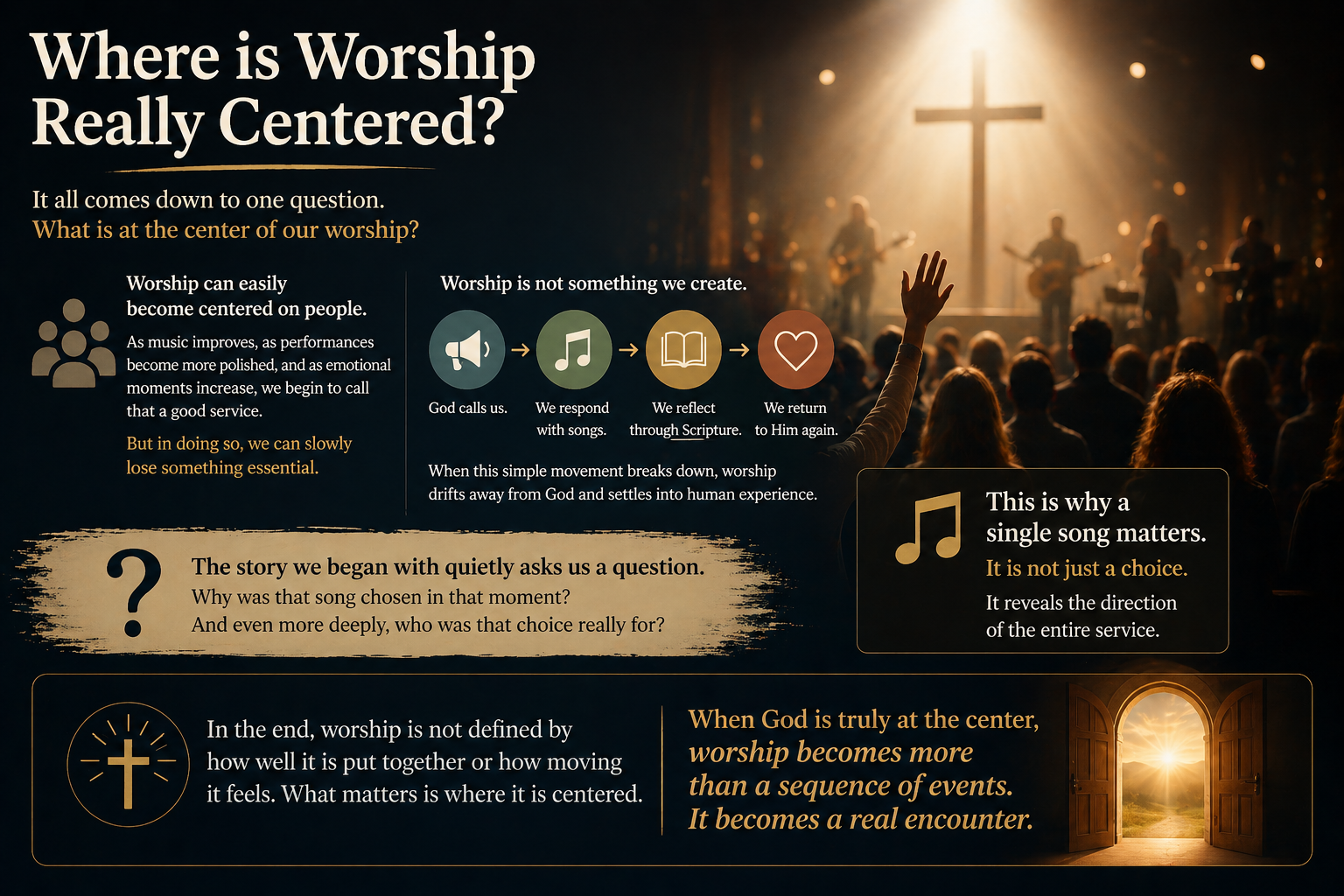
All of this leads to one question. What is at the center of our worship.
Worship can easily become centered on people. As music improves, as performances become more polished, and as emotional moments increase, we begin to call that a good service. But in doing so, we can slowly lose something essential.
Worship is not something we create. It begins with God calling us. We respond with songs, we reflect through Scripture, and we return to him again. When this simple movement breaks down, worship drifts away from God and settles into human experience.
This is why a single song matters. It is not just a choice. It reveals the direction of the entire service.
The story we began with quietly asks us a question. Why was that song chosen in that moment. And even more deeply, who was that choice really for.
In the end, worship is not defined by how well it is put together or how moving it feels. What matters is where it is centered. When God is truly at the center, worship becomes more than a sequence of events. It becomes a real encounter.