The Abortion Battle Has Moved. Most Christian Leaders Haven't Caught Up Yet.
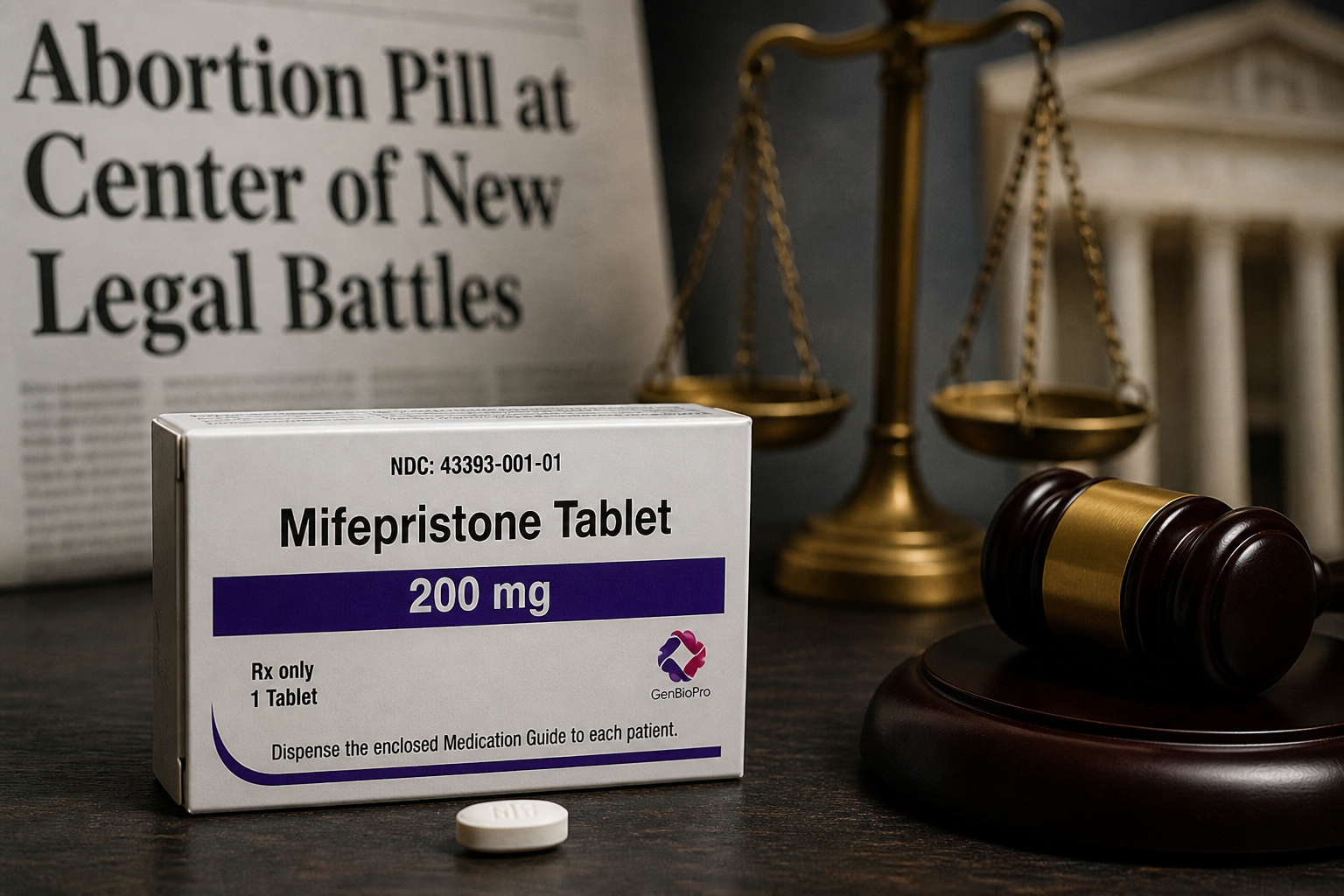 Illustration: AI-generated via ChatGPT
The abortion pill is now the front line of the pro-life legal battle. Most Christians haven’t updated their understanding of that yet.
This week, Supreme Court Justice Samuel Alito paused a federal appeals court ruling that would have restricted the mail distribution of mifepristone — the most widely used abortion drug in America. The pause runs through May 11, when the full Court will decide whether to intervene or let the restriction stand.
Here’s the number that reframes everything: more than 63% of all abortions in the United States now happen through the abortion pill, not through surgical procedures. And here’s the number almost nobody knows — surveys of abortion providers indicate that pharmaceutical access is a primary reason the total number of abortions in America has not dropped but increased since Roe v. Wade was overturned in 2022. Tony Perkins of the Family Research Council describes the reaction when he shares this with people: “Bewilderment sets in.” That’s the right word.
The ruling that made Dobbs possible changed the legal landscape profoundly. The on-the-ground reality of abortion in America has been largely insulated from it by the pharmaceutical channel. That’s the context every Christian leader needs to understand right now.
What actually happened this week and why Alito’s role is more complicated than it looks
The underlying legal dispute is about FDA procedure, not abortion itself. Louisiana argued the FDA violated proper federal process when it eliminated the requirement that women see a doctor in person before obtaining mifepristone. The appeals court agreed Louisiana had a strong enough case to block that rule while the lawsuit continues.
Alito issued the pause for a structural reason that rarely gets explained: as the Supreme Court’s assigned justice for the 5th Circuit, he handles emergency applications from that court. It doesn’t mean he supports abortion access. It means he has a procedural responsibility and he used it to preserve the status quo while the full Court reviews the situation.
The more revealing story is the Trump administration’s posture. Pro-life organizations that broadly supported this administration are now publicly frustrated. Students for Life calls the FDA’s behavior “stall tactics.” The Family Research Council warns of an “enthusiasm gap” in the Republican base if the administration doesn’t act. Susan B. Anthony Pro-Life America is being more careful with its words, calling this “an important opportunity to prioritize women’s safety”.
The reason for the caution is visible in one number: since Roe was overturned, abortion has appeared on state ballots 17 times. Voters sided with the abortion-rights position in 14 of those 17. The White House is watching that scorecard. Acting aggressively on mifepristone before the 2026 midterms satisfies the pro-life base but risks the independent voters who were critical to the 2024 win. The Trump administration announced a safety review, has been running it slowly, and hoped the courts would stay out of it. Last Friday’s 5th Circuit ruling made that strategy harder to sustain.
It’s worth saying plainly: the political interests of a party and the convictions of the pro-life movement are not always the same thing. This week is a live example.
One more data point worth holding: a study by the Ethics & Public Policy Center covers prescriptions of mifepristone for abortion from Jan. 1, 2017, through Dec. 31, 2023 found the rate of serious adverse events rose from 10.15% when the in-person requirement was enforced to 11.50% after the FDA removed the requirement, a statistically significant difference of 1.35 percentage points and a 13% increase — far above the 0.5% rate listed on the drug’s label. The pastoral implications are quiet but real.
Why this matters for leaders
The abortion landscape your congregants are living in looks different from the one most of them learned to think about. The question is no longer primarily about clinics and procedures. It is about pills, telehealth appointments, and mail delivery, which happen privately, with minimal oversight, and often without a pastor, counselor, or trusted friend knowing. Dobbs was a genuine turning point in law. It has not yet been a turning point in the number of lives lost.
Christian leaders who haven’t updated their understanding of this shift may find themselves unprepared when the pastoral moment arrives. The legal battle matters, but so do the conversations that happen in your office, or don’t happen at all.
A question to carry into the week:
Do the people you lead know that abortions in America have not declined since Dobbs and that the reason is largely the abortion pill? Is there a pastoral conversation, a teaching moment, or a care framework your ministry needs to build regardless of what the Supreme Court decides?
This is a draft from a new weekly briefing we’re developing for Christian leaders — curated from The Christian Post and other reporting, with the analysis and leadership application that busy leaders don’t have time to do themselves.
If you’re a pastor, ministry executive, or church leader, does this kind of briefing add value to your week? I’d genuinely like to know in the comments.