The Change That Began in Worship Without Singing: The Story of Luther and Calvin
1. A Time When We Could Not Sing
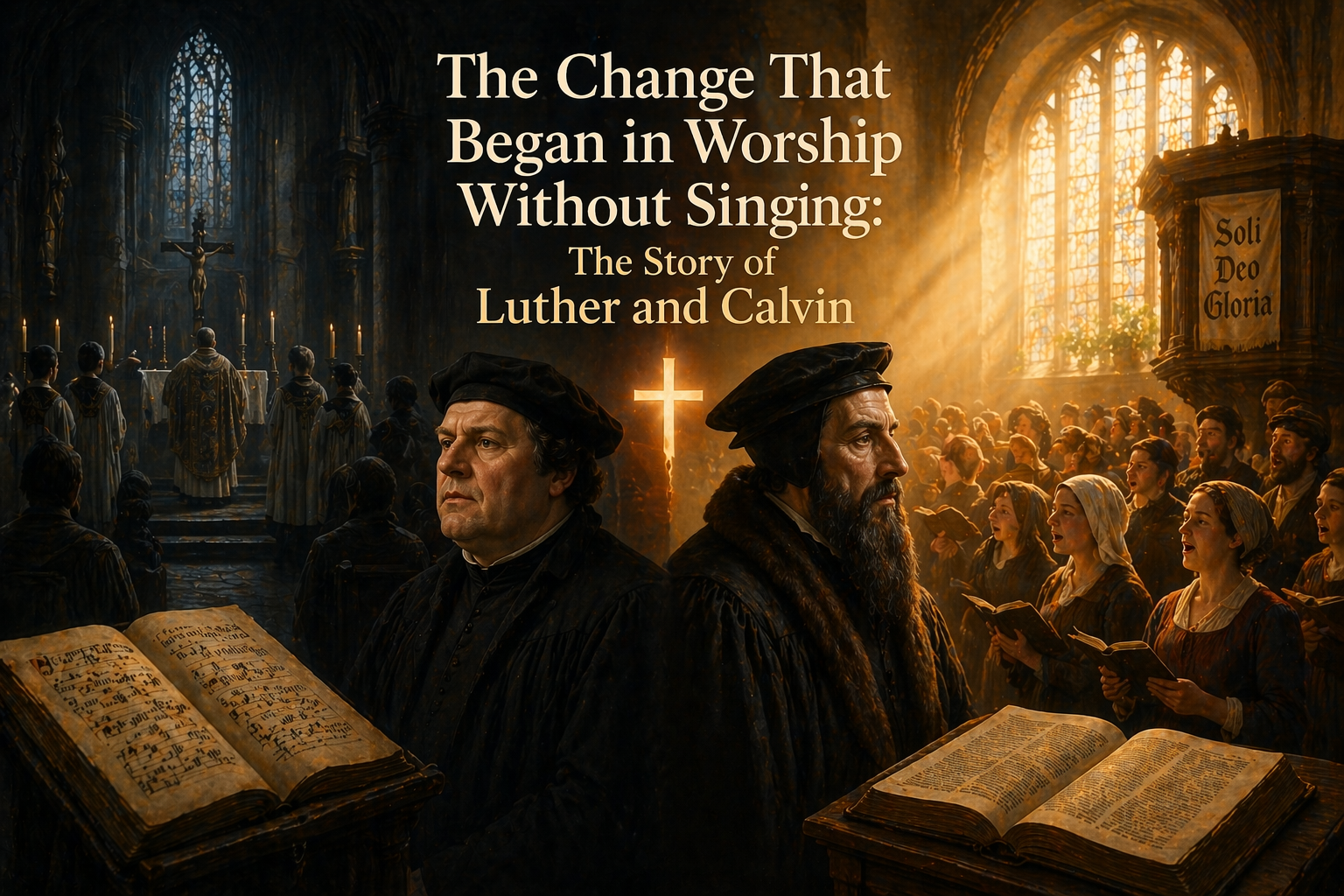
Today, we naturally sing together in worship. We close our eyes, sometimes raise our hands, and lift our voices to God. This has become so familiar that we rarely stop to question it. Yet this was not always the case. Before the Reformation, worship in the church was conducted in Latin, and singing belonged only to choirs and priests. Ordinary believers simply stood and listened. They were present, but they did not participate. There was praise offered to God, but there was no place for their own voices within it.
This silence began to break through figures such as Martin Luther and John Calvin. Although they shared the same faith, they approached worship and music in distinctly different ways. Their differences were not merely about style, but about how they understood the very nature of worship.
2. Luther: Turning Worship into Participation
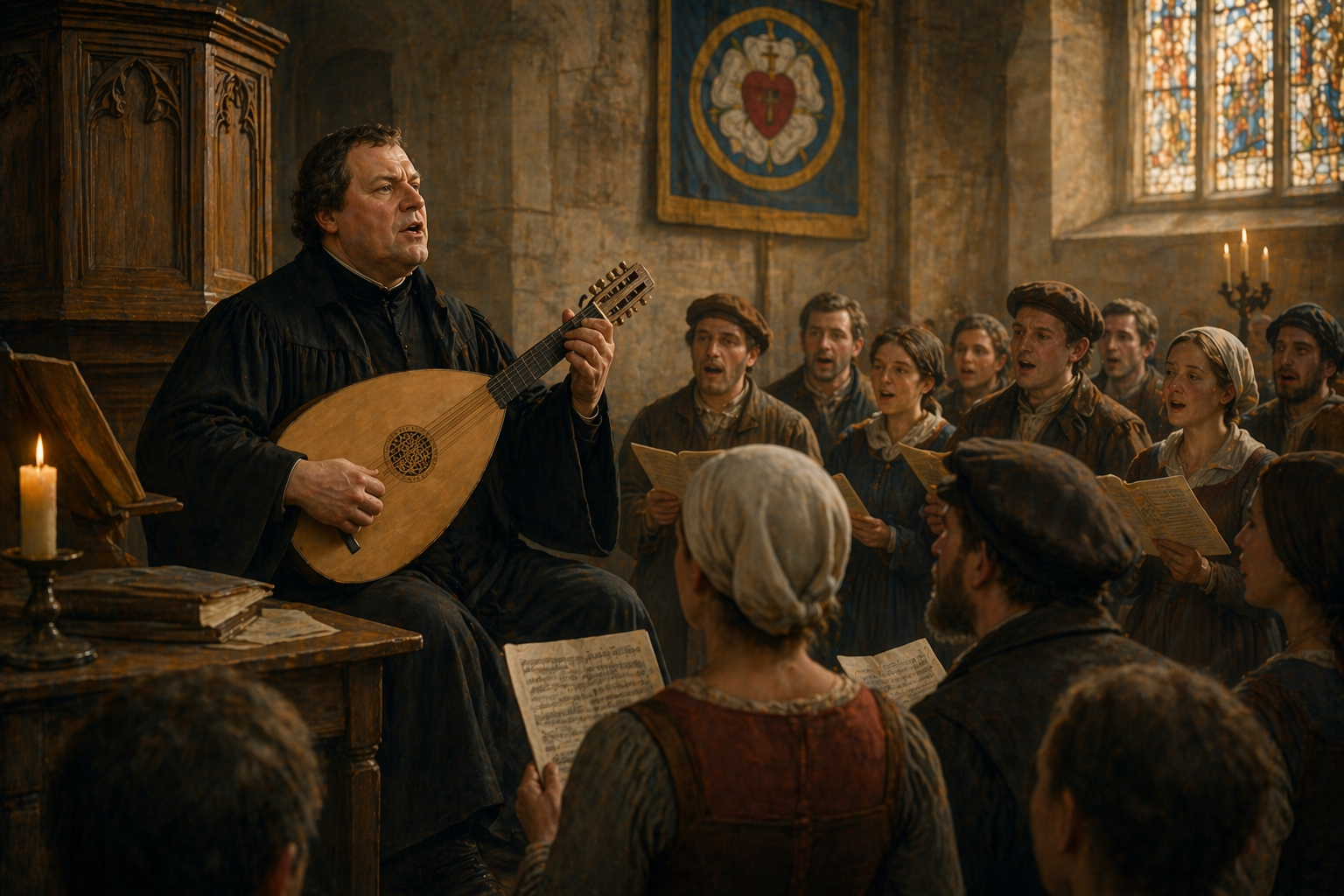
Luther loved music. He was not only a theologian but also a man who played instruments and sang. In particular, he played the lute, an instrument that can be seen as a predecessor of the modern guitar. He believed that music was not merely decorative, but that it had the power to reach deep into the human heart.
As he observed worship, he found himself asking a simple but profound question: why should people stand silently before God? Why should worship be shaped only by the voices of a few? To him, this silence did not feel natural. It felt like something that needed to be restored.
For Luther, worship was not meant to be a passive experience. It was meant to be a shared confession. He believed that those who heard the Word of God should respond to it with their own voices. This conviction led him to a bold decision: to return worship to the people.
The method he chose was surprisingly simple, yet revolutionary for his time. He took melodies that people already knew—tunes heard in the streets and in everyday life—and transformed them into hymns. Rather than creating music that was complex or distant, he intentionally shaped songs that were clear, memorable, and easy to sing. At times, he would even play the lute himself as he taught these hymns, guiding people into participation.
As a result, a new sound began to fill the church. It was no longer the voice of a select few, but the voice of the entire congregation. People were no longer spectators. They became worshipers who actively lifted their voices to God.
Hymns such as “A Mighty Fortress Is Our God” became more than music. They became declarations of faith. In moments of fear and uncertainty, they gave people words to confess their trust in God, uniting the hearts of the community.
For Luther, music was not an accessory to worship. He once said that next to the Word of God, music is the greatest gift. Music helped the Word dwell in the heart, made truth memorable, and gave believers a way to confess their faith aloud.
In this sense, Luther’s reform was not simply about making worship more lively or expressive. It was about restoring something that had been lost. It was the moment when the silent voices of the people were returned to God. What he opened was not merely the beginning of singing, but the recovery of worship itself.
3. Calvin: Preserving the Center of Worship
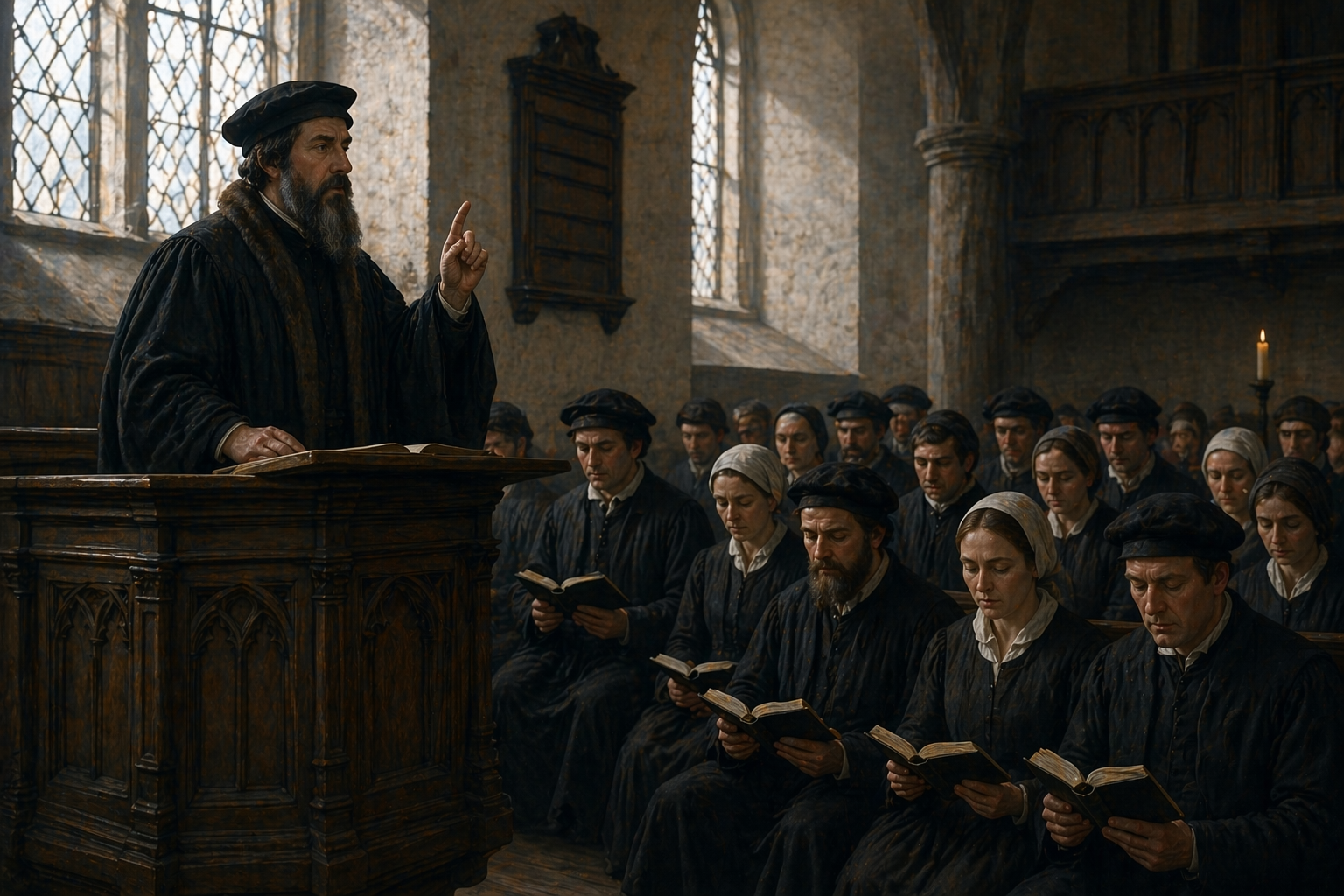
Yet within this movement, another perspective emerged. John Calvin looked at worship and saw a different concern. He recognized that worship could easily become centered on human emotion and expression. The more emphasis placed on feeling and creativity, the more likely it was that the focus would shift away from God and toward the self.
For Calvin, worship was not simply a gathering of people. It was a moment of standing before God. It was not a place to display oneself, but a place to lift one’s attention entirely toward Him. He feared that even small shifts in direction could lead people to pursue their own emotional experiences rather than God Himself.
Because of this, Calvin made a deliberate decision to approach worship with great care. He insisted that only the Psalms, which are given in Scripture, should be sung. He removed the use of instruments and emphasized a cappella singing, relying solely on the human voice.
For him, worship was not about expressing emotion, but about making a sincere confession before God. He believed that God’s Word, not human creativity, must remain at the center of worship. In order to preserve that center, he was willing to set clear and firm boundaries.
In the churches of Geneva, elaborate musical elements and decorative expressions gradually disappeared. In their place, simple psalm singing filled the space. The sound was not grand or dramatic, but it carried a quiet depth. Voices were not shaped to impress others, but lifted honestly toward God. There was no exaggeration of emotion, no performance, only the truth of human hearts standing before Him.
For Calvin, worship was not something meant to move people emotionally. It was an act of surrender before God. By removing what was unnecessary, he sought to reveal what truly mattered.
What he guarded was not a particular form, but the center. Not what could be seen, but what was real before God. And the tradition he left behind continues to challenge us to reconsider what worship truly is.
Conclusion
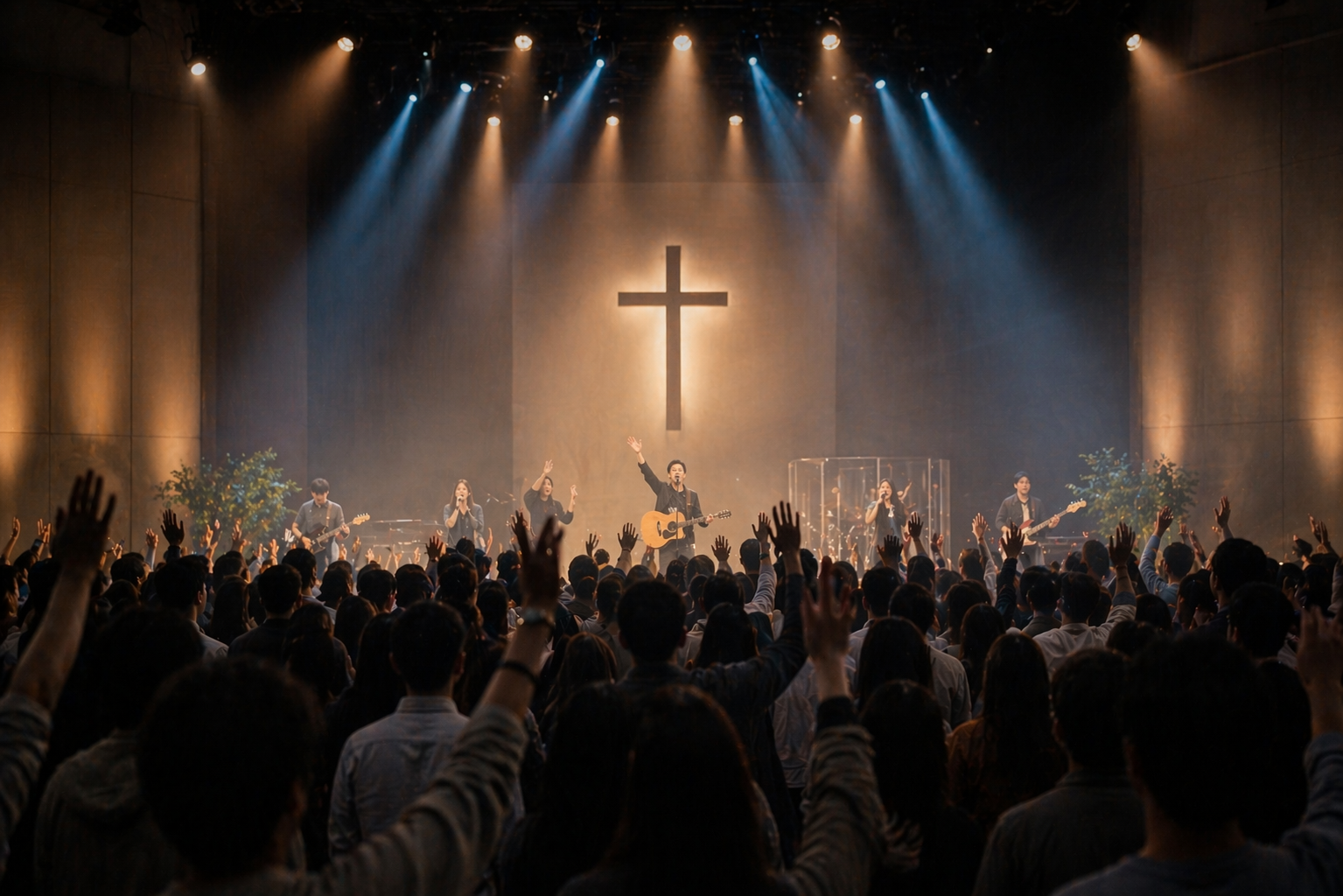
Luther and Calvin walked different paths. One opened the door, expanding worship into a shared experience for all people. The other guarded that space, making sure its center would not be lost. At first glance, their approaches may seem to move in opposite directions. Yet over time, these two streams did not collide but instead came to complement one another.
The worship we experience today has been shaped by both of them. We sing together and take part actively, while still remaining grounded in the Word of God. We express what is in our hearts, but we try to do so without losing the center. The openness introduced by Luther and the focus preserved by Calvin are both still alive within our worship.
When we begin to understand this, even the most familiar song starts to sound different. What we sing is no longer just music. It is the result of a restored practice shaped through history, and at the same time, it is a personal confession offered before God.
And so worship quietly asks us a question. Are we truly participating in this song? Are we worshiping God in the way He desires? As long as these questions remain within us, worship will not become something empty or routine. It will continue to be a living expression of faith.