When Life Interrupts the Music: Clara Schumann’s Three Romances, Op. 22
Some seasons leave little time for the things we love. Work, family, and unexpected responsibilities can push our passions aside, even when they remain important to us.

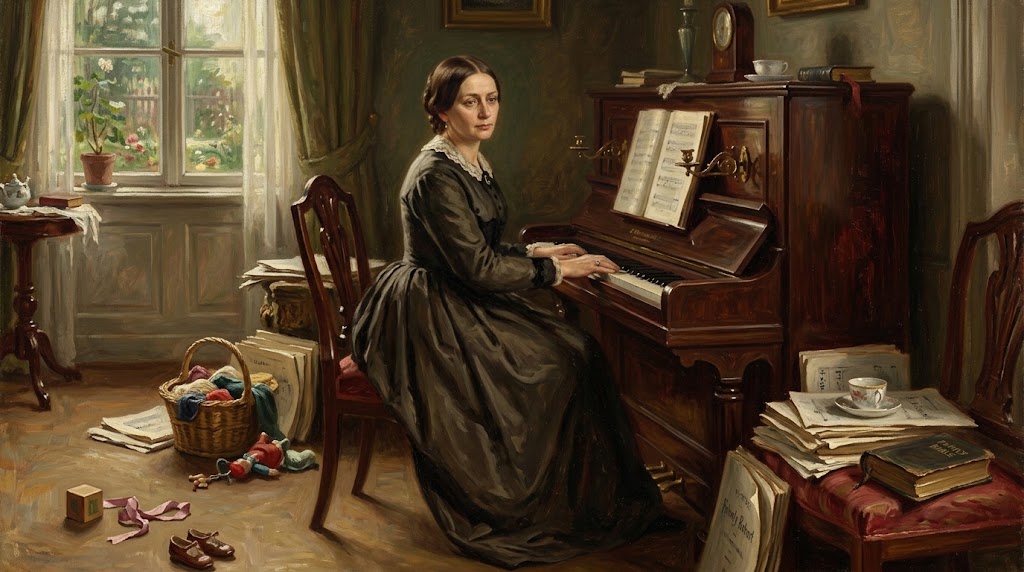
Clara Schumann (1819–1896) knew this reality well. A celebrated pianist, composer, and mother of eight, she spent much of her life balancing music with family responsibilities. Her story reminds us that even a gifted person cannot always give every part of life the time it deserves.
A Life Between Music and Family
Clara Schumann began performing as a child and continued her musical career after marrying composer Robert Schumann in 1840. As their family grew, balancing music and family responsibilities became increasingly difficult.
In 1853, she composed her Three Romances for Violin and Piano, Op. 22, dedicating them to the violinist Joseph Joachim, a close friend of the Schumann family and a longtime musical collaborator. The pieces reveal her gift for lyrical, expressive music.
The following year, Robert was admitted to an asylum after a mental health crisis. Clara continued performing to support her family while facing this painful separation.
The Quiet Beauty of Three Romances, Op. 22
The first romance opens with a lyrical violin melody supported by the piano. The two instruments seem to converse, creating a warm, intimate atmosphere.
Listen to how the piano does more than accompany the violin. Their musical lines respond to each other, allowing both instruments to share in the expression.
Though Clara’s life demanded much of her, this music invites us to pause and appreciate the beauty she created amid her many responsibilities.
When We Cannot Do Everything
There are times when family, work, or unexpected difficulties leave little room for our own interests. We may have to put aside a project, practice less than we planned, or accept that progress will be slow.
That does not mean we have failed. Sometimes faithfulness means continuing with what we can do. At other times, it means accepting our limits without feeling that we must do everything perfectly.
“My grace is sufficient for you, for my power is made perfect in weakness.” — 2 Corinthians 12:9
God’s grace does not mean every difficulty will disappear or that we will always have enough time. It reminds us that our worth is not measured by what we accomplish.
Some seasons leave less room for our gifts than others. Even then, we can take one step at a time, trusting that our lives have value beyond our accomplishments.
Explore Clara Schumann’s complete Three Romances for Violin and Piano, Op. 22 here. (affiliate link)
Read previous: Beginning with a Little: Edvard Grieg’s Arietta