When One Instrument Changed the Flow of Worship: From Guitar to Drums, and the Question Worship Still Asks
 1. When One Instrument Quietly Changed Everything
There was a time when the sound of worship was clearly defined. The organ filled the room, and the choir carried the melody. Worship followed a structured order, steady and familiar. For many, that was simply what worship was.
Then, something unexpected began to appear.
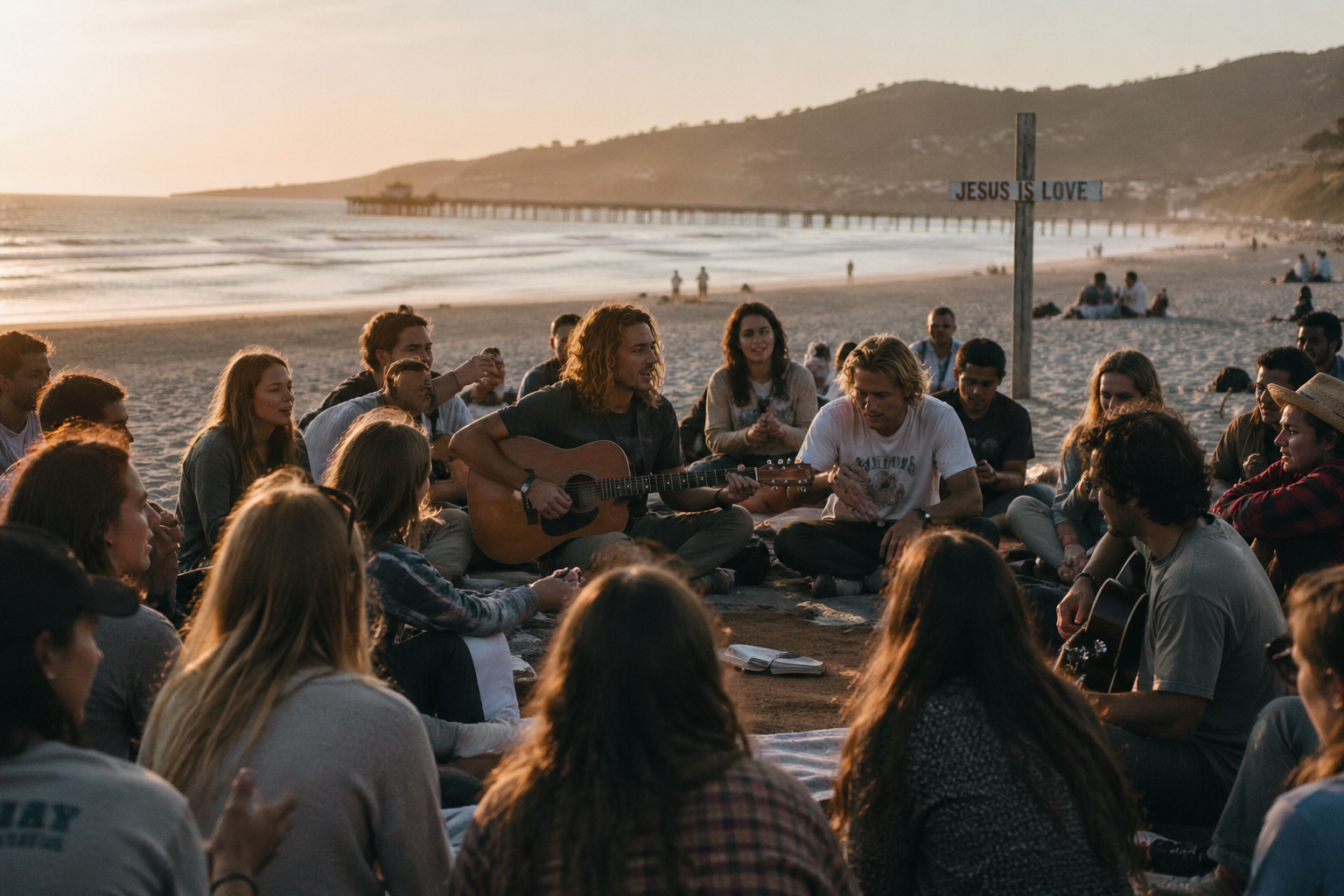
Not inside church buildings, but on beaches. Not in formal sanctuaries, but in small gatherings. People began to gather and sing together in places that did not look like church at all. And at the center of it was not the organ, but a guitar. This was during the Jesus Movement.
When someone first picked up a guitar and began to lead worship, it did not seem like a major shift. The music was simple, just a few chords. But something in the flow was different. People were not just watching anymore. They were joining in.
It was a small change, but it carried weight. When the instrument changed, the way people participated began to change. And when participation changed, the way worship was understood began to shift as well.
We often think of instruments as a matter of style. But they are not neutral. One instrument can reshape the structure of worship, the way it moves, and even where it leads.
When the guitar entered that space, worship had already begun to move in a new direction.
 2. Worship Had Already Been Living Between Two Streams
This change did not begin out of nowhere. The path had already been opened long before.
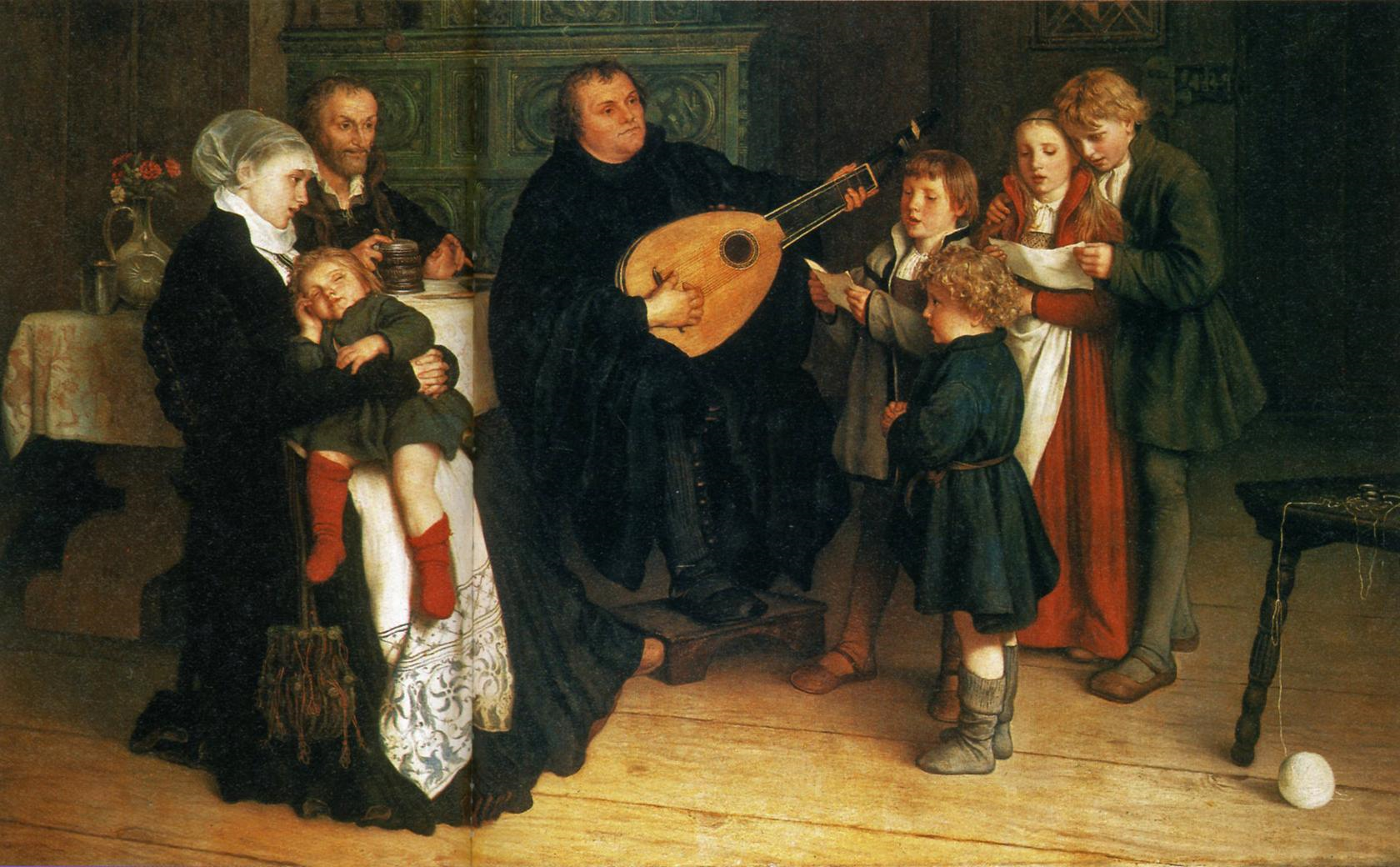
Martin Luther was not only a reformer. He was also a musician. He played the lute, which can be seen as an early form of what we now know as the guitar. He loved to sing, and he believed music was a powerful way to express faith.
He once said, “Next to the Word of God, music deserves the highest praise.”
That was not just a poetic statement. It reflected how he understood worship. He believed music could move the heart and help people receive the gospel more deeply.
So he encouraged the congregation to sing. Worship was not something to watch. It was something to participate in. Many of the hymns he wrote were simple, but they carried clear and personal confession.
From this perspective, the idea of instruments like the guitar entering worship is not strange. It was already possible. It just had not yet fully appeared.
At the same time, there was another voice.
John Calvin took a more cautious approach. He was concerned that worship might drift away from God if it became too centered on human expression. For him, worship had to remain grounded in the Word of God.
Because of that, he approached music carefully. He wanted to protect the center of worship from being shaped too much by emotion or atmosphere.
These two streams may seem to move in different directions. But together, they form a necessary balance. One opens the space for expression. The other guards the center.
So when the guitar appeared, it was not simply a new idea. It was the resurfacing of an old question.
How far can worship be expressed? And where is that expression really directed?
 3. When Rhythm Entered, the Structure Began to Shift
The guitar opened the door. But it did not stay alone.
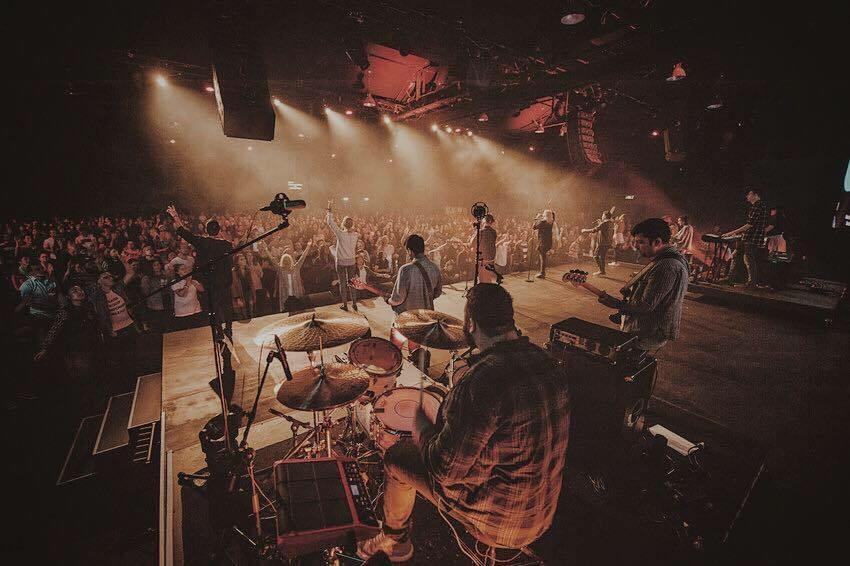
Over time, more instruments began to enter. Electric guitars, bass, keyboards, and eventually drums. Among them, the drums created the most tension.
The reason was not simply volume.
Drums do something different. They do not just shape sound. They move the body. While the guitar often speaks to emotion, rhythm reaches people in a more immediate and physical way.
Because of that, many in the church began to feel uneasy.
Drums were associated with rock music. And rock music was often connected to ideas of rebellion, worldliness, and physical intensity.
So a certain assumption began to form.
Drums stir people up. They excite the body. Therefore, they do not belong in worship.
This was not just about preference. It reflected a deeper understanding of what worship should be.
But at the same time, there was another reality.
Scripture itself is not silent about rhythm. In Psalm 150, we see tambourines, dancing, and various forms of percussion used in praise.
So the tension became unavoidable.
One side understood holiness through restraint and quietness.
The other began to understand it through sincerity and direction toward God.
And so the question became clearer.
Is this leading people toward God, or simply stimulating them?
This question was never only about drums. It was about the entire direction of worship.
As these instruments became more common, worship itself began to change. It was no longer just a sequence of songs. It started to take on movement, build, and emotional progression.
Worship began to feel less like a fixed order and more like an experience.
 4. In the End, Where Is Worship Really Pointing
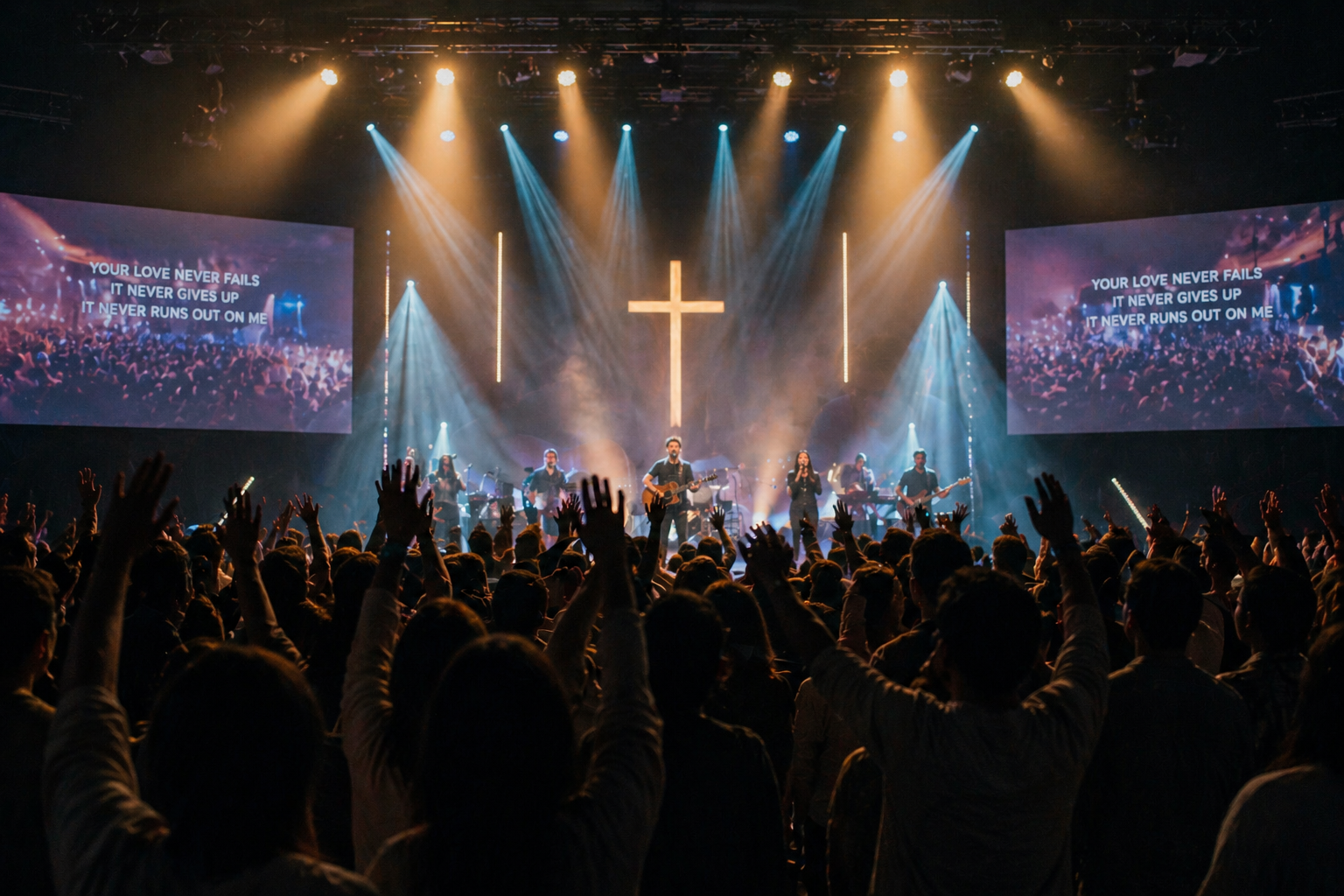
Today, guitars and drums are no longer unusual in worship. In many churches, they are simply expected. Through movements like Hillsong Church, this style has spread across the world.
The music is fuller. The atmosphere is more immersive. People feel deeply moved, and many experience a sense of closeness to God.
And yet, this is where we must pause.
Worship can easily shift toward being centered on people. As the music improves, as the performance becomes more refined, and as the emotional intensity grows, we begin to call that a good service.
But something important can be lost in that process.
Worship is not something we create. It begins with God calling us. We respond through song, through Scripture, and through prayer. When this simple movement breaks down, worship begins to drift.
That is why instruments are never neutral. Whether it is a guitar or drums, they always move the moment in a certain direction.
The small change that began long ago is still unfolding today. And through all of it, one question remains.
Where is this sound really pointing?
In the end, worship is not defined by style or structure. It is defined by its center. When that center is truly God, worship becomes more than a sequence of moments. It becomes a real encounter.