Where Did Contemporary Worship Begin: The Story of the Jesus Movement
 1. When Did the Worship We Know Today Begin?
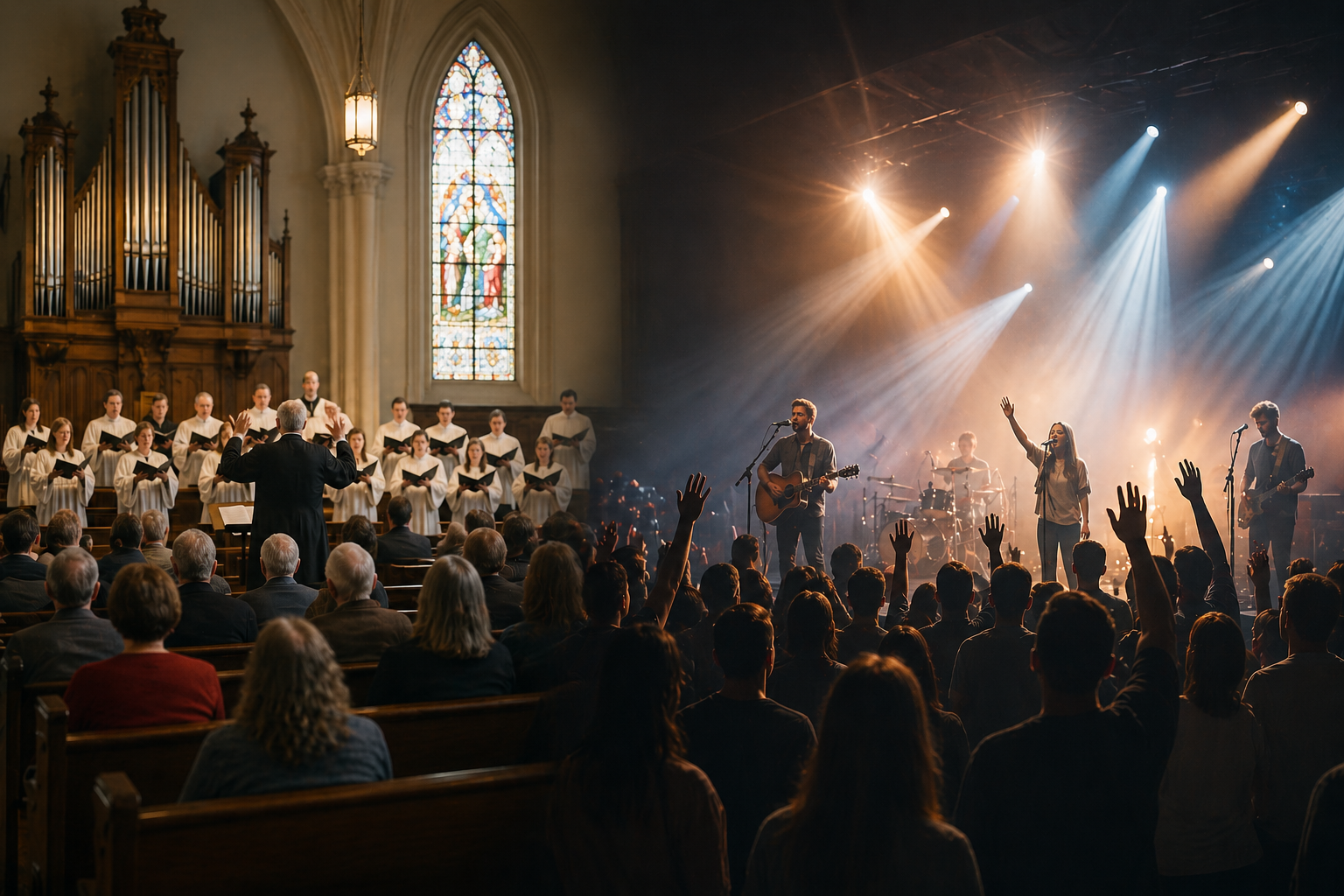
If we think about the way we worship today, a certain image comes to mind. A band stands at the front, with guitars, drums, and keyboards blending together. The congregation sings along as they follow the lyrics, and the music gradually builds, drawing people into a deeper sense of focus and emotion.
This form of worship, what we often call contemporary worship, feels so natural to us now that we rarely stop to question it. It is easy to assume that worship has always looked this way.
But if we take a step back, we begin to realize that this style is not as old as we might think. Just a few decades ago, church worship looked very different. It centered around traditional hymns, accompanied by the organ, and followed a structured and formal order.
That form of worship carried deep meaning and strong theological roots. Yet it was clearly different from the band led, flow driven, and emotionally expressive worship we experience today.
So when did this shift happen?
The answer takes us back to the Jesus Movement.
 2. A Movement That Began Outside the Church
If we ask how contemporary worship began, the answer may be surprising. It did not begin inside the church, but outside of it.
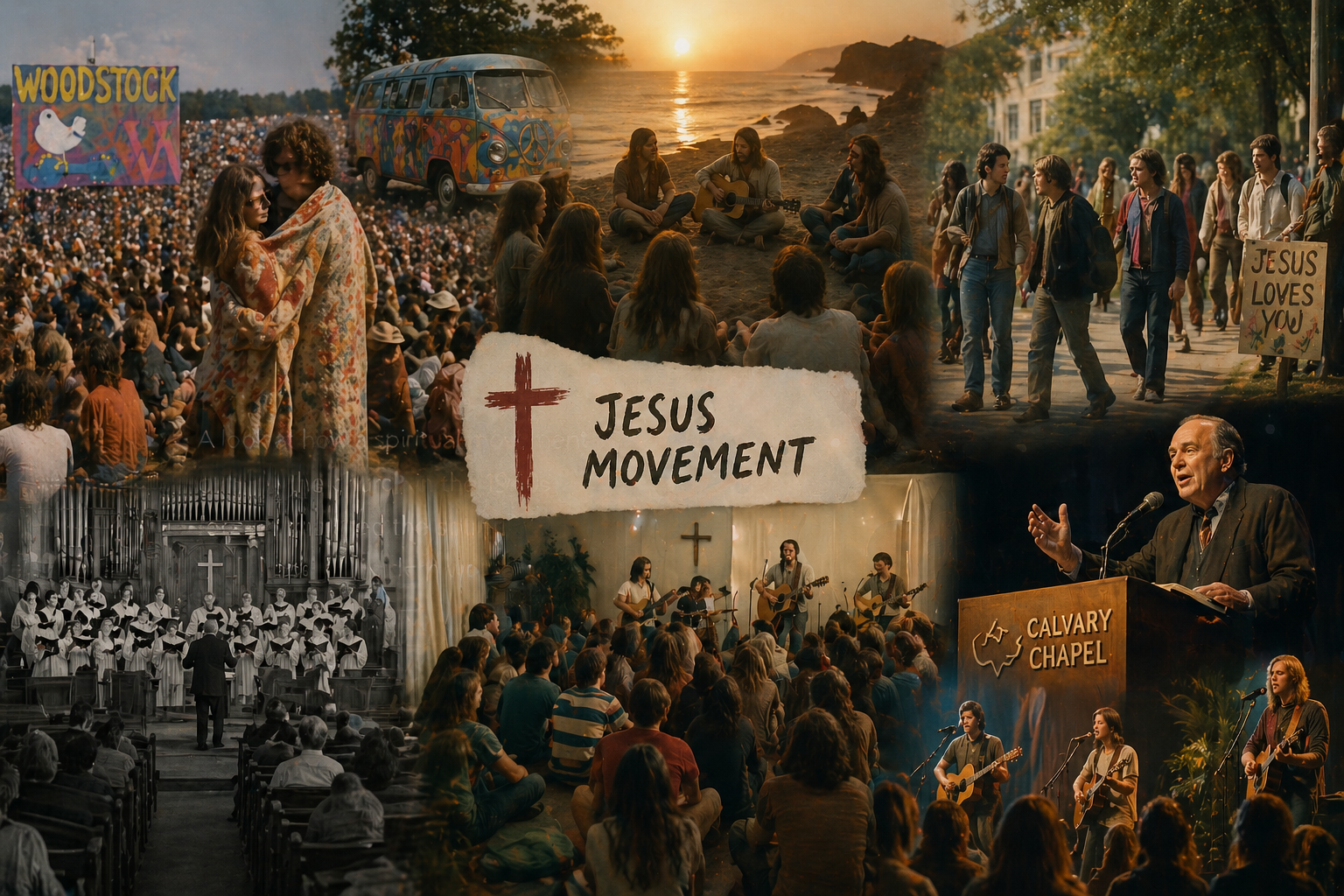
In the 1960s, rock and roll was at the center of American popular music. It was more than just a genre. It shaped an entire cultural mindset, especially among young people. Society was changing rapidly, and many began to question existing authority, social structures, and even traditional religion.
This questioning spirit evolved into what we now recognize as the hippie movement, with its emphasis on freedom, peace, and love. However, that freedom often lacked boundaries and sometimes led into drug use, unrestrained lifestyles, and the pursuit of pleasure without direction. The Woodstock Festival became a powerful symbol of how far this movement had grown.
Yet not all young people followed that path completely. In the midst of that same cultural environment, there were those who were still searching for something deeper. Many had become disillusioned with the institutional church, yet they had not given up on the search for God.
Out of that tension, the Jesus Movement began to emerge.
This was not a movement built through programs or formal structures. It spread naturally through everyday spaces such as beaches, streets, and college campuses. People encountered the gospel in the middle of life, and communities began to form organically.
What is especially significant is that when these young people came into the church, they did not leave their culture behind. They did not suddenly become different people. They were still the same generation that listened to rock music, still carrying their guitars, still expressing themselves in the same ways.
What changed was the direction of their expression.
One of the key communities that embraced this movement was Calvary Chapel. Its pastor, Chuck Smith, chose not to force these young believers into traditional forms. Instead, he allowed their musical language and creativity to be redirected toward God.
At that time, church music was largely dominated by four part choir arrangements and formal liturgical structures. But within this new movement, something different began to take shape. Folk and rock elements blended into worship, and new forms of songs emerged. Some used Scripture directly as lyrics, while others expressed personal faith in simple and honest ways.
This was not just a musical change.
It was the beginning of a new language of worship.
 3. A Single Song That Revealed a New Way of Worship
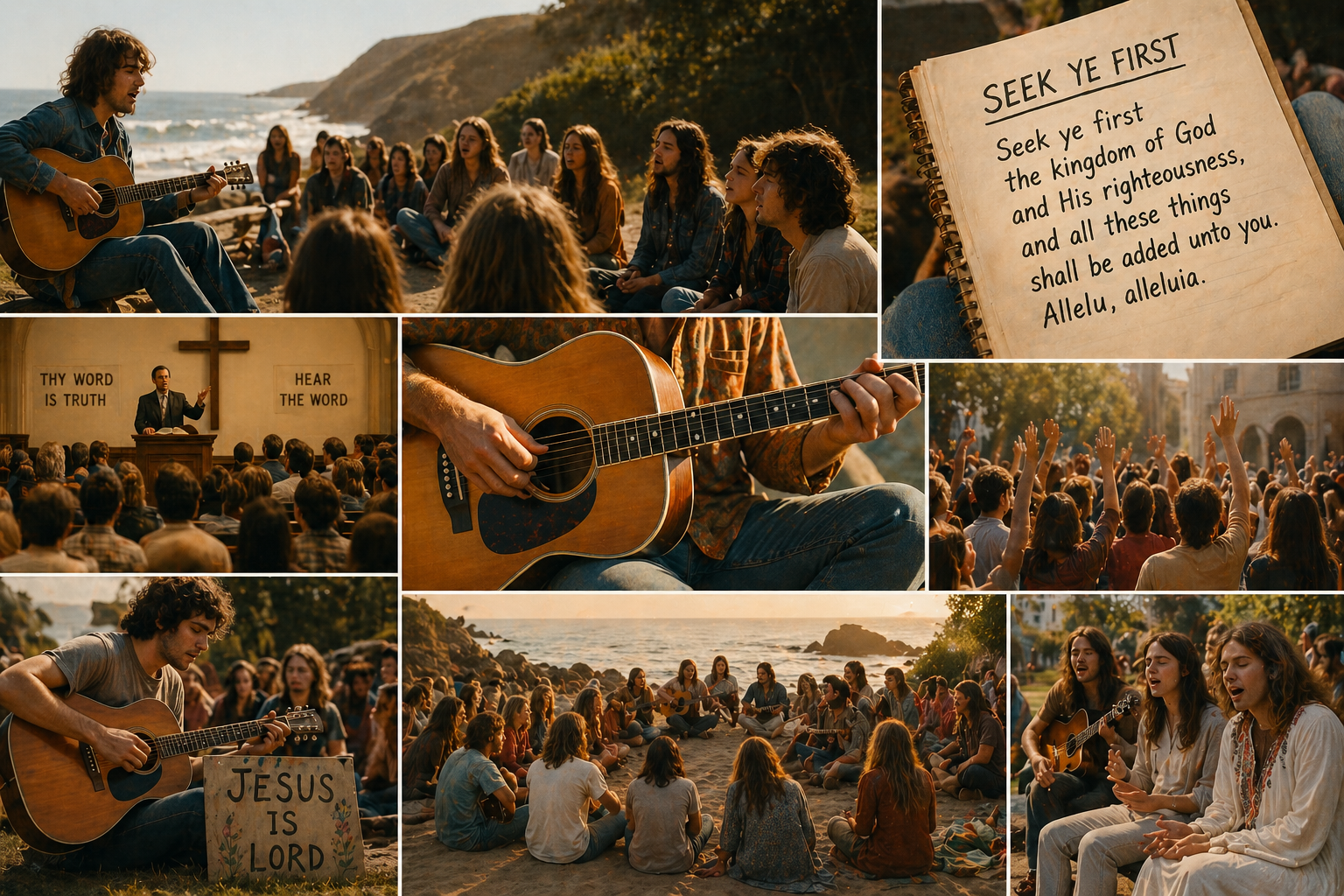
Seek Ye First is one of the clearest examples of what this shift looked like in practice. The song is remarkably simple, with short lyrics, a repetitive structure, and a melody that anyone can easily follow.
At first glance, it may seem too simple to be significant. But that simplicity is exactly what gives it power.
The lyrics come almost directly from Scripture, yet the way they are used is entirely different. Instead of being read or explained, the words are sung together. This difference is more profound than it might first appear.
In earlier forms of worship, Scripture was primarily communicated through preaching, and the congregation’s role was to listen and understand. But songs like this transformed Scripture into something that could be repeated, sung, and embodied. It moved from intellectual understanding into spoken confession and lived experience.
This approach resonated deeply with the spirit of the Jesus Movement. Young people at the time were not drawn to complex forms or long explanations. They were drawn to something they could experience directly.
This song was not meant for a solo voice, but for a community. As the melody repeated, people were gradually drawn deeper into the meaning of the words. At some point, the song stopped feeling like music and became a shared confession.
Another important aspect of this song is that it could be led with nothing more than a guitar. This meant that worship was no longer confined to a formal setting or dependent on trained musicians. It could happen anywhere.
In fact, during the Jesus Movement, worship often took place in public spaces such as beaches and campuses. In those environments, simple songs like this carried extraordinary power.
In the end, this was not just a song.
It marked a turning point. Worship was shifting from something people listened to into something they actively participated in. It was moving from fixed structure into a flowing and lived experience. And this shift would go on to shape countless worship songs in the years to come.
 4. Worship as Flow and the Question We Face Today
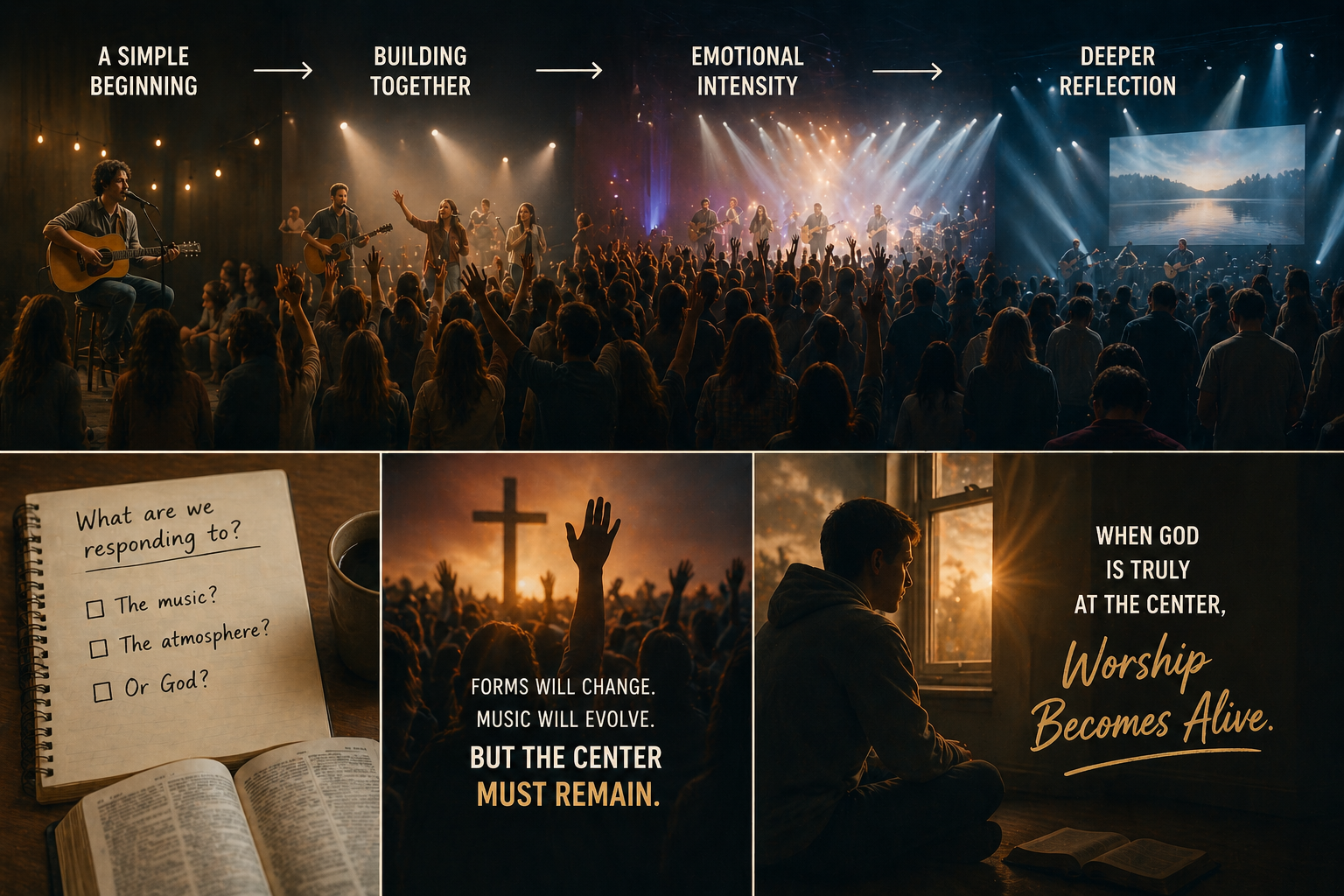
As this movement continued, the style of worship expanded. What began with a single guitar grew into full bands, and songs developed into structured flows that guided people through a worship experience.
This progression, from quiet beginnings to emotional intensity and deeper reflection, has become a familiar pattern in contemporary worship today.
But this was more than a musical evolution. It was a transformation in how worship was experienced. People were no longer simply following a set order. They were engaging, responding, and encountering God within the movement of the service itself.
The contemporary worship we know today is, in many ways, the result of a generation’s longing meeting the message of the gospel.
Yet an important question remains.
What are we responding to?
Is it the music, the atmosphere, or is it God?
Forms will continue to change. Music will continue to evolve. But the center of worship must remain the same.
When God is truly at the center, worship becomes alive.