The Secret to Stopping the 3 A.M. Anxiety Loop: A Review on Max Lucado’s 'Anxious for Nothing'
Have you ever laid awake at 3 a.m., running through the same anxious loop you've already run a hundred times?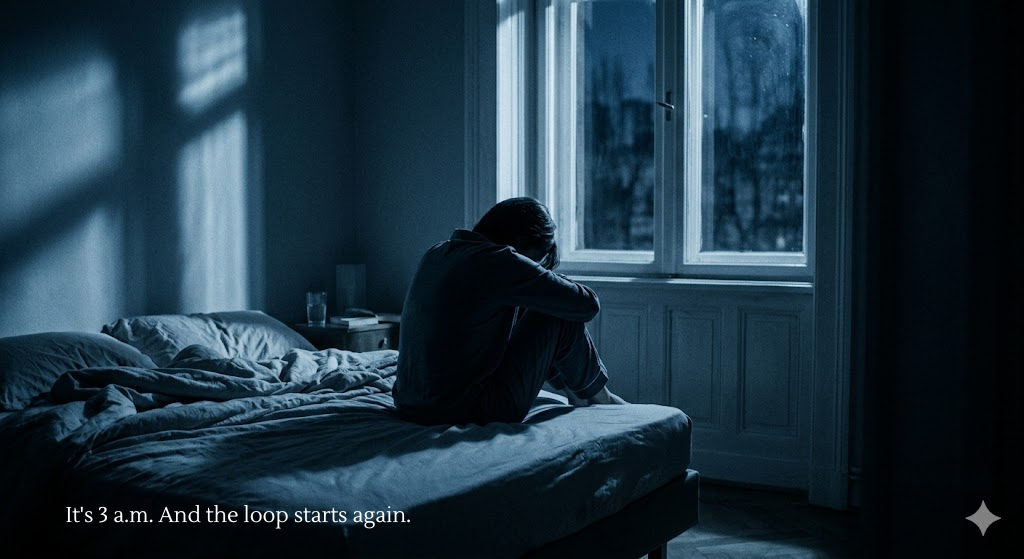
Maybe it's your finances. Your health. A relationship that feels like it's slowly unraveling. A future that won't stop feeling uncertain.
You tell yourself to calm down. fvYou breathe. You scroll. You distract. And for a few minutes, it works — until the worry crawls back, quieter now but no less real.
Most of us live here more than we'd like to admit. Anxiety has become so ordinary that we've started treating it as a personality trait rather than a problem worth solving.
But what if there's a way out that doesn't require you to have it all figured out?
The Quiet Epidemic Nobody Talks About Honestly
Anxiety disorders affect over 40 million adults in the United States alone. But those are just the ones who've been diagnosed. The real number — the people lying awake, white-knuckling through their days, performing "fine" for everyone around them — is almost certainly much larger.
What's interesting is that anxiety is not a modern invention. People in every era have wrestled with worry. What is modern is how relentlessly we're exposed to things worth worrying about: 24-hour news, social comparison, economic pressure, health scares, relationship uncertainty.
We were not built for this volume.
Max Lucado — one of the most widely read Christian authors of our time — wrote Anxious for Nothing not as a detached theological lecture, but as someone who has personally battled anxiety. His honesty is part of what makes the book so disarming. He isn't offering a ten-step fix. He's offering something rarer: a way of seeing that changes what worry actually does to you.
What the Book Is Actually About
The book is structured around a single passage from the New Testament — Philippians 4:6-7 — which Lucado unpacks with the acronym CALM:
- Celebrate God's goodness
- Ask God for help
- Leave your concerns with God
- Meditate on good things
The framework isn't dressed up in science. It doesn't cite studies or reference neuroplasticity. It just points you toward four movements — and trusts that doing them matters.
Lucado calls it a spiritual posture, not a technique. I found that distinction worth sitting with.
The Part That Hit Differently
There's a section in the book where Lucado writes about how anxiety often masquerades as responsibility. If I worry enough, I'm taking it seriously. If I let go, I'm being careless.
Many of us carry this unexamined belief without realizing it. Worry feels like love. Worry feels like diligence. Worry feels like we haven't given up yet.
But there's a difference between thoughtful action and anxious spinning. One moves you forward. The other keeps you trapped in a loop, consuming energy without producing anything — except more anxiety.
Lucado gently dismantles the idea that worry is useful, and replaces it with something more active: prayer as a transfer of burden, not a passive resignation to fate.
This is not "don't think about it." It's more like: think about it, bring it fully into the light, and then hand it to something with more capacity than you have.
For the Skeptic in the Room
If you're not sure what you believe about God, that's okay. This book won't require you to settle that question before it's useful to you.
What it will ask you to consider is this: what are you currently trusting to manage your anxiety?
Busyness? Control? Alcohol? Other people's approval? Endless information-gathering?
None of these are evil. But none of them work, not really. The relief they offer is temporary. The anxiety returns, often louder than before.
Anxious for Nothing invites you into a different experiment: what if you weren't meant to carry all of this alone? What if there's a kind of peace that doesn't depend on your circumstances resolving the way you hope?
You don't have to believe that's true to find the question worth sitting with.
What You'll Walk Away With
I'll be honest — I can't tell you what you'll take away from this. That depends on where you're at when you pick it up.
What I can say is that the CALM framework is simple enough to actually use at 3 a.m. Not a system you have to study. Just a direction to turn when the loop starts again.
A Note on Faith
Anxious for Nothing is explicitly a Christian book. Lucado doesn't hide that. But he writes with a warmth and accessibility that tends to reach beyond his usual audience.
If you're already a person of faith, this book will deepen your prayer life and give you biblical grounding for the peace you've been told is possible but haven't always been able to access.
If you're exploring what you believe — or if you've been burned by religious communities and are still figuring out what, if anything, remains worth keeping — this is a gentle on-ramp. It's not a book that argues. It's a book that invites.
And sometimes, when you're lying awake at 3 a.m., an invitation is exactly what you need.
📚 Anxious for Nothing by Max Lucado
Available at most major booksellers and your local library.
If this sounds like a book worth picking up, you can find it here. (affiliate link)
📚You Might Also Like
When You Can Never Be Enough — In the Grip of Grace
Can You Love God and Still Feel Broken? — Heal Your Hurting Mind